



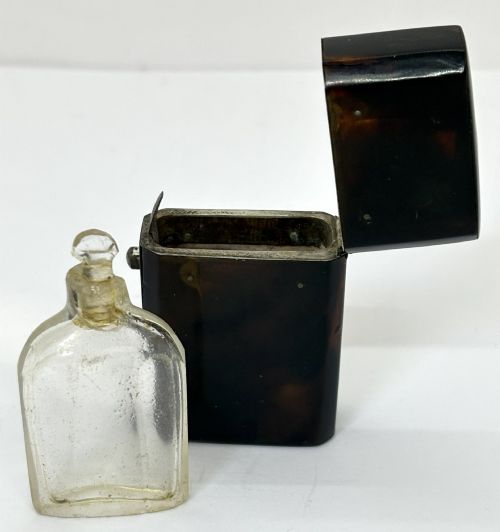


Glass Vanity Container
A glass vanity container holds powders, pins, and unguents on a dressing table, combining utility with decorative metalwork.
Glass Vanity Container
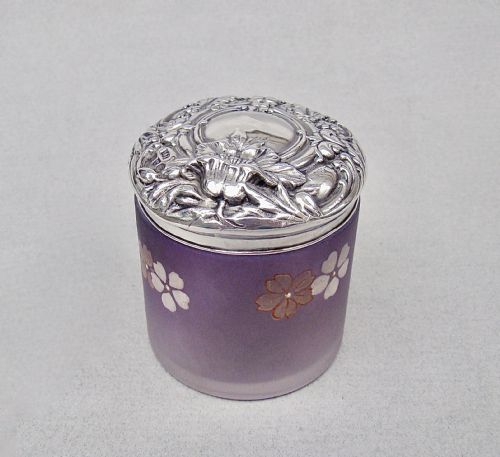
A glass vanity container encompasses dressing table jars, trinket boxes, powder pots, and rouge containers used across several centuries. The pieces on this page span the Georgian, Victorian, Edwardian, and Art Deco eras, showing how dressing table habits shifted over time.
Early examples include Georgian patch boxes and tortoiseshell scent bottle holders alongside Victorian cut glass and sterling silver boxes. Later twentieth-century items bring frosted crystal, geometric Art Deco profiles, and vibrant guilloche enamel lids into the selection.
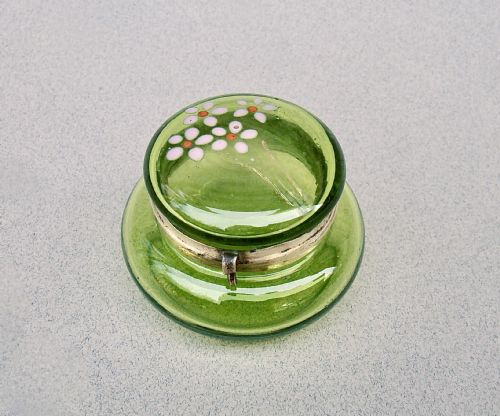
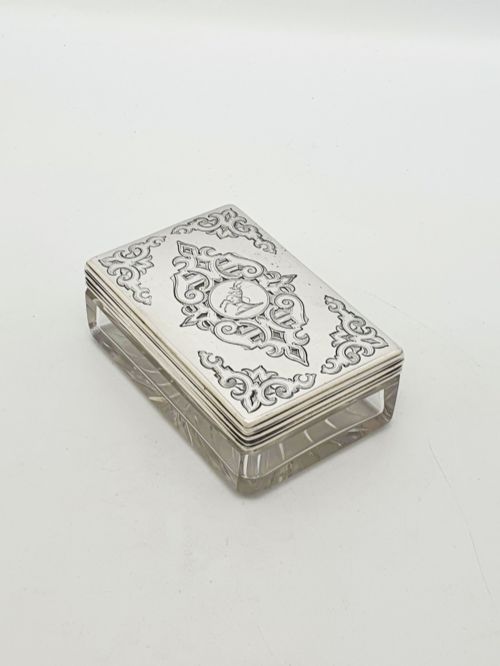
Trinket boxes and vanity jars appear frequently in cut crystal, green glass, and amethyst glass mounted with silver or enamel. Buyers seeking a glass vanity container find everything from compact Edwardian silver-topped jars to substantial crystal presentation boxes.
Materials and construction
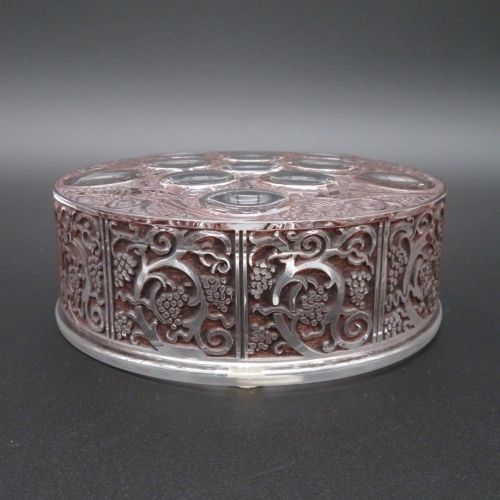
Makers combined heavy lead crystal, cut glass, frosted glass, or coloured glass with sterling silver mounts, metal frames, and tortoise shell panels. Glass bodies were blown, moulded, or heavily cut to catch the light on a dressing surface.
Lids and collars relied on sterling silver, often hallmarked for cities like Birmingham, Sheffield, or Chester, alongside detailed guilloche enamel work. Artisans secured these metal mounts directly onto the glass rims with specialised adhesives or tight mechanical flanges.
Surface decoration ranges from intricate faceted wheel-cuts on Victorian crystal to applied enamel and tortoiseshell inlays on Georgian and Edwardian pieces. Each container balances the fragile clarity of glass with the robust structure of precious metalwork.
Glass Vanity Container Retail Price Guide 2026
Typical asking prices for glass vanity container among the pieces listed under this phrase on Sellingantiques today, from the lower quarter to the upper quarter. They describe what is for sale here now, not the wider market.
Early sailing presentations and tiny patch boxes prove that even the smallest dressing table pots once carried outsized ambitions.
Evaluating craftsmanship
Quality rests on the depth and precision of the glass cutting, the weight of the crystal, and the crispness of the silver hallmarks. Heavy, thick crystal with sharp facet edges distinguishes finer vanity containers from lighter, moulded glass alternatives.
The integrity of the metal mount and the closure of the lid define the upper tier of production. When silver lids close flush against the glass collar without wobble, and guilloche enamel remains free from chips or deep scratching, the standard of manufacture is high.
René Lalique·Goldsmith's and Silversmith's Co.
The Glass Vanity Container Glossary
- Guilloche
- An intricate mechanical engraving technique that etches precise geometric patterns into metal before applying translucent enamel. It appears frequently on twentieth-century vanity jar lids.
- Patch box
- A small decorative container used in the eighteenth century to hold tiny fabric patches worn on the face. Georgian examples often feature enamel lids.
- Sterling silver
- An alloy consisting of ninety-two point five percent silver by mass, standard for the metal mounts and lids found on these containers.
- Rouge pot
- A small lidded vessel designed to hold cheek or lip cosmetics. They often feature coloured glass bodies paired with silver or enamel tops.
Glass Vanity Container: Frequently Asked Questions
What is a glass vanity container?
A glass vanity container is a lidded vessel designed to hold cosmetics, pins, or small trinkets on a dressing table.
These pieces combine glass bodies with metal mounts, reflecting the dressing habits of various historical periods.
How do I date these containers?
Dating relies on hallmarks stamped on the silver mounts, the style of the glass cutting, and manufacturing techniques.
Georgian and Victorian pieces display different decorative motifs and weight compared to later Art Deco designs.
How were these containers used historically?
They sat on dressing tables to store powders, perfumes, patches, and hair trinkets.
Wealthy owners used them to keep daily grooming accessories organised and protected.
How do I care for antique glass?
Clean glass bodies gently with warm soapy water while avoiding harsh scrubbing on silver mounts and enamel.
Keep enamel lids dry to prevent moisture damage to the underlying metalwork.