

Glass Stoppered Decanter
A glass stoppered decanter holds wine, spirits or scent behind hand-cut facets and precious metal mounts.
Glass Stoppered Decanter
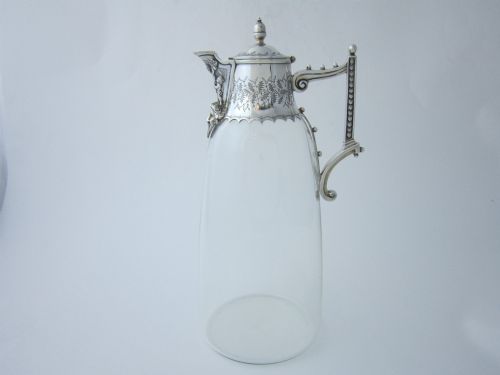
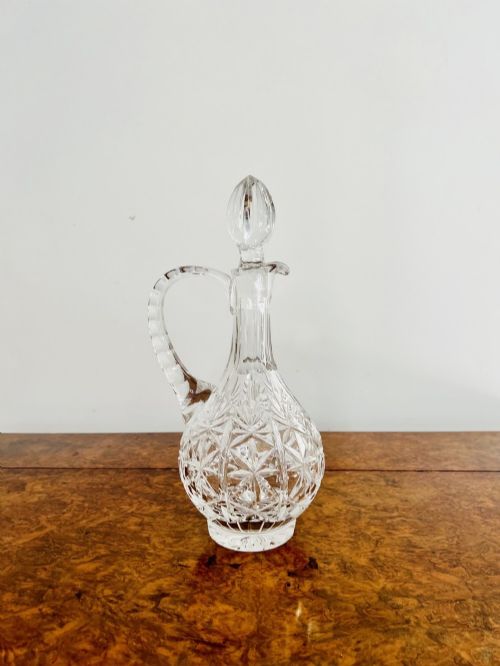
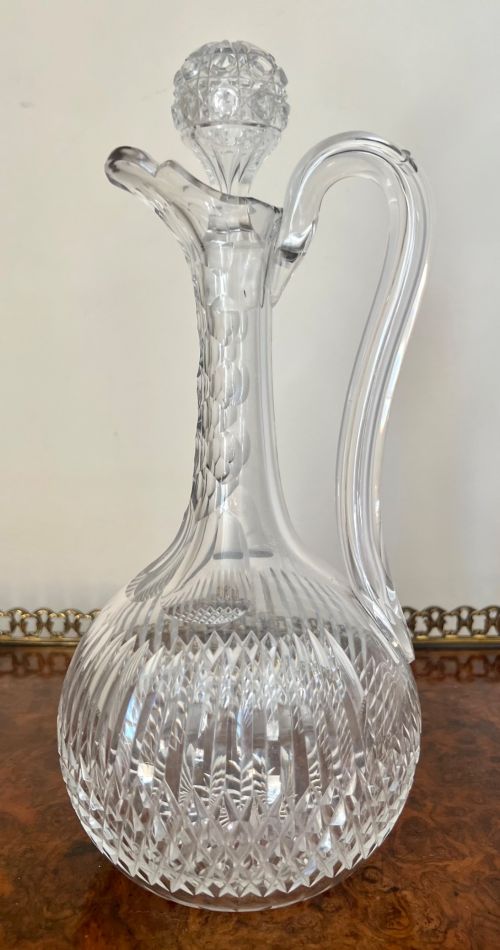
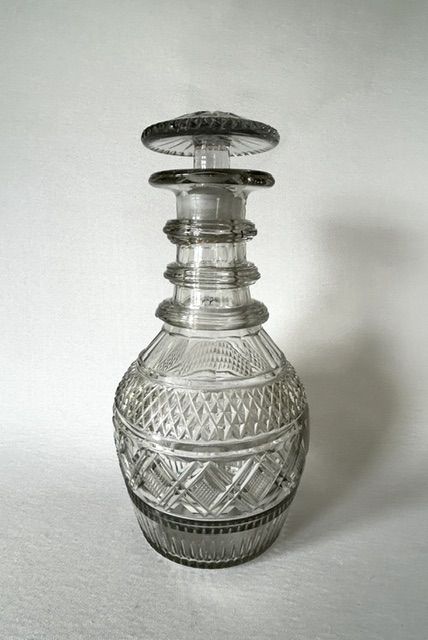
A glass stoppered decanter sits on the dining table or sideboard, designed to hold and serve wine, whiskey, brandy and port. The form ranges from heavy Georgian sugarloaf and shaft and globe vessels to slender Victorian claret jugs, Edwardian spirit bottles and small scent flasks.
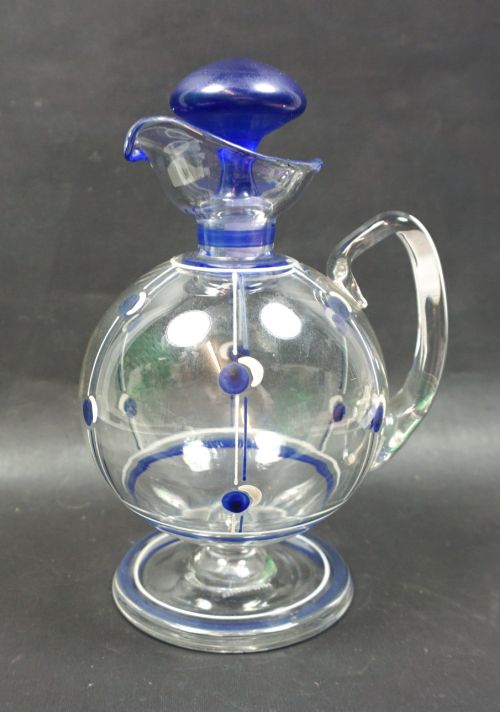
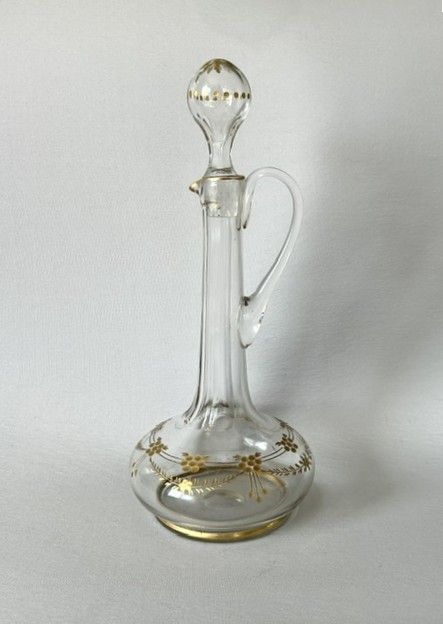
You will frequently meet Victorian and Edwardian examples on this page, alongside Georgian pieces and twentieth-century Bohemian and Czechoslovakian variations. These vessels combine functional utility with decorative engraving, etching and applied enamelling.
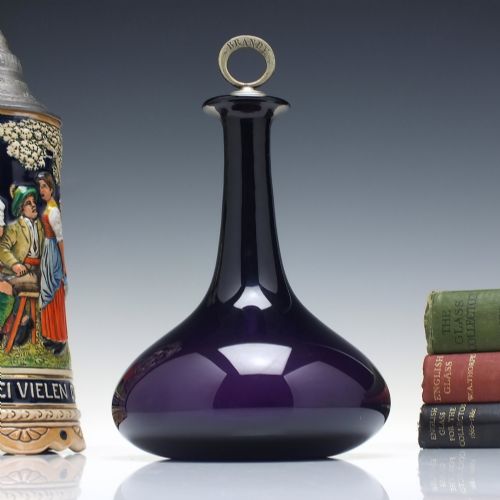
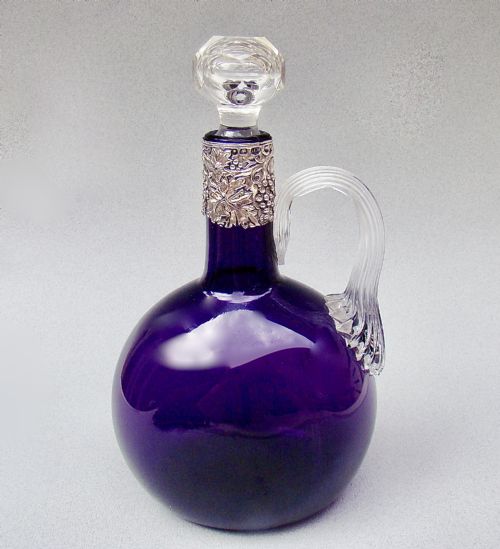
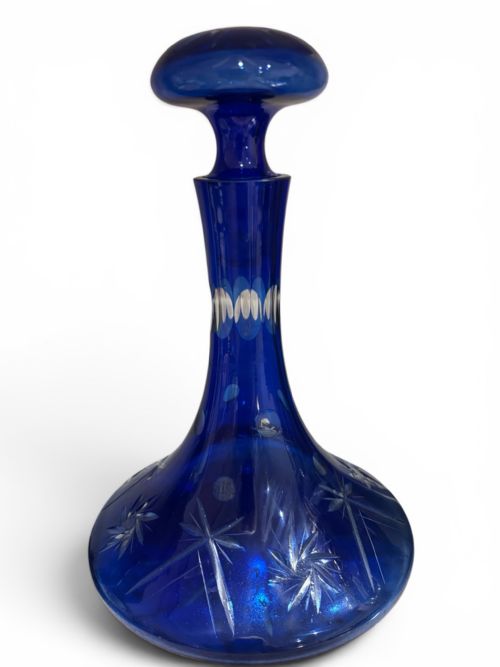
The contents are sealed by a matching ground-glass stopper or finial, occasionally secured with sterling silver collars, silverplate mounts or hinged lids. Whether rendered in clear crystal, rich amethyst, ruby or cobalt glass, each piece reflects the interior lighting of period rooms.
How they were made
Makers shaped these vessels using free-blown or mold-blown techniques, working molten lead crystal, clear glass or coloured glass such as amethyst, cobalt and ruby. Skilled hands then cooled and annealed the hot metal before applying surface decoration.
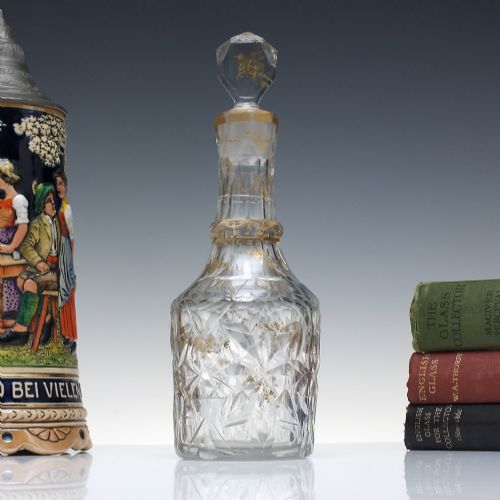
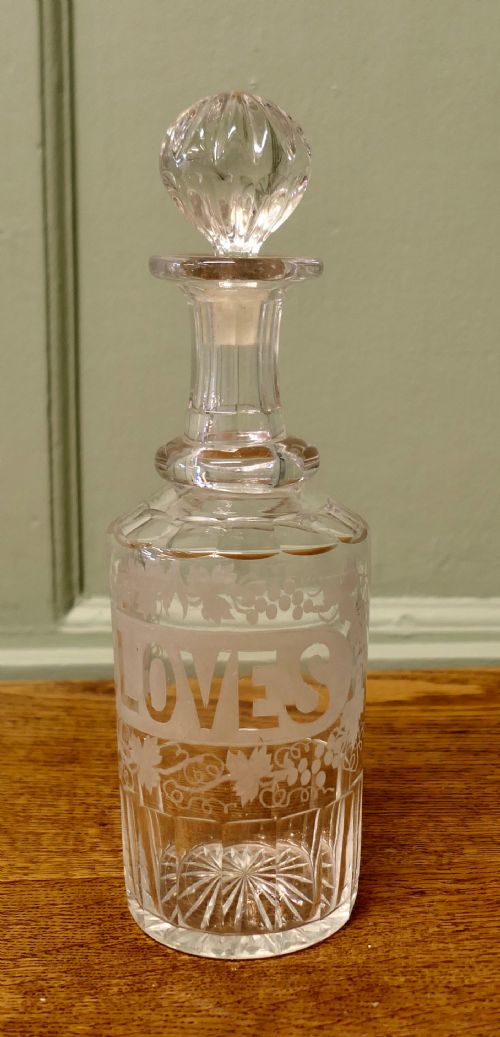
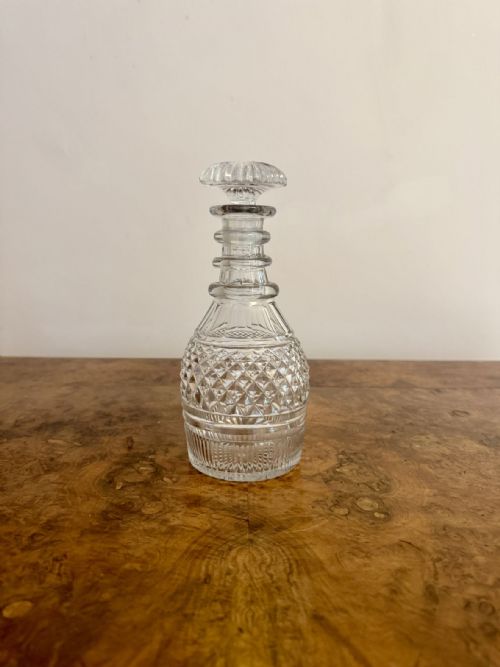
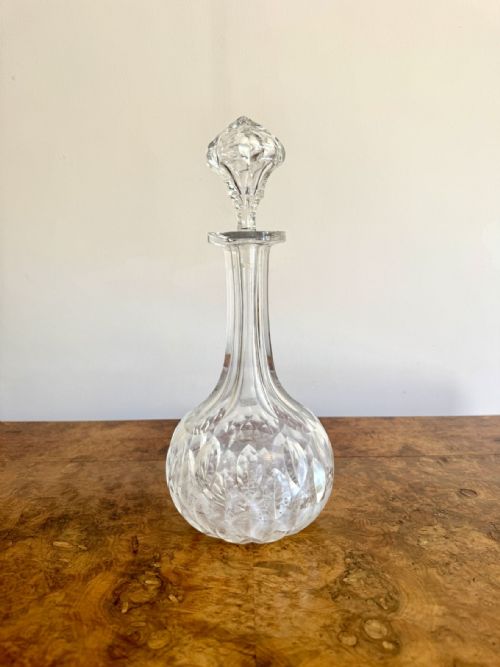
Cut glass decorations were carved onto the vessel using rotating wheels, creating sharp geometric facets that catch the light. Engravers added floral or label inscriptions like Madeira, while gilding and enamel work provided coloured highlights.
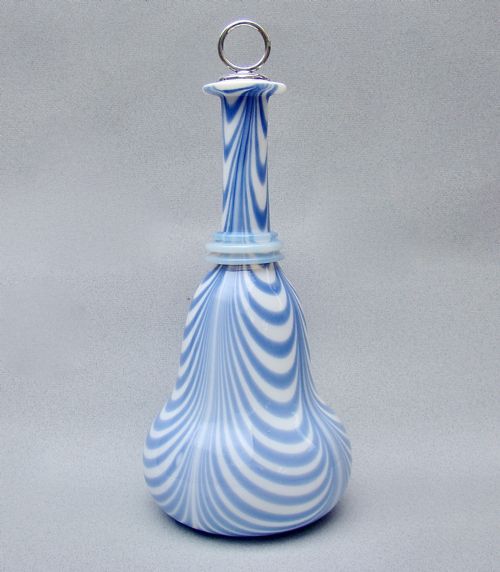
Metal mounts in sterling silver, old Sheffield plate and silverplate were fitted to necks and lips, sometimes stamped with maker marks and assay office symbols to record origin and date.
Materials range from clear lead crystal and cut glass to coloured glass bodies in amethyst, ruby, and cobalt.
What varies in quality
The weight and clarity of the metal define the baseline of a vessel, distinguishing heavy lead crystal from lighter utility glass. Deeper, crisper wheel-cutting and polished facets separate standard production from superior workshop output.
The precision of the fit between the stopper and the neck marks the standard of manufacture, as hand-ground components require exact pairing. The addition of substantial sterling silver mounts, hand-painted enamel, or fine gilding elevates the piece further.
James Giles·Henry Matthews·Stevens and Williams
The Glass Stoppered Decanter Glossary
- Mell
- A mallet-shaped decanter body with a wide base tapering to a narrow neck. This form is typical of Georgian and nineteenth-century spirits containers.
- Sugarloaf
- A conical decanter profile resembling a traditional loaf of refined sugar. It provides stability and a generous volume for heavy beers and wines.
- Claret jug
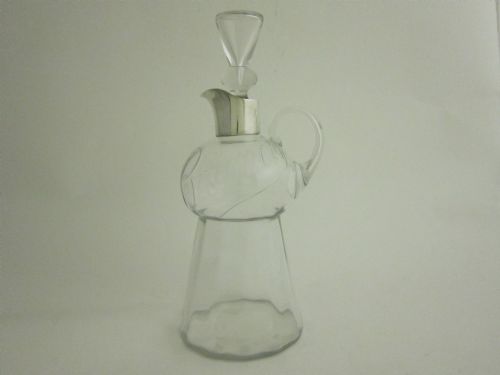
- A pouring vessel designed specifically for red wine, usually incorporating a handle and a hinged metal lid. They frequently pair cut glass bodies with silver mounts.
- Shaft and globe
- A decanter style featuring a spherical lower body beneath a long, slender neck. This silhouette dates predominantly to the eighteenth century.
- Finial
- The decorative topmost knob of a stopper. It provides a secure grip for lifting the glass closure from the decanter neck.
Glass Stoppered Decanter: Frequently Asked Questions
What is a glass stoppered decanter used for?
These vessels serve wine, whiskey, brandy, port and sherry, or hold aromatic liquids in scent bottles. They bring liquid from storage bottles to the dining table with appropriate presentation.
The ground-glass stopper seals the contents from air exposure while matching the decorative cutting of the body.
How do I tell a Georgian decanter from a Victorian one?
Georgian examples often display heavier lead crystal, distinct mallet or shaft and globe silhouettes, and simpler, deeper hand-cut flutes. Eighteenth-century pieces may also feature characteristic pontil marks on the base.
Victorian and Edwardian versions introduce varied colours like amethyst, ruby and cobalt, alongside more intricate machine-polished or acid-etched decoration and silver mounts.
Are stoppers original to the decanters?
Original stoppers are ground to fit an individual neck during manufacture, meaning each pair shares unique grinding marks and proportions. Examining the interior neck and the stopper base reveals whether the texture and wear align.
Matching glass colour, clarity and cutting style further confirm that the stopper belongs to that specific vessel.
How should I clean an antique decanter?
Cleaning requires gentle warm water and mild detergent, avoiding sudden temperature changes that can crack old glass. Residue inside the base is traditionally lifted using specialised cleaning beads rather than abrasive brushes.
Metal mounts and silver collars require careful polishing separate from the glass to preserve any engraved details or hallmarks.