




Glass Stopper Scent Bottle
Glass stopper scent bottle pieces are small, portable vessels designed for personal fragrance, prized for their decorative stoppers and tactile materials.
Glass Stopper Scent Bottle
A glass stopper scent bottle combines functional storage for perfume with decorative glasswork, spanning periods from the Victorian era through to the Art Deco movement. These pieces include English silver-mounted designs alongside continental moulded and opalescent examples.
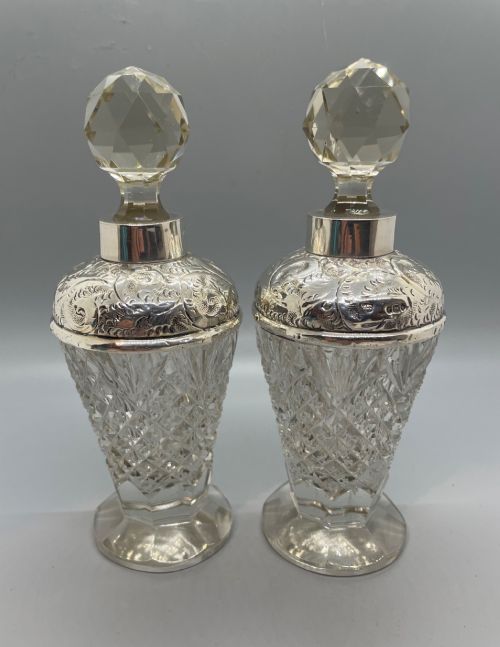
Victorian and Edwardian iterations frequently feature cut glass bodies secured with sterling silver collars or hinged lids. The stopper itself remains an integral sculptural element designed to seal the contents securely.
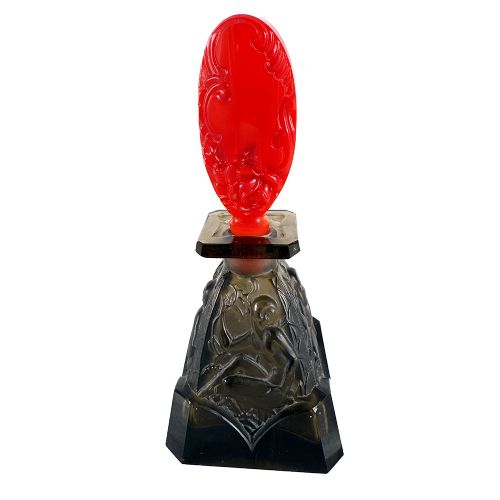
Art Deco examples introduce geometric moulding, vibrant blue glass and enamel decoration from makers working in Czechoslovakia and France. Chinese snuff bottles add hand-painted interior details to the range of portable glass containers.
Materials and construction
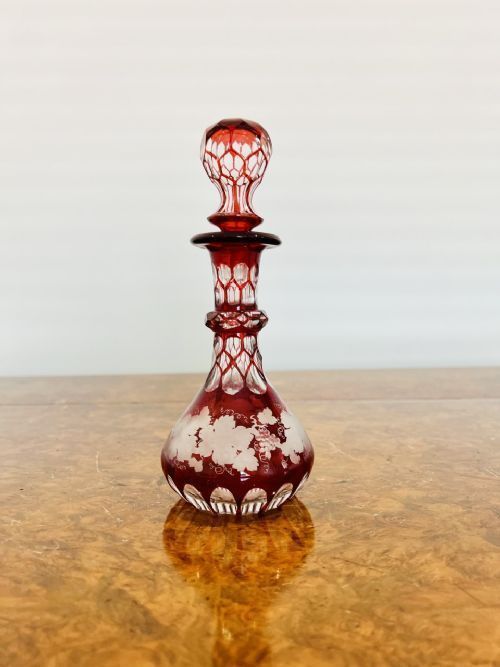
Makers utilised clear cut glass, frosted glass, ruby glass and opalescent glass to form the main body of each scent bottle. These glass bodies were often formed through moulding or heavy cutting techniques.
Sterling silver mounts and collars provide structural framing for many English examples, occasionally paired with colourful enamel work. Stoppers were individually ground to fit the neck of each specific bottle.
Assessing quality and execution
Quality rests in the crispness of the glass cutting, the weight of the material and the precision of the stopper fit. Superior examples demonstrate harmonious proportions between the glass body and any metal mounts.
Signed works by established designers carry distinct aesthetic marks through complex mouldings and careful surface finishing. The inclusion of intricate interior painting or vibrant enamel detailing elevates the execution of individual pieces.
Karl Palda·Rene Lalique·Sabino
The Glass Stopper Scent Bottle Glossary
- Opalescent glass
- A translucent glass type that diffuses light with a milky or bluish glow. This effect was heavily utilised in French Art Deco pieces.
- Sterling silver mount
- A fitted collar and cap assembly cast in high-purity silver. These mounts secure the stopper and provide a surface for hallmarks.
- Cranberry overlay
- A double-layered glass technique featuring a clear or contrasting inner core beneath a rich red outer stratum. Cutting through the outer layer reveals the contrasting colour underneath.
- Cut glass
- Glassware shaped and patterned by abrasive wheel grinding and polishing. This process creates deep facets that catch and refract light across the bottle surface.
Glass Stopper Scent Bottle: Frequently Asked Questions
How do I date a scent bottle?
Dating relies heavily on stylistic markers such as Victorian silver hallmarks, Edwardian cut glass patterns, and geometric Art Deco moulding.
Material choices like opalescent glass and specific maker signatures also help narrow the production era.
Are stoppers original to the bottles?
Most antique scent bottles retain their matching ground-glass stoppers, which were individually fitted to the neck during production.
Checking the fit and wear patterns helps determine if the stopper belongs to that specific piece.
How were these bottles used?
These vessels held liquid perfumes and spirits for personal grooming and travel during the nineteenth and early twentieth centuries.
The secure stopper prevented evaporation of volatile fragrance oils.
What is the difference between French and English pieces?
English scent bottles frequently emphasise heavy cut glass combined with sterling silver collars and hinged caps.
French production from the same periods often showcases moulded opalescent glass and artistic figural stoppers.