

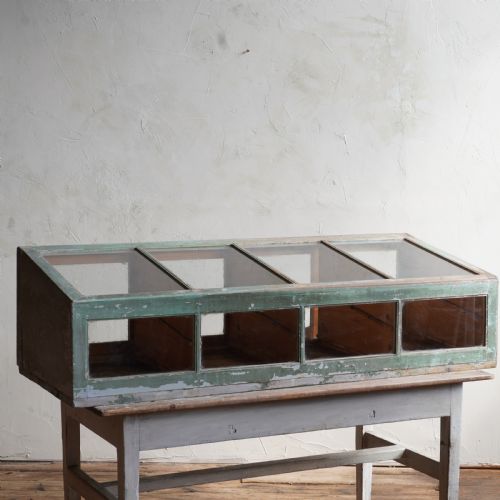
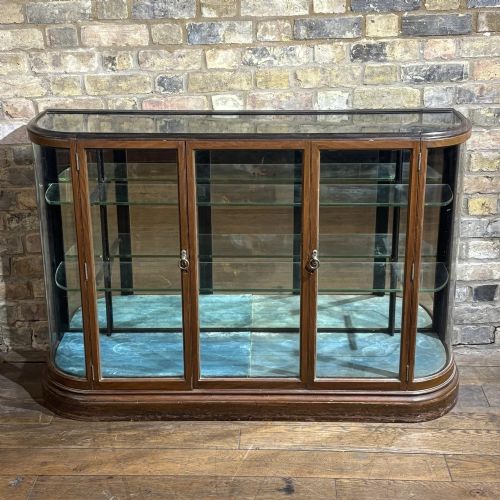


Glass Shop Counter Vitrine
A glass shop counter vitrine puts merchandise on full display while keeping it secure on top of a retail counter.
Glass Shop Counter Vitrine
A glass shop counter vitrine is a functional retail fixture designed to sit atop a counter or serve as the counter itself, showcasing goods behind glazed panels. When you search for a glass shop counter vitrine, you encounter pieces originating from the nineteenth century through to the Art Deco period.
The versions most commonly found here include mahogany and oak countertop cabinets, alongside larger commercial display counters. These pieces span Victorian, Edwardian, and 1920s commercial styles, reflecting their original use in retail environments.
Makers such as F. Sage & Co. and E. Pollard & Co. Ltd. produced robust display cabinetry for merchants. The physical forms vary from small tabletops to pentagonal counters and bow-fronted cases.
Materials and construction
Makers built these vitrines using sturdy timbers such as mahogany and oak, often combining them with ebonised wood or brass framing. The extensive glazing allowed maximum light into the interior chamber to illuminate the merchandise.
Internal surfaces frequently lined with velvet provided a contrasting backdrop for delicate goods. Mirror panels were occasionally integrated into the backing to enhance the illusion of depth and brightness within the display case.
Glass Shop Counter Vitrine Retail Price Guide 2026
Typical asking prices for glass shop counter vitrine among the pieces listed under this phrase on Sellingantiques today, from the lower quarter to the upper quarter. They describe what is for sale here now, not the wider market.
Chocolate branding endures on a few surviving cabinets, reminding us that early twentieth-century sweet shops knew how to tempt buyers.
Quality and craftsmanship
The distinction between standard commercial utility and finer quality lies in the subtlety of the timber framing and the sophistication of the joinery. Cabinets bearing maker signatures from established shopfitters generally demonstrate superior structural execution.
The integrity of the original glazing, the precision of the door mechanisms, and the refinement of brass hardware set the finer examples apart from utilitarian boxes.
F. Sage & Co.·John Stow Ltd of Bradford·Terry s of York·Quincy Showcase Works Illinois·E. Pollard & Co. Ltd.
The Glass Shop Counter Vitrine Glossary
- Vitrine
- A glass-fronted cabinet or case used for displaying fine goods or collections. It relies primarily on transparent panels to let light reach the objects inside.
- Ebonised
- Wood treated with a dark stain or finish to imitate ebony. This dark surface creates a sharp contrast against bright glass and metal.
- Bow end
- A cabinet design featuring a curved end or front panel. This shape softened the rigid geometry typically found in standard retail interiors.
- Pentagonal
- A geometric form possessing five sides and five angles. In display counters, this shape allowed the cabinet to wrap around a shop floor corner.
Glass Shop Counter Vitrine: Frequently Asked Questions
What were glass shop counter vitrines used for?
Merchants used these cabinets to display high-value items, confectionery, and pharmaceutical goods directly to customers standing at the counter. The glass kept delicate stock clean while maintaining clear visibility during transactions.
Cabinet tops often doubled as an immediate service space, placing wares right under the buyer's eye line while keeping them protected under lock and key.
How do I date a glass shop counter vitrine?
Dating relies on timber choices, construction methods, and stylistic cues such as Edwardian proportions or Art Deco geometric lines. Maker plaques and trade labels provide the most reliable chronological markers.
Later commercial pieces from the 1920s often show more standardised industrial hardware compared to handmade late nineteenth-century examples.
Can I use a shop vitrine at home?
These cabinets adapt readily to domestic interiors for displaying ceramics, books, or personal collections. Their countertop and table top proportions suit living rooms and studies.
Placing them on existing furniture allows you to utilise the historic glazing to protect small artefacts from dust in a modern home.
How do I care for the wood and glass?
Maintaining these pieces involves regular dusting of the timber and careful cleaning of the glass panels using non-abrasive solutions. Avoid harsh chemical sprays that might damage antique polishes or painted finishes.
Keeping the vitrine away from direct sunlight protects velvet linings from fading and prevents timber from drying out.