



Glass Oil and Vinegar Cruet
A glass oil and vinegar cruet brings tactile weight and functional elegance to the dining table, pairing clear vessels with precious metal mounts.
Glass Oil and Vinegar Cruet
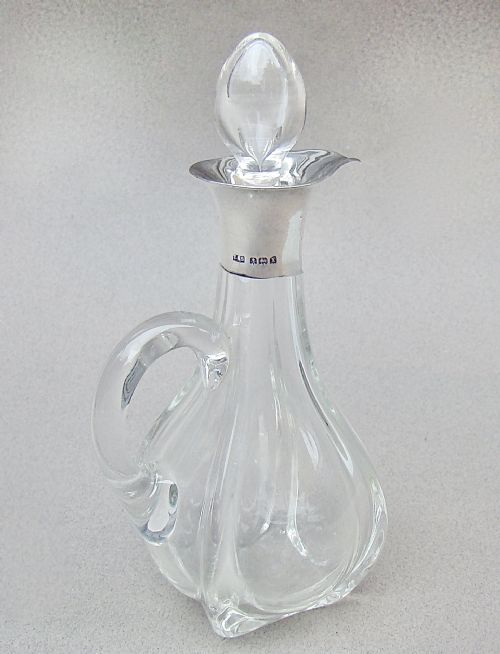
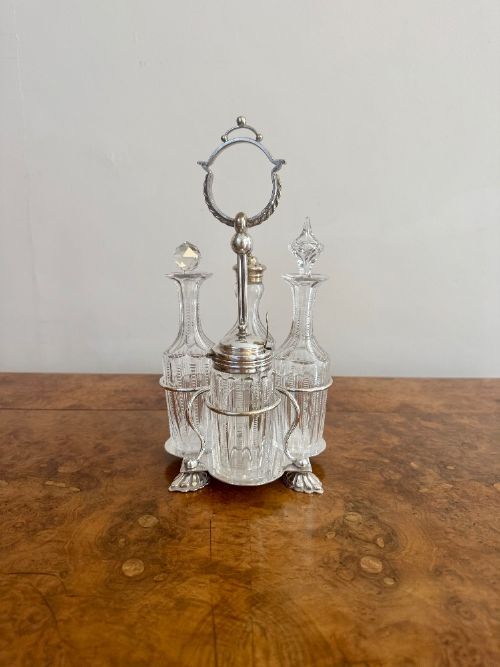
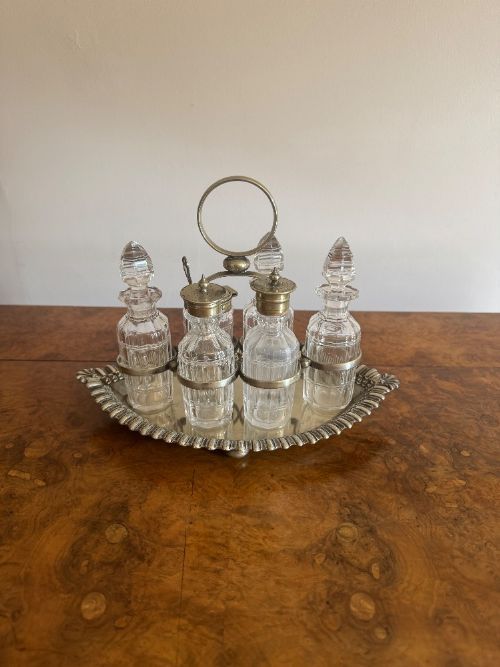
When you search for a glass oil and vinegar cruet, you encounter a specialised table accessory designed to hold and dispense condiments neatly during meals. These pieces appear as individual paired bottles or as part of larger stands containing multiple condiment vessels.
The most common versions on this page date from the Edwardian and Victorian eras, alongside Georgian examples and Art Deco designs. They combine glass bottles with metal stands or mounts, ranging from simple pairs to elaborate multi-bottle frames.
Makers utilised various frameworks, including mahogany and ebonised wood stands alongside silver plate and sterling silver frames. The glass itself ranges from plain blown vessels to heavy hand-cut lead crystal.
Materials and construction
Silversmiths and manufacturers shaped sterling silver and silver plate into intricate stands and bottle mounts, often incorporating handles and supportive rings. Ebonised wood and mahogany served as alternative base materials for stands, particularly during the Georgian period.
Glassmakers formed the cruet bottles using lead crystal and standard glass, applying techniques such as hand cutting to create faceted surfaces that catch the light. Silver collars and stoppers were then fitted to the glass bodies to complete the dispensing mechanism.
Glass Oil and Vinegar Cruet Retail Price Guide 2026
Typical asking prices for glass oil and vinegar cruet among the pieces listed under this phrase on Sellingantiques today, from the lower quarter to the upper quarter. They describe what is for sale here now, not the wider market.
Victorian novelty cruet sets sometimes took playful figural shapes, allowing diners to pass oil and vinegar dispensed from miniature animals or whimsical characters.
Distinctions in quality
Quality rests upon the depth and precision of the cut glass facets and the substantial weight of the metal mounts. Heavier lead crystal and thick sterling silver or robust silver plate indicate superior manufacture.
The integrity of the ensemble also dictates standing, where matched bottles original to their stand elevate the piece above marriage sets assembled later. Finer silversmith work shows crisp hallmarks and balanced framing.
Mappin Brothers·Walker & Hall·Charles Thomas Fox·Elkington & Co·Hester Bateman·Wade Wingfield Wilkins·William Hutton & Sons
The Glass Oil and Vinegar Cruet Glossary
- Cruet set
- A matched collection of bottles or jars for holding condiments like oil, vinegar, salt, and pepper, typically housed in a dedicated stand. These sets formed an essential part of formal dining arrangements from the Georgian period onward.
- Cut glass
- Glass decorated by grinding facets or patterns into the surface using a wheel. This technique adds considerable weight and sparkle to cruet bottles.
- Silver plate
- A base metal, often copper or Britannia metal, coated with a thin layer of silver. This process provided the visual appeal of solid silver at a more accessible cost for Victorian and Edwardian households.
- Sterling silver
- An alloy consisting of 92.5 percent silver and 7.5 percent other metals, usually copper. Hallmarks stamped into the metal verify its standard and origin.
- Ebonised wood
- Timber treated with a finish to imitate ebony. It provides a dark, contrasting frame for silver mounts and glass bottles.
Glass Oil and Vinegar Cruet: Frequently Asked Questions
How were cruet sets used?
Cruet sets sat at the centre of the dining table to allow guests to season their food individually during a meal.
Oil and vinegar bottles held dressing ingredients, while smaller jars accommodated mustard, pepper, and salt.
How do I clean antique glass?
Wash the glass bottles gently in warm soapy water using a soft bottle brush to remove internal residue.
Avoid harsh abrasives and submerging wooden stands or cemented silver mounts in water.
Are the stoppers original?
Original stoppers fit snugly into their specific bottle necks and often share matching cut patterns or silver mounts with the vessel.
Replacements frequently show slight variations in glass tint, wear patterns, or fitting.
How do I date a cruet set?
Silver mounts and stands usually bear hallmarks that reveal the exact year and city of assay.
Stylistic cues, such as Art Deco geometric lines or Victorian ornamentation, help date unmarked plated pieces.