





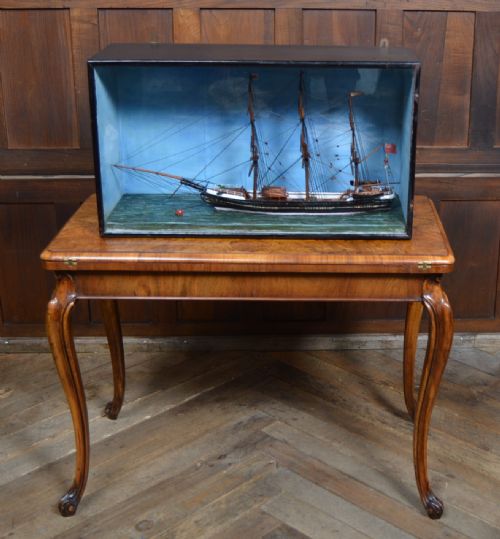


Glass Model Ship
A glass model ship brings tactile maritime heritage indoors, capturing miniature rigging and hull work sealed tight against time.
Glass Model Ship
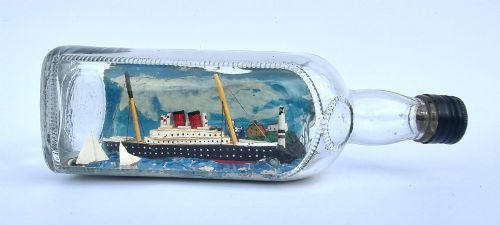
A glass model ship encompasses intricate maritime dioramas housed within transparent vessels or glass cases, capturing the charm of traditional coastal craft. When exploring a glass model ship, buyers encounter handcrafted vessels ranging from single-masted sailing ships to racing vessels and steamships.
The objects seen here largely originate from the nineteenth and early twentieth centuries, spanning periods such as 1860, 1900, 1920, and 1930. English and Welsh makers dominate the available selection, often presenting folk art interpretations mounted on wooden plinths or displayed in shadow box formats.
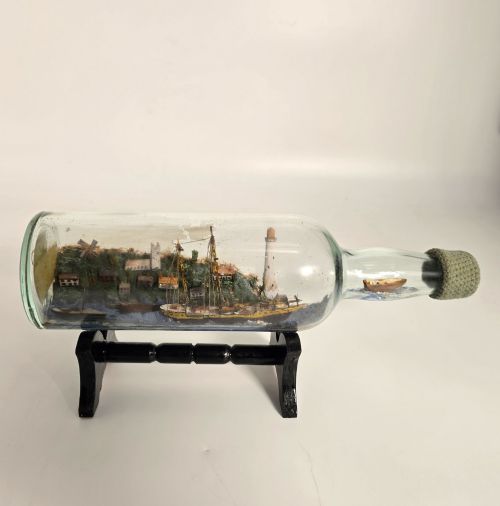
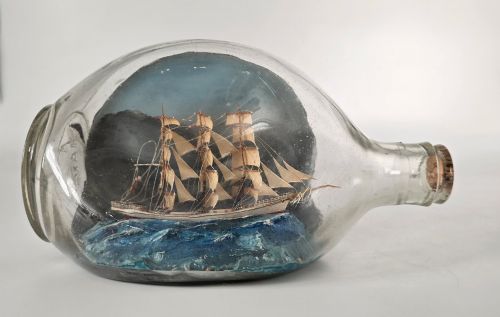
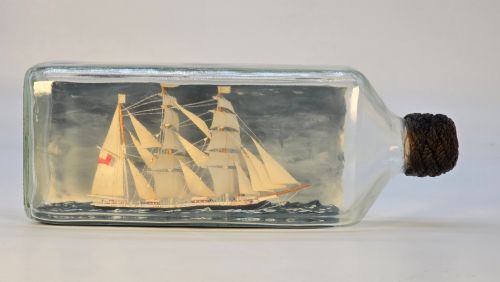
Forms vary from classic ships contained entirely within bottles to detailed cased scale models and multi-vessel dioramas. Each piece reflects distinct nautical folk art traditions, utilising the confines of glass to preserve elaborate maritime scenes.
Materials and construction
Construction relies upon a resourceful combination of glass, wood, paint, thread, putty, plaster, cork, and rope. Makers shaped wooden hulls to fit through narrow bottle necks before raising masts and rigging with fine thread inside.
Putty, plaster, and cork provided the foundation for sculpted sea foam and stabilizing bases, while paint added realistic detail to hulls and sails. Maritime dioramas within shadow boxes utilised similar mixed media to build three-dimensional coastal and ocean settings.
Glass Model Ship Retail Price Guide 2026
Typical asking prices for glass model ship among the pieces listed under this phrase on Sellingantiques today, from the lower quarter to the upper quarter. They describe what is for sale here now, not the wider market.
Listings feature works spanning the nineteenth century through to 1930, utilising glass, wood, paint, thread, putty, plaster, cork, and rope.
Assessing craftsmanship
Quality reveals itself in the fineness of the rigging and the proportion of the vessel relative to its glass enclosure. Superior examples demonstrate remarkable patience in folding and erecting masts, sails, and deck fittings within severe spatial limits.
The complexity of the surrounding scene also distinguishes finer pieces, such as multi-vessel racing scenarios or named vessels like Sunray and The Hippolyta. Original wooden plinths, intact shadow box framing, and well-preserved painted backgrounds elevate the overall presence of the work.
The Glass Model Ship Glossary
- Ship in a bottle
- A miniature nautical model assembled inside a glass bottle with folding masts designed to be raised by pull-threads. This form represents the quintessential challenge of maritime folk art.
- Maritime diorama
- A three-dimensional scenic representation of ships at sea or in coastal waters. These displays often incorporate painted backdrops and sculpted plaster waves.
- Shadow box diorama
- A deep framed display case enclosing a model ship and its dimensional sea setting under glass. This format protects the delicate components while offering wide viewing angles.
- Scale model
- A physical representation of a ship built accurately to a proportional measurement. Cased versions protect the meticulous rigging and deck details from dust and damage.
- Maritime folk art
- Decorative and utilitarian objects created by self-taught makers inspired by seafaring life. These pieces prioritize expressive character and resourcefulness over strict naval architecture.
Glass Model Ship: Frequently Asked Questions
How did they fit ships inside bottles?
Makers constructed hulls small enough to pass through the neck, attaching masts and rigging with hinges and long threads. Once inside, the builder pulled the strings to raise the masts into an upright position.
Additional elements like sea spray and cork foundations were guided into place using specialised long-handled tools and secured with adhesives.
Are these models English in origin?
The available evidence points to English and Welsh workshops creating these maritime pieces during the nineteenth and early twentieth centuries. Folk art traditions varied slightly by region and maker.
Named vessels and specific dates, such as the diorama dated 1922, help pinpoint individual pieces within this British heritage.
What is the difference between a bottle and a cased diorama?
A bottle confinement restricts the viewing angle and requires miniature engineering with folding rigging. Cased dioramas offer broader panoramic views of multiple vessels or racing scenes.
Both forms protect the fragile components from environmental wear, though shadow boxes provide more interior space for sculpted plaster waves.
How should I display a glass model ship?
Place these pieces on stable surfaces away from direct sunlight and dramatic temperature fluctuations to protect the glass, paint, and thread rigging. Wooden plinths and shadow boxes provide built-in support for safe placement.
Avoid handling the internal components, as the materials often rely on historical adhesives that benefit from minimal disturbance.