

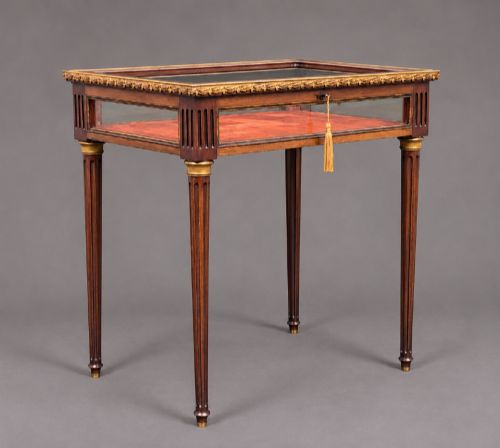


Glass Jewelry Showcase
Glass jewellery showcase pieces turn small treasures into focal points, bringing Victorian and Edwardian mercantile elegance directly into a modern interior.
Glass Jewelry Showcase
A glass jewellery showcase encompasses countertop cabinets, standing display tables, and glazed vitrines designed originally for merchants and private collectors. When searching for a glass jewellery showcase, buyers encounter diverse forms ranging from modest countertop boxes to elaborate freestanding tables.
The selection on this page draws primarily from the Victorian, Edwardian, and Art Deco eras, alongside French revival styles. Pieces span from the late nineteenth century into the nineteen-thirties, reflecting both commercial shop fittings and domestic display furniture.
Common formats include mahogany bijouterie tables with glazed tops, satinwood kidney-shaped cabinets, and brass-framed countertop cases lined in fabric. These items were built to protect precious objects while offering maximum visibility from every angle.
Materials and construction methods
Makers utilised dense timbers such as mahogany, walnut, rosewood, and satinwood, frequently applying decorative veneers and crossbanding. Brass framing and ormolu mounts provide structural rigidity and ornamental contrast to the glazed panels.
Interiors typically feature original linings of velvet, satin, or other fabrics designed to cushion delicate items. Cabinet joints and glass enclosures were engineered to withstand commercial use or refined domestic handling.
Glass Jewelry Showcase Retail Price Guide 2026
Typical asking prices for glass jewelry showcase among the pieces listed under this phrase on Sellingantiques today, from the lower quarter to the upper quarter. They describe what is for sale here now, not the wider market.
Listings feature pieces spanning from the eighteen-eighties through the nineteen-thirties, covering Victorian, Edwardian, and Art Deco design periods.
Distinctions in craftsmanship
Quality rests in the precision of the timber joinery, the clarity and thickness of the bevelled glass panes, and the integrity of internal fabric linings. Superior examples integrate subtle inlay work, painted floral decoration, or cast brass hardware that remains tight and aligned.
The sophistication of the silhouette defines the upper tier, from kidney-shaped tables to pentagonal counters and finely proportioned French revival vitrines. Lesser pieces exhibit simpler commercial utility without the refined secondary timbers or decorative marquetry found on high-end salon furniture.
Quincy Showcase Works Illinois
The Glass Jewelry Showcase Glossary
- Bijouterie table
- A glass-topped display table intended for holding small ornaments, medals, and jewellery. These pieces usually feature a hinged glazed lid above a fabric-lined well.
- Vitrine
- An enclosed glass cabinet or showcase designed to display porcelain, silver, and precious artefacts. The term derives from the French word for glass.
- Crossbanding
- A decorative border technique where veneer strips are laid perpendicularly to the grain of the primary wood surface. This adds a refined frame around table tops and cabinet drawers.
- Ormolu
- Gilded bronze ornamentation applied to furniture, popular in French nineteenth-century design. The technique involves mercury gilding cast metal components.
- Kidney shape
- A curved, asymmetrical furniture profile resembling a kidney bean. This form appears frequently in Edwardian bijouterie tables designed for domestic drawing rooms.
Glass Jewelry Showcase: Frequently Asked Questions
What were glass jewellery showcase pieces originally used for?
Merchants used these glazed cabinets and tables on shop counters to display rings, watches, and precious trinkets safely to customers. Wealthy households also adopted them in drawing rooms to exhibit personal collections of small valuables.
Over time, the distinction between commercial shop fittings and domestic display furniture blurred, leading to the sophisticated decorative tables seen today.
How do I date a glass jewellery showcase?
Dating relies on combining the timber species, decorative style, and hardware construction methods visible in the piece. Victorian examples often feature heavy walnut or rosewood with robust brass locks, while Edwardian pieces frequently showcase lighter mahogany and satinwood with delicate painted details.
Art Deco variants introduce ebonised finishes and geometric forms characteristic of the nineteen-twenties and thirties.
How should I clean the fabric interior?
Original velvet or satin linings require gentle care, typically limited to careful surface dusting with a soft brush or low-suction vacuum attachment. Moisture can damage old adhesives and delicate textiles beneath the display surface.
Professional textile conservators should handle deep cleaning if staining or heavy degradation occurs over decades of use.
Can these cases support heavy items?
Countertop and table displays were engineered primarily for lightweight articles like jewellery, medals, and pocket watches rather than heavy porcelain or silver. Placing excessive weight on glazed top panels risks cracking the glass or straining the wooden framework.
Heavier collections are better suited to sturdy base shelves rather than elevated glazed display surfaces.