




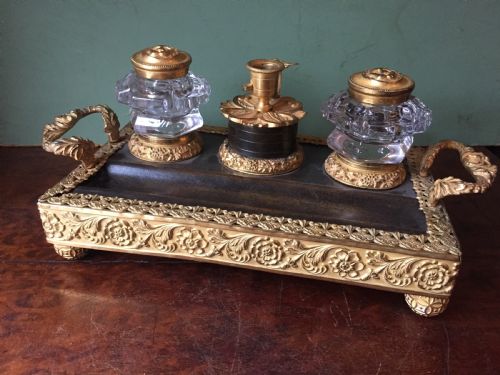
Glass Inkwell Brass Mount
These glass inkwell brass mount pieces combine heavy desktop utility with decorative metalwork.
Glass Inkwell Brass Mount
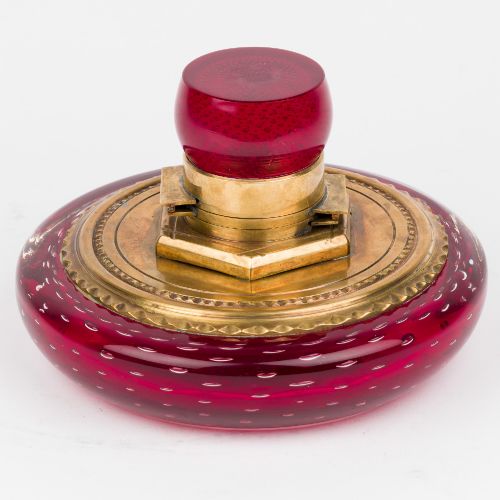
A glass inkwell brass mount is a desk accessory designed for writing desks, combining a glass vessel for ink with brass mounts, frames, or hinged lids. Buyers searching for this phrase seek functional writing equipment from past centuries that also served as ornaments for the study.
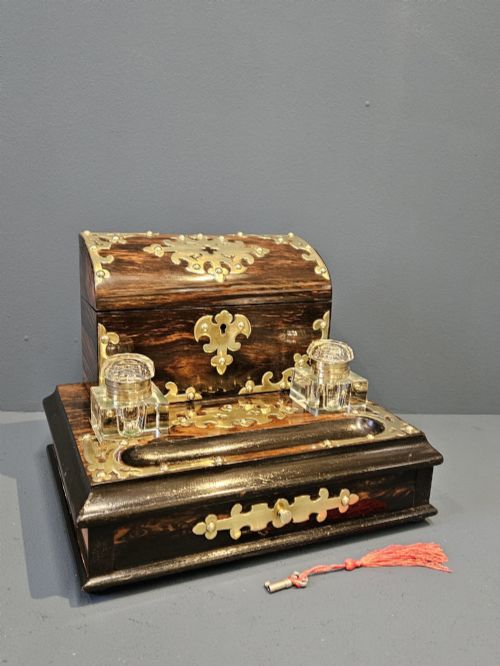
The versions most likely encountered on this page date from the nineteenth century, including Victorian and Napoleon III examples. They range from simple single inkwells to elaborate desk stands incorporating materials like coromandel, walnut, and tortoiseshell alongside the core glass and brass elements.
How they were made
Makers combined glass bodies with cast or sheet brass mounts, often securing the metalwork directly to wooden bases formed from oak, walnut, or coromandel. Cut glass and iridescent techniques appeared in the glass reservoirs, while ormolu and tortoiseshell provided additional decorative surfaces.
Construction involved precise metal fitting around delicate glass edges, requiring secure hinges for lids and tight collars to prevent leaks. Wood stands were frequently inlaid with brass or detailed with materials like mother of pearl and bone.
Listings feature items spanning the eighteenth and nineteenth centuries, utilising brass, glass, oak, walnut, cut glass, ormolu, coromandel, and tortoiseshell.
What varies in quality
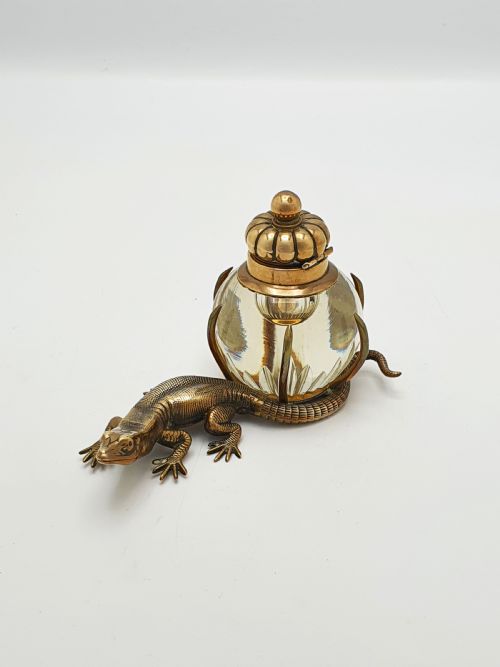
Quality rests on the weight and crispness of the brass casting, the clarity and cut of the glass, and the integration of the materials within the desk stand. Superior examples show meticulous detail in the mountings, such as figural lizard motifs or French Empire ormolu work.
The choice of secondary materials also elevates a piece, distinguishing standard wooden bases from those utilising exotic woods like coromandel or elaborate tortoiseshell and brass inlay. The overall cohesion of the desk accessory dictates the upper tier of the range.
The Glass Inkwell Brass Mount Glossary
- Ormolu
- Gilded bronze or brass applied to decorative objects and furniture mounts. It provides a bright golden finish that resists tarnish.
- Coromandel
- A dense, dark cabinet wood with contrasting light brown streaks, highly prized for nineteenth-century luxury boxes and desk stands.
- Tortoiseshell
- The mottled brown and amber shell material of certain turtles, used for decorative inlay and veneering on fine desk accessories.
- Inkstand
- A tray or stand holding one or more inkwells, sanders, and pen holders for a writing desk.
Glass Inkwell Brass Mount: Frequently Asked Questions
What is a glass inkwell brass mount?
It is a desk accessory featuring a glass ink reservoir secured or decorated with brass metalwork. These pieces were standard writing desk equipment in past centuries.
They often appear mounted into wooden desk stands alongside space for pens and stamps. The brass elements served to protect the glass edges and provide decorative contrast.
How were these inkwells used?
They sat on writing desks to hold liquid ink for dip pens during the eighteenth and nineteenth centuries. The hinged brass lids kept the ink from drying out too quickly.
Larger desk stands held multiple inkwells for different coloured inks or sealing wax. They formed an essential part of daily correspondence before the invention of the fountain pen.
What materials accompany the glass and brass?
Many examples incorporate wooden bases made from oak, walnut, or exotic coromandel. Some pieces feature tortoiseshell, mother of pearl, and bone inlay.
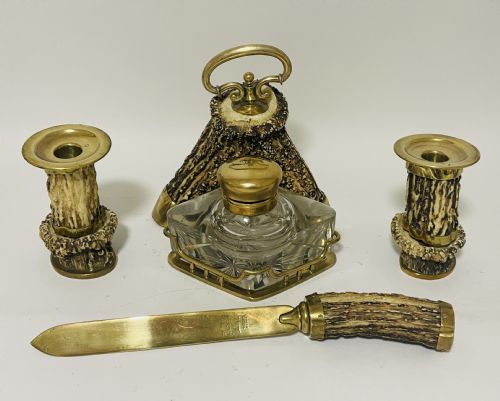
More ornate versions utilise gilded brass or ormolu mounts, and occasionally antler or specialised cut glass. These varied materials reflect the status of the original desk.
How do I date a brass mounted inkwell?
Dating relies on the prevailing style of the brass mounts, the wood used for the base, and manufacturing techniques visible in the glass. Victorian and nineteenth-century pieces often show heavier brass casting and specific stylistic revivals.
Earlier eighteenth-century examples display different construction methods and simpler lines. Examining the hinges and interior components helps confirm the period.