


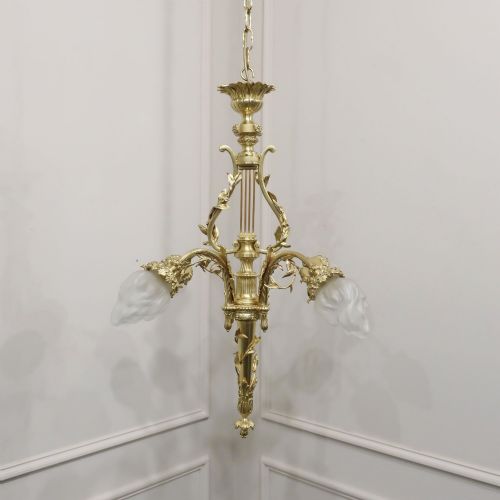
Glass Hanging Pendant
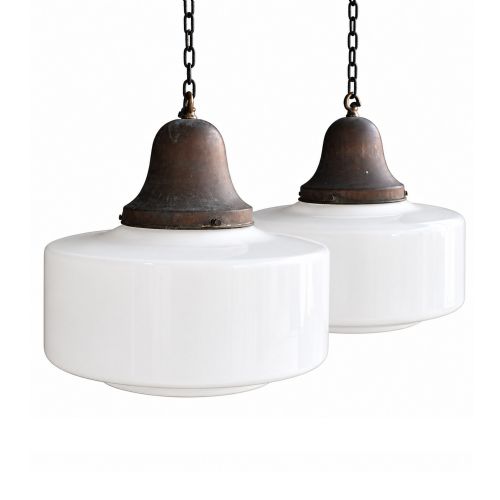
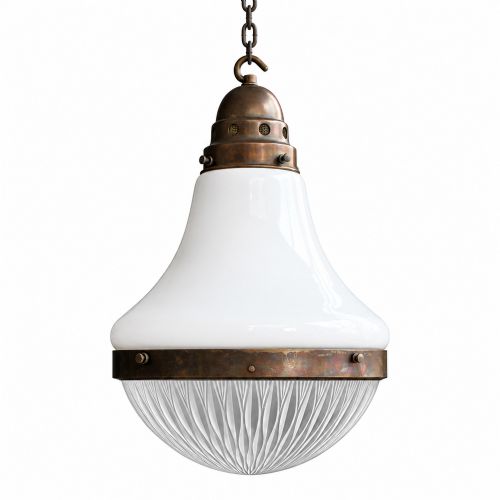
These glass hanging pendant fixtures bring a focused, period illumination to halls and rooms.
Glass Hanging Pendant
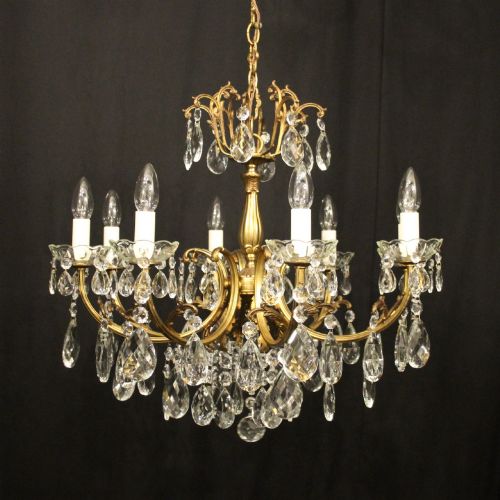
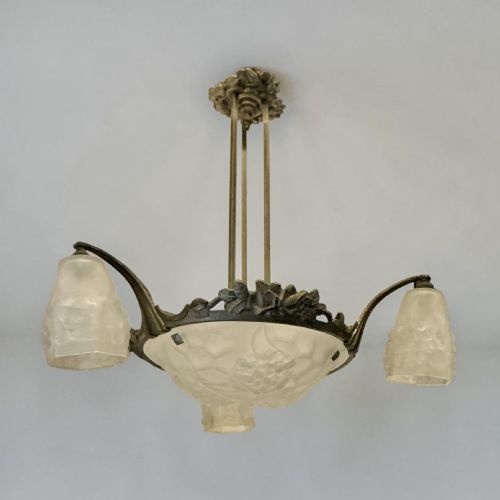
A glass hanging pendant suspended from a ceiling delivers overhead illumination through various historic styles ranging from Victorian and Edwardian to Art Deco. Buyers seeking a glass hanging pendant will find fixtures spanning the nineteenth and twentieth centuries, often originating from French and English workshops.
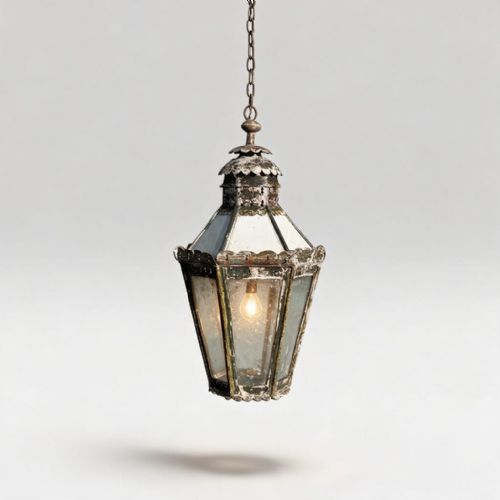
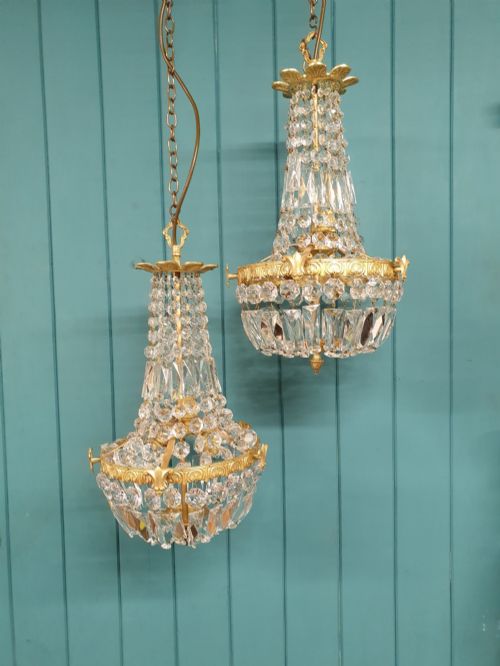
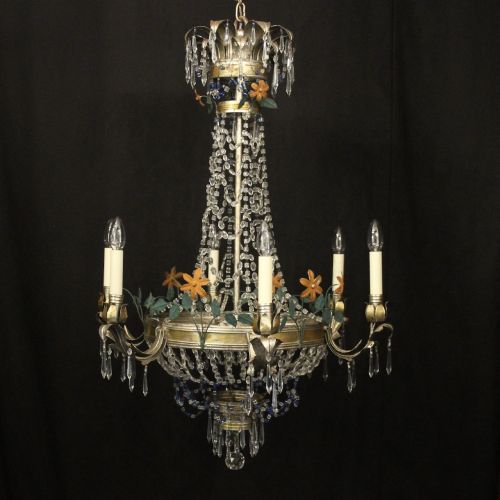
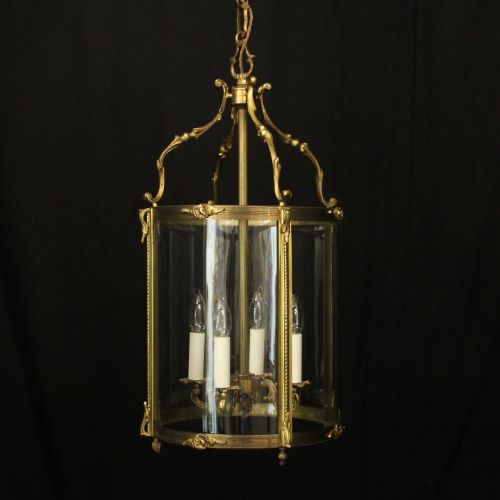
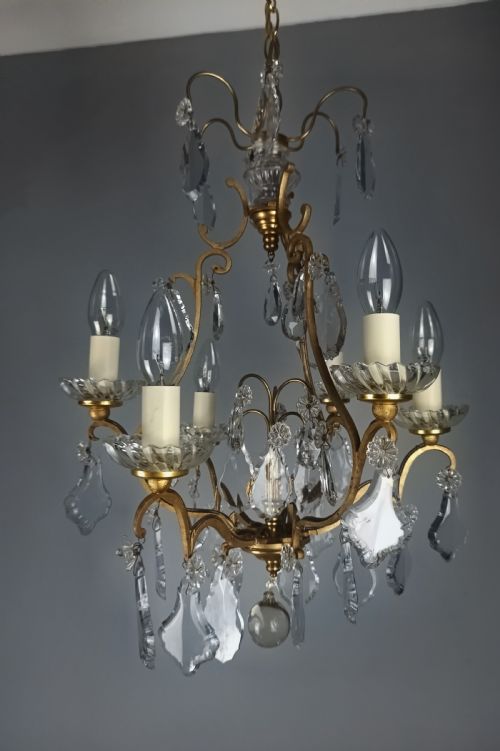
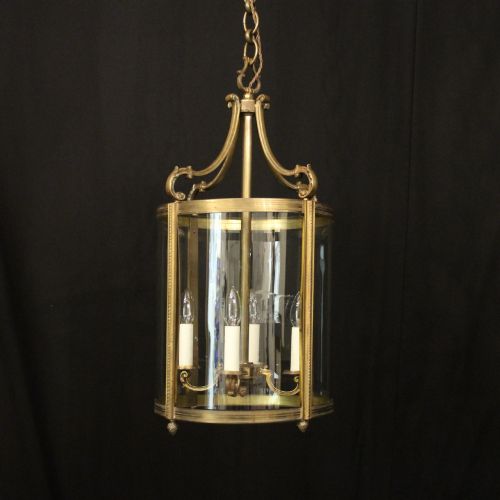
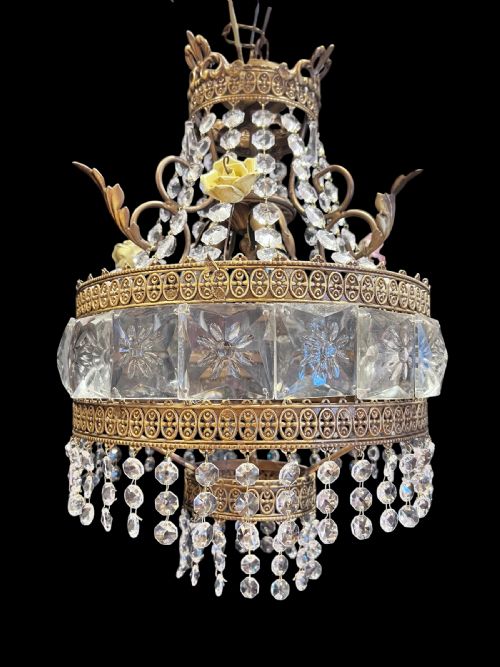
The forms vary from simple opaline glass globes to ornate brass-framed lanterns and multi-light chandeliers decorated with crystal lustres. French gilded bronze and polished brass mounts frequently house cut glass, leaded panels, or moulded shades.
Examples on this page draw upon aesthetic movements such as Arts and Crafts, Gothic Revival, and Neoclassical design. The selection includes single-light drops, flush plafonniers, and substantial hall lanterns designed for entryways.
How They Were Made
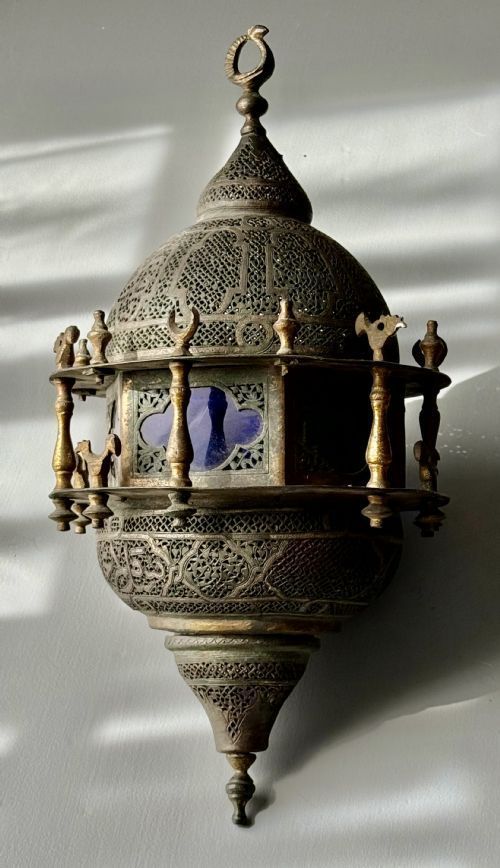
Metal frames utilise brass, copper, and cast or gilded bronze to support individual panes of glass or enclosed globes. Metalworkers shaped these mounts through casting, piercing, and soldering.
Glass components combine blown opaline, milk glass, and Vaseline glass with heavy cut crystal and leaded panels. Artisans also employed etching, bevelling, and moulding techniques to diffuse light and pattern the glass surfaces.
French hall lanterns frequently incorporate convex glass panels and multiple interior light fittings.
What Varies in Quality
The refinement of the metal casting and the thickness of the glass distinguish finer examples from standard production. Heavier gauge brass and finely chased gilt bronze or ormolu provide structural integrity and sharper decorative detail.
Hand-cut crystal, deeply etched patterns, and specialised glass formulations such as colour-changing Vaseline or opalescent shades elevate a piece's finish. Original patination on the metalwork and intact lead or copper cames also separate superior examples.
Émile-Jacques Ruhlmann
The Glass Hanging Pendant Glossary
- Plafonnier
- A ceiling-mounted lighting fixture that sits close to the surface rather than dropping on a long chain. These often feature bowl-shaped glass shades.
- Opaline glass
- A type of semi-translucent glass developed in the nineteenth century that diffuses light softly. It appears in white and various pastel tones.
- Ormolu
- Finely ground high-carat gold applied to bronze metalwork through a mercury amalgamation process. This finish creates a rich, warm golden lustre.
- Lead glass
- Glass containing lead oxide to increase brilliance, weight, and clarity. It allows for deep, sharp cutting by artisans.
- Lustre
- A cut crystal pendant or drop suspended from a chandelier to reflect and multiply light. These are typically faceted and hung with small brass pins.
Glass Hanging Pendant: Frequently Asked Questions
How do I choose the right size pendant for my hallway?
Consider the ceiling height and the floor area of the space before selecting a lantern or globe pendant. Larger rooms and taller ceilings naturally accommodate monumental brass or bronze fixtures without overwhelming the proportions.
Compact halls benefit from single-light opaline globes or flush plafonniers that maintain adequate clearance underneath. Ensure the drop length leaves sufficient headroom for passing beneath safely.
Can these historic pendants be rewired for modern electrical systems?
Most antique lighting fixtures accept modern wiring while retaining their original brass, bronze, or copper frames and sockets. Professional electricians can adapt the internal components to meet current safety standards without altering the external appearance.
Retaining the original canopy and chain preserves the historic integrity of the installation. Check the weight of heavier multi-light chandeliers to ensure proper ceiling anchorage.
What is the difference between an opaline and a frosted glass shade?
Opaline glass contains ingredients that create a milky, semi-translucent appearance with a smooth, soft sheen. It diffuses light evenly while hiding the internal bulb completely.
Frosted glass is typically treated on the surface through acid-etching or sandblasting to create a matte, textured finish. This scatters the light to reduce harsh glare.