


Glass Font Paraffin Lamp
A glass font paraffin lamp brings nineteenth-century warmth into a room, combining brass columns with coloured glass reservoirs.
Glass Font Paraffin Lamp
A glass font paraffin lamp is primarily a Victorian domestic lighting piece, combining a metal or ceramic base with a glass reservoir for fuel. These lamps date mostly from the latter half of the nineteenth century into the early twentieth century.
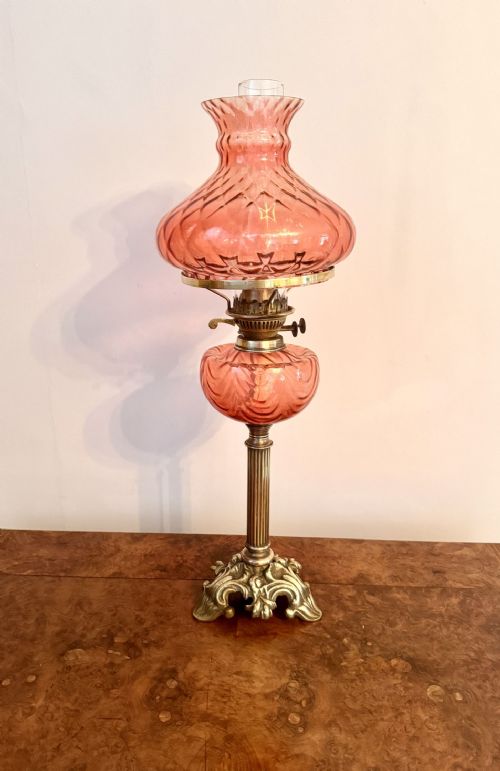
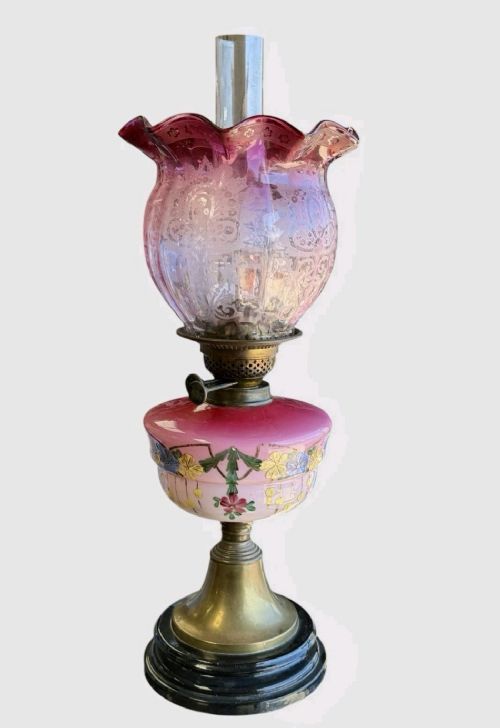
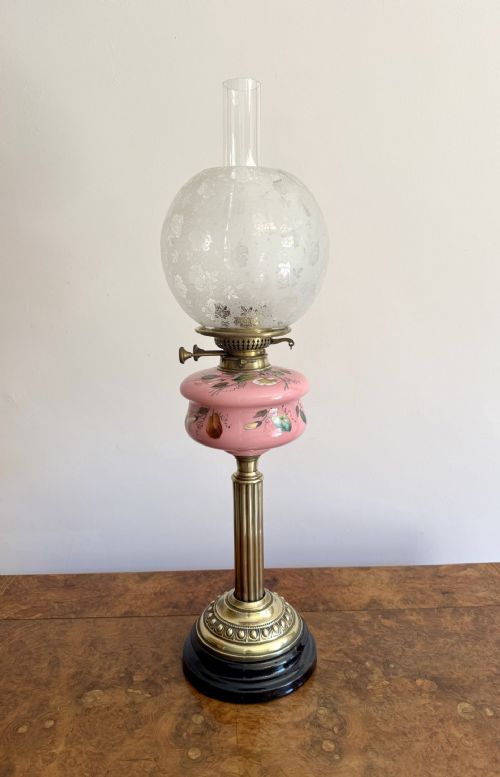
The version you meet most often on this page pairs a polished brass column with a coloured glass font, frequently topped by a matching glass shade. Cranberry glass, pink, blue and green fonts appear regularly across the selection.
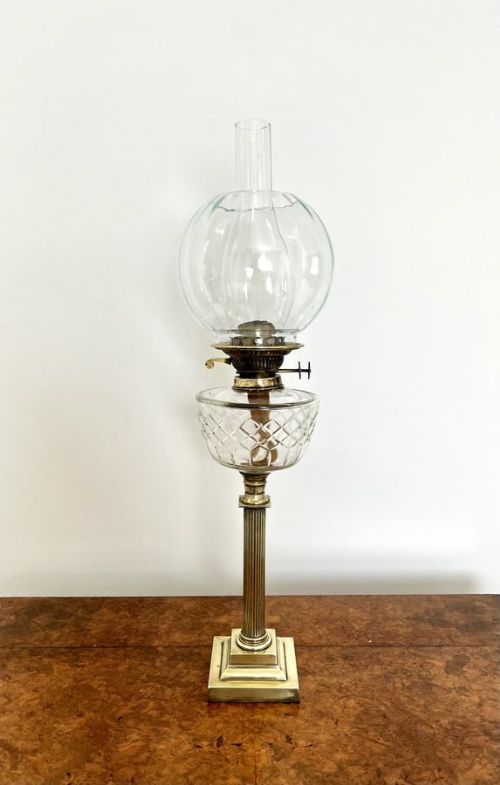
The forms range from simple cottage table lamps to grander telescopic examples and Corinthian column designs. Many specimens integrate hand-painted decoration on the glass or shade.
How they were made
Makers constructed these lamps using brass for the columns and reservoirs, mounted on slate or ceramic bases for stability. Brass components were often cast and turned to create fluted columns and stepped pedestals.
The glass fonts and shades demonstrate various techniques, including mould-blowing, cutting, and hand-painting with enamel colours. Cranberry and milk glass represent the primary coloured media utilised by period manufacturers.
Some lamps were tall enough to double as floor-standing illumination, though most stayed firmly put on parlour tables.
What varies in quality
Quality in a glass font paraffin lamp rests on the weight and crispness of the brass casting, particularly in the detailing of Corinthian capitals and stepped bases. Heavy telescopic mechanisms and substantial cut glass fonts distinguish the finer productions from standard table models.
The depth of colour and precision of hand-painted enamel decoration on the glass font and shade create a distinct hierarchy. Rich cranberry hues and intricate floral motifs separate standard decorative items from superior examples.
The Glass Font Paraffin Lamp Glossary
- Font
- The reservoir that holds the paraffin oil, typically fashioned from glass or ceramic. It sits atop the lamp base and connects directly to the burner.
- Cranberry glass
- A rich red glass created by adding gold chloride to the molten batch. It is a defining material of Victorian lighting.
- Milk glass
- An opaque white glass used for decorative fonts and shades. This material became popular during the nineteenth century for its clean appearance.
- Corinthian column
- A classical architectural style adapted for lamp bases, featuring ornate acanthus leaf capitals. Brass versions of this column are common in the Victorian period.
Glass Font Paraffin Lamp: Frequently Asked Questions
How do I date a paraffin lamp?
Dating relies on the materials, burner mechanisms, and stylistic clues present in the construction. Victorian examples frequently utilise brass columns and coloured glass fonts.
Later pieces extend into the Edwardian era, sometimes showing simpler cottage forms or different proportions. Comparing the base style helps narrow the decade of production.
Are the glass shades original?
Glass shades on these lamps frequently paired with the base during the period, though matching them requires careful observation of colour and mounting fit. Etched and hand-painted shades complement the tone of the glass font below.
Evaluating the wear around the fitter rim helps indicate period authenticity. Many lamps survive with matched cranberry or tinted shades.
Can I use a paraffin lamp today?
These lamps function primarily as decorative interior objects rather than everyday light sources. Many retain their original brass burners, though modern safety standards often keep them unlit.
Placing one on a table introduces period character to a room. They serve as sculptural reminders of nineteenth-century domestic technology.