



Glass Dome Pendant
These glass dome pendant lights bring a clean, curved silhouette and warm diffusion to a ceiling, making them a practical choice for period interiors.
Glass Dome Pendant
A glass dome pendant is a ceiling-hung light fixture featuring a rounded or hemispherical glass shade, most commonly seen in Edwardian and 1920s Art Deco forms. These pieces serve primarily as functional overhead illumination while adding a distinct period focal point to a room.
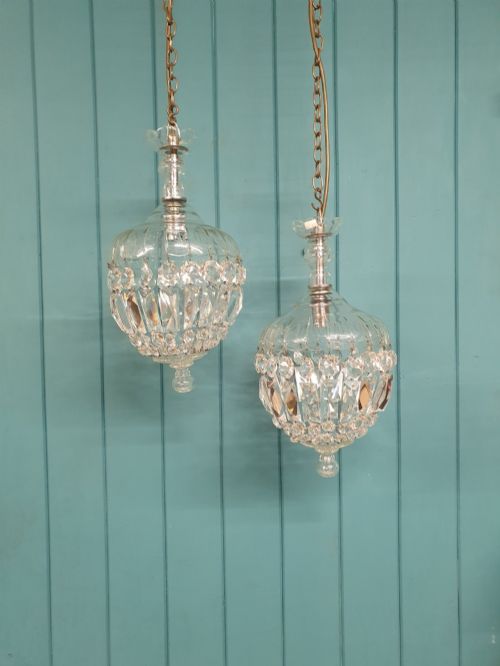
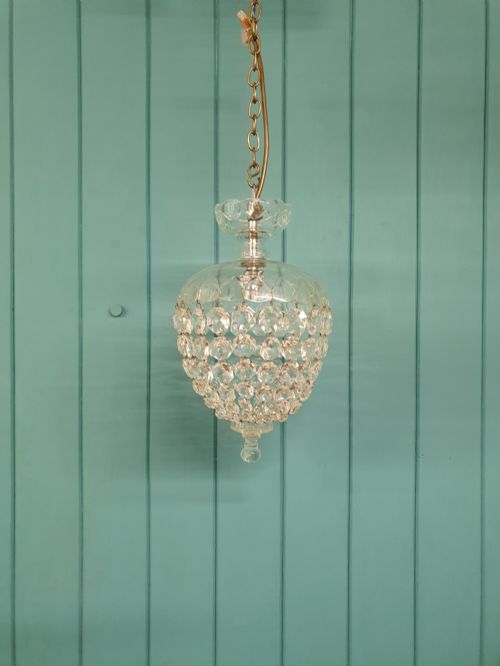
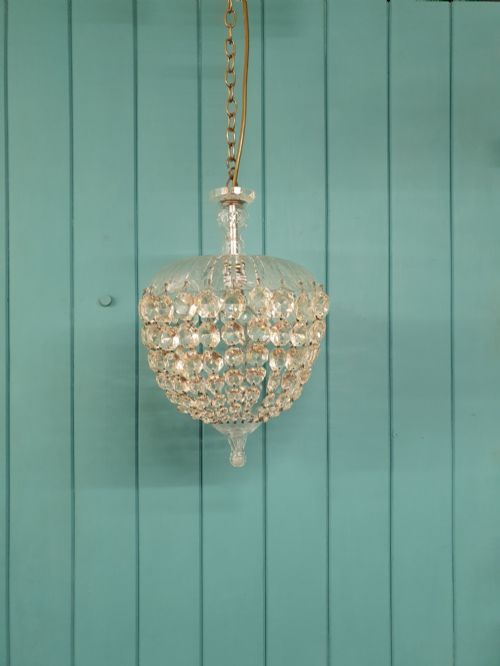
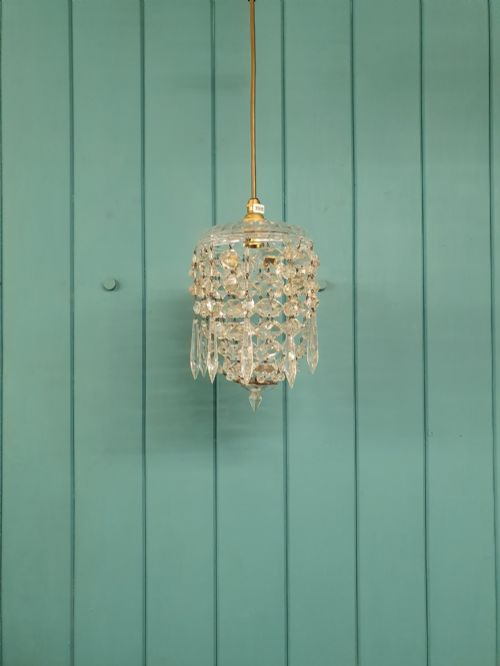
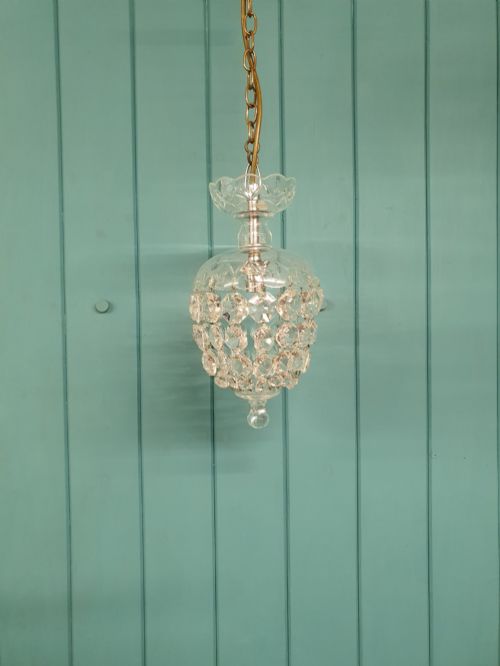
The selection here includes compact Edwardian cut glass crystal chandeliers measuring six inches alongside larger Art Deco copper and brass lanterns and French mid-century downlighters. Buyers frequently encounter the simple dome top chandelier configuration, often paired with brass or copper mounts.
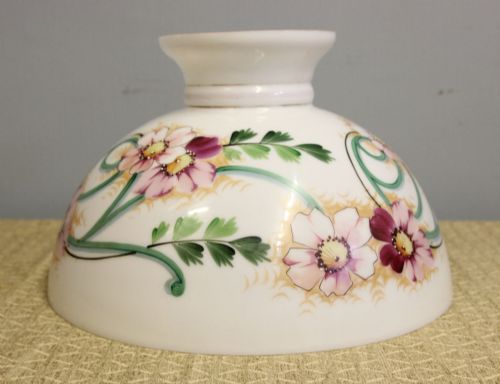
Originating across British and continental workshops, these fixtures span styles from Victorian-derived designs to French mid-century lighting. The forms range from plain frosted glass shades to opaline painted hanging oil lamps adapted for domestic electricity.
How they were made
The construction relies on heavy-duty brass and copper frames designed to secure curved glass elements safely overhead. Metalwork components are cast or spun, providing a sturdy skeleton for the delicate shades.
Glass production involves mould-blown techniques to achieve the characteristic dome shape, sometimes finished with cut crystal patterns or acid etching. Opaline and frosted glass variations are employed to soften the light output, while specific examples incorporate hand-painted surface decoration.
Glass Dome Pendant Retail Price Guide 2026
Typical asking prices for glass dome pendant among the pieces listed under this phrase on Sellingantiques today, from the lower quarter to the upper quarter. They describe what is for sale here now, not the wider market.
One French kitchen light hides behind the charming title 'A Parisien Cuisinier', ready to feed the illumination.
What varies in quality
Quality in these ceiling lights is defined by the weight of the metal and the clarity or depth of the glass. Heavier brass and copper mountings indicate superior construction, whereas thinner metalwork lacks the same structural rigour.
The distinction between standard pressed glass and deep cut crystal or finely etched French surfaces dictates the visual refinement of the piece. Crispness in the execution of decorative motifs and the integration between metal collars and glass domes mark the division between ordinary production and finer examples.
The Glass Dome Pendant Glossary
- Dome top
- A rounded upper profile on a glass shade or chandelier frame. This shape directs light downward while enclosing the bulb.
- Opaline glass
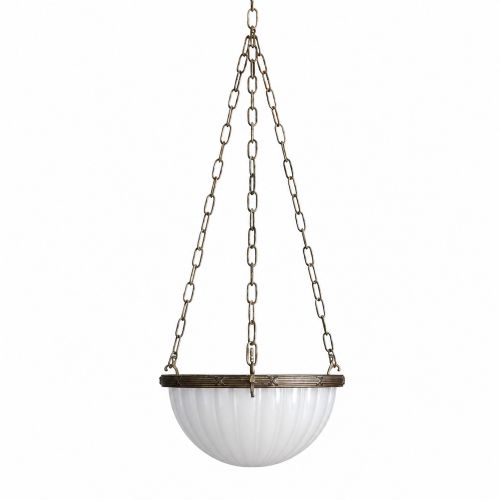
- An opaque or semi-translucent glass, often with a milky white appearance, used to diffuse light evenly. It was popular in the late nineteenth and early twentieth centuries.
- Cut glass
- Glass decorated by grinding facets or linear patterns into the surface using a wheel. This technique enhances sparkle and refraction.
- Downlighter
- A light fixture designed to project the majority of its illumination directly downward toward a surface or floor. Such forms are common in mid-century French settings.
- Art Deco
- A design style emerging around 1920 characterised by geometric symmetry, stylised motifs, and industrial metals like copper and brass.
Glass Dome Pendant: Frequently Asked Questions
What rooms suit a glass dome pendant?
These fixtures work well in hallways, kitchens, or compact rooms where ceiling height requires a flush or semi-flush profile. Their enclosed or semi-enclosed shapes direct illumination downwards effectively.
They also integrate smoothly into period properties seeking authentic Edwardian or 1920s lighting accents without overwhelming smaller spaces.
How do I distinguish Edwardian from Art Deco domes?
Edwardian examples tend to feature cut crystal, polished brass, and softer, traditional floral or hobnail patterns. They often look back to Victorian proportions.
Art Deco pieces from the 1920s favour geometric lines, etched crystal, and combinations of brass and copper with a more industrial or streamlined silhouette.
Are these pendants suitable for modern wiring?
Most antique fixtures require professional rewiring to meet current electrical standards before installation in a domestic setting. Dealers generally supply them with the original metalwork intact for your electrician to update.
The historical sockets and wiring should be replaced for safety while preserving the structural integrity of the brass or copper frame.
What is the difference between opaline and frosted glass?
Opaline glass is an opaque, milky white material created during the manufacturing process to diffuse light softly. It has a dense, porcelain-like appearance.
Frosted glass has a textured, translucent surface achieved through acid etching or sandblasting, which scatters light rather than blocking direct vision entirely.