




Glass Crystal Candle Sconces
Glass crystal candle sconces catch candlelight along a wall, bringing depth and gentle reflection to a room.
Glass Crystal Candle Sconces
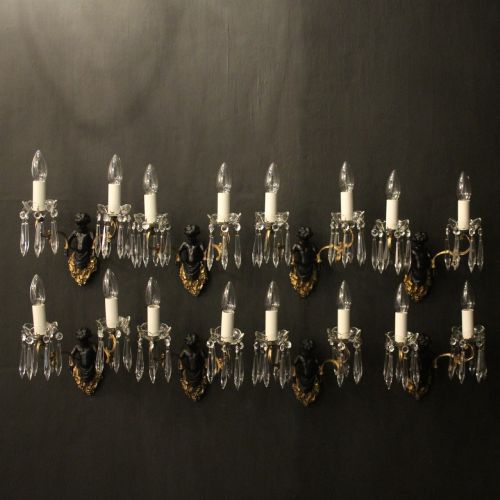
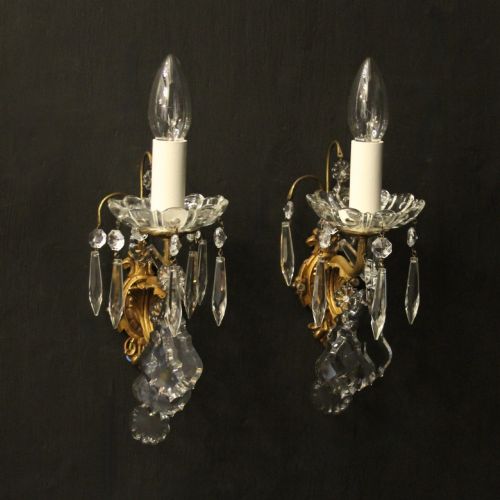
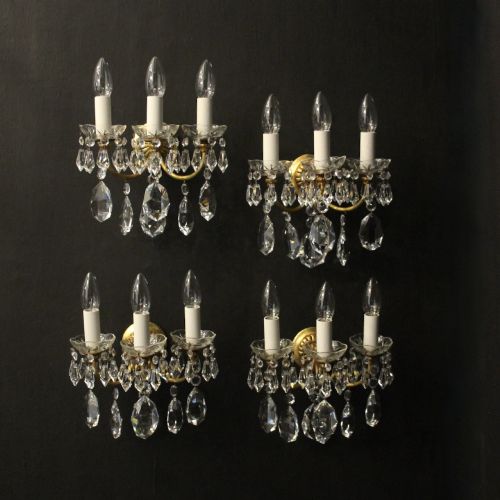
Glass crystal candle sconces are wall-mounted light fittings designed to hold candles, using reflective drops and pendants to amplify the glow. The listings show forms ranging from single-arm fixtures to triple-branch arrays.
Most examples appearing here hail from the early twentieth century and the nineteenth century, reflecting French, Swedish, and Italian origins. Buyers most frequently encounter paired sets in styles such as French Rococo, Gustavian, and Florentine beaded work.
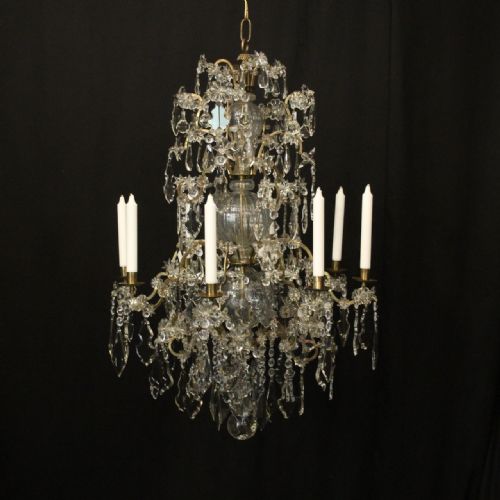
Beyond standard wall lights, related forms in the inventory include wall chandeliers, lustres, and candlesticks adapted for the wall. These pieces combine metal frames with glass and crystal components to create decorative focal points.
How they were made
The construction of these pieces relies on metal armatures paired with glass and crystal elements. Workshops utilised brass, gilt bronze, gilt metal, wrought iron, and silver to form the structural branches and backplates.
Prisms, drops, and beads are hand-cut or moulded from glass and crystal, then wired or pinned to the metal frames using brass wire. This combination allows the reflective components to move slightly and catch ambient light from every angle.
Glass Crystal Candle Sconces Retail Price Guide 2026
Typical asking prices for glass crystal candle sconces among the pieces listed under this phrase on Sellingantiques today, from the lower quarter to the upper quarter. They describe what is for sale here now, not the wider market.
Cherubs occasionally peek from antique wall light frames, keeping silent watch over centuries of flickering candlelight.
What varies in quality
Quality rests in the weight and clarity of the crystal drops and the crispness of the metal casting. Finer examples display hand-cut facets that refract light sharply, while simpler pieces utilise moulded glass with softer edges.
The complexity of the frame also dictates the grade, distinguishing between basic stamped metal backplates and elaborate cast gilt bronze or chased brass structures adorned with extensive beadwork.
F. & C. Osler·Baccarat
The Glass Crystal Candle Sconces Glossary
- Sconce
- A wall-mounted bracket lighting fixture designed to hold candles or light bulbs. They often feature backplates that reflect the flame.
- Lustre
- A ornamental glass candelabra or candlestick hung with cut crystal pendants. These drops enhance the visual sparkle of the piece.
- Cut glass
- Glass decorated by grinding and polishing facets into the surface. This technique increases the refraction of light through the material.
- Gilt bronze
- Bronze coated with a thin layer of gold, historically applied through mercury gilding or fire-gilding. It provides a durable, warm metallic finish.
- Beaded
- Decorated with small perforated glass or crystal spheres strung together. This detail is characteristic of Florentine wall lights.
Glass Crystal Candle Sconces: Frequently Asked Questions
How do I clean glass crystal candle sconces?
Remove removable drops and wash them gently in warm soapy water, drying them thoroughly with a lint-free cloth before reattachment. Wipe fixed metal frames with a dry or slightly damp cloth.
Avoid harsh chemical cleaners that can strip gilt finishes or damage fragile glass surfaces over time.
Were these sconces originally wired for electricity?
Many surviving examples began as purely candle-lit fixtures and were adapted later for electric bulbs. Some retain their original candle-holding pans alongside modern wiring additions.
Checking the bobeche and drip pans reveals whether the fitting held wax candles or electric lamp holders originally.
How do I secure wall sconces safely?
Wall sconces require sturdy fixing into solid masonry or wall studs due to the combined weight of metal and glass crystal components. Using appropriate rawl plugs and screws prevents strain on the plaster.
Professional installation is recommended for wired versions to ensure electrical safety and secure weight distribution.
How can I tell a nineteenth-century piece apart from a later one?
Nineteenth-century pieces often exhibit heavier cast bronze frames, hand-cut crystal drops with slight irregularities, and traditional pin-and-wire construction methods. Later twentieth-century versions may show more uniformity in the glass moulding and machine-cut facets.
Examining the backplate fixings and the patina on the brass or gilt metal provides further clues to the age.