

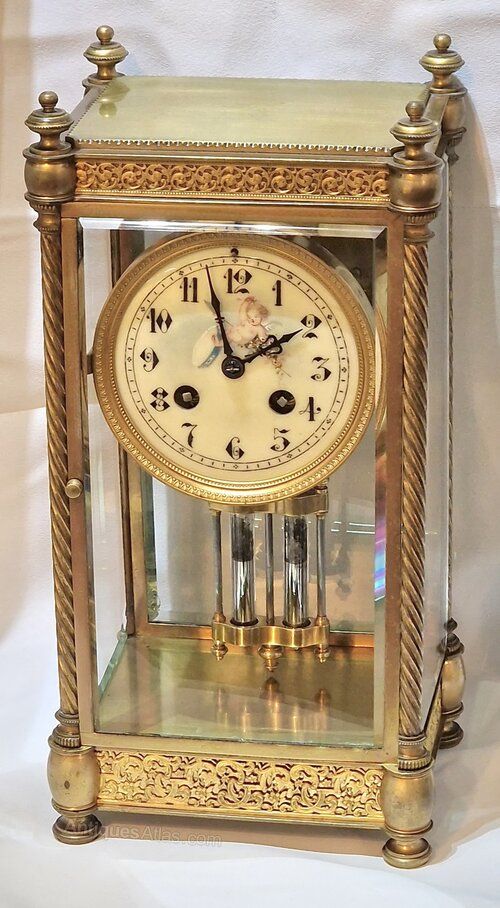
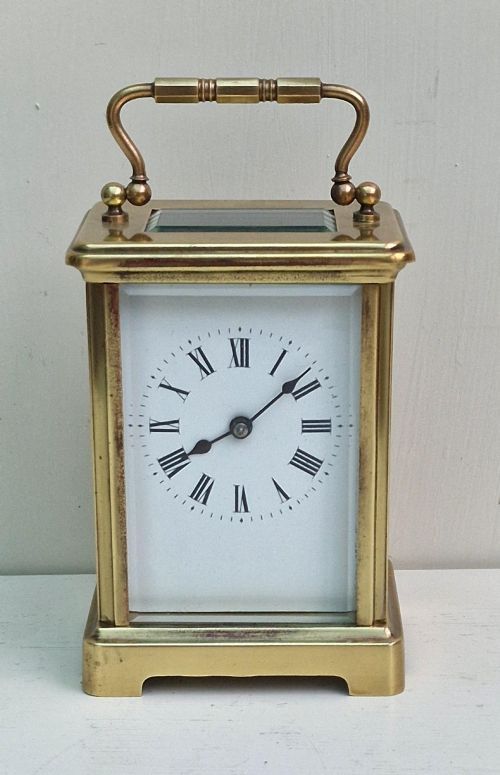
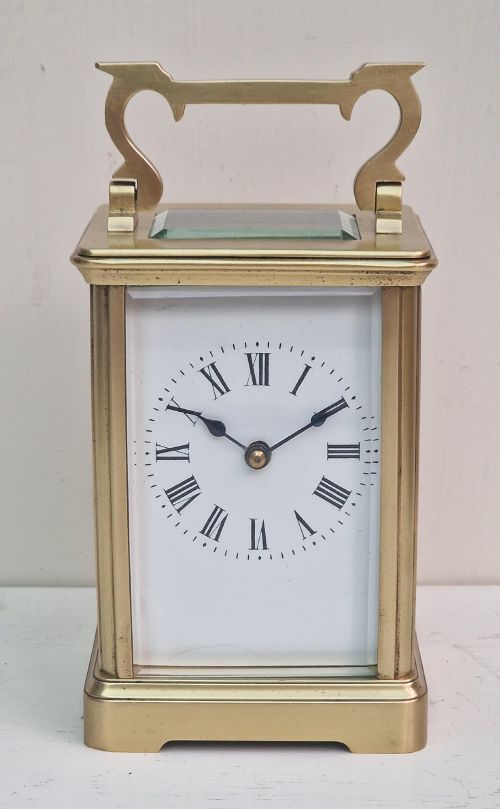
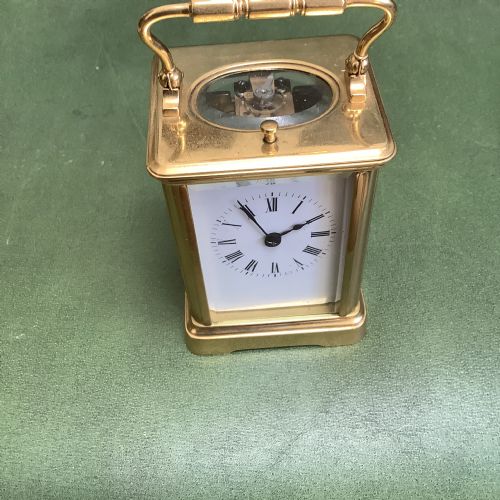

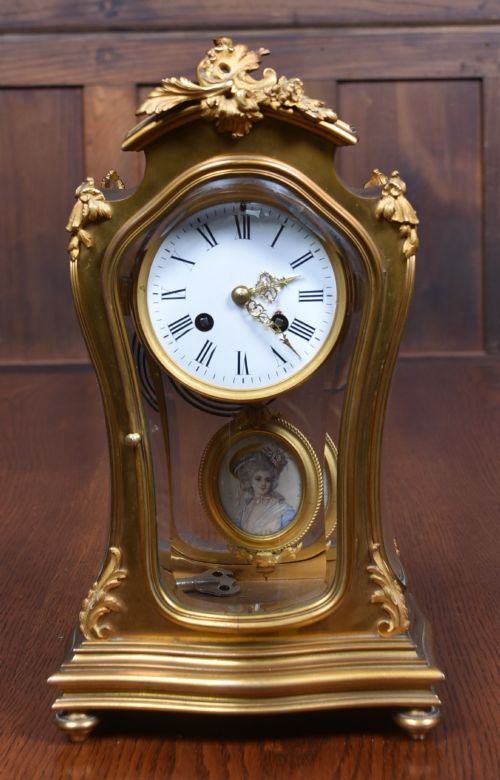


Glass Carriage Clock
A glass carriage clock brings mechanical precision and heavy brass and glass construction together for travel and home use.
Glass Carriage Clock
The most common examples date from the Victorian era and the late nineteenth century, reflecting French Belle Epoque and Edwardian styles. These pieces range from standard striking models to miniature versions and large architectural cases equipped with travel cases.
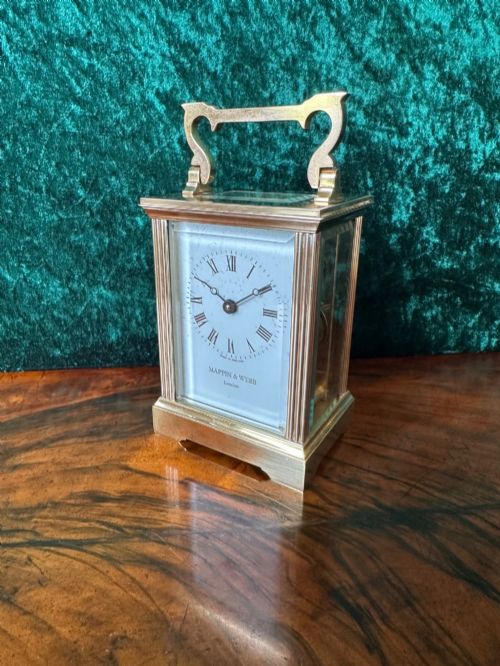
Makers and retailers such as Goldsmiths Alliance Ltd, Mappin and Webb, John Morley, Tiffany, and Samuel Marti et Cie appear across the chronological span. Buyers also find specialist pieces including repeaters, chiming movements, and giant engraved examples.
Materials and construction
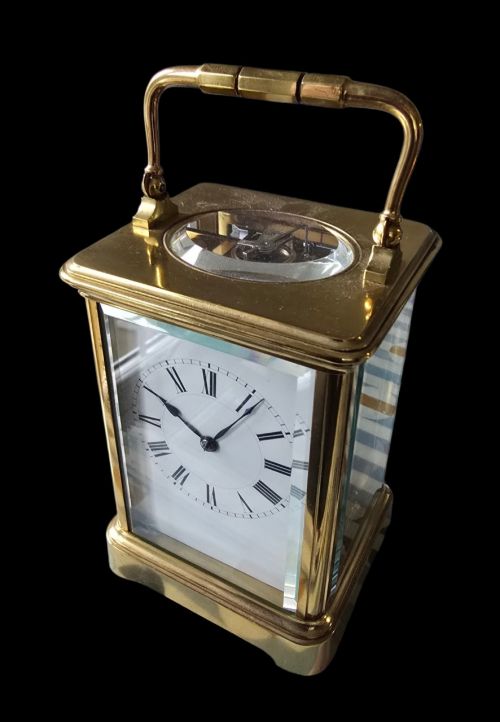
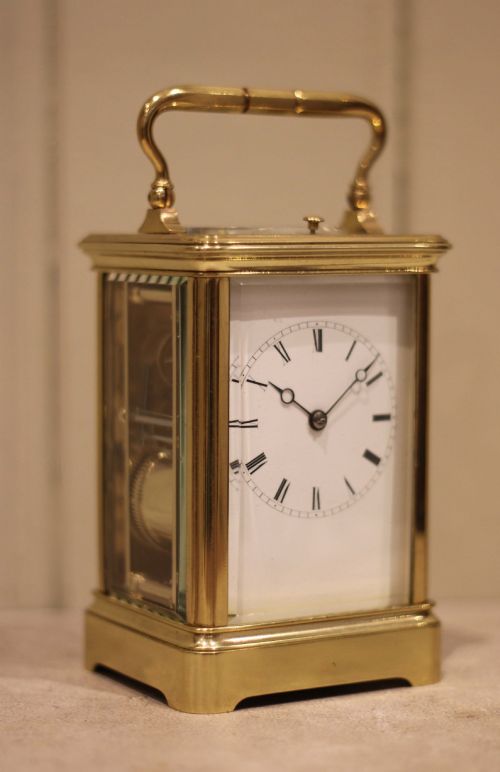
Makers constructed glass carriage clocks using heavy cast brass and gilt brass frames fitted with bevelled glass panels to display the internal escapement and gear train. Enamel dials, sometimes featuring painted details or decorative elements, sit behind the front glass plate.
Movements incorporate steel components and brass wheels, powered by springs that drive eight day striking or repeating mechanisms. Leather travel cases frequently accompany these pieces to protect the metal and glass housing during transit.
Glass Carriage Clock Retail Price Guide 2026
Typical asking prices for glass carriage clock among the pieces listed under this phrase on Sellingantiques today, from the lower quarter to the upper quarter. They describe what is for sale here now, not the wider market.
Distinctions in craftsmanship
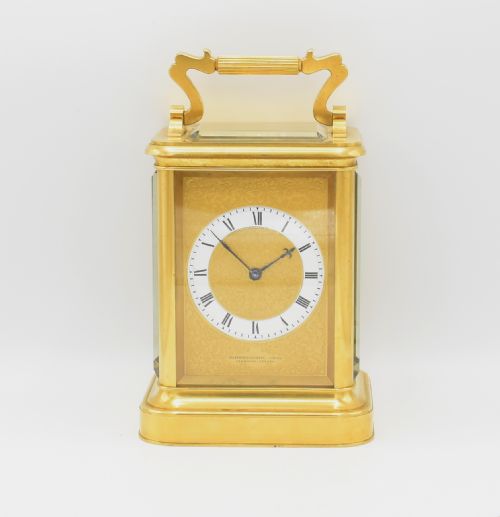
Quality in a glass carriage clock rests on the complexity of the movement, separating basic timepieces from quarter striking, repeating, and chiming complications. Heavily engraved gilt cases and signed dials by known makers indicate higher workshop standards.
The weight of the cast brass frame and the clarity of the bevelled glass panels distinguish finer productions from standard models. Original fitted leather cases and surviving paperwork further elevate the standing of a piece.
Goldsmiths Alliance Ltd·Mappin and Webb·John Morley·Duverdrey and Bloquel·Tiffany·Delépine Barrois·L Epee·Samuel Marti et Cie·Spirrell of Paris
The Glass Carriage Clock Glossary
- Carriage clock
- A portable spring-driven timepiece designed for travellers during the nineteenth century. These clocks feature brass frames with glass panels on all sides and the top.
- Gorge case
- A distinct rectangular brass carriage clock case style characterised by stepped mouldings at the top and base. It represents a traditional French housing design.
- Repeater
- A mechanism that chimes the hours and quarters on demand when a button or pendant is pressed. This complication requires extra gear trains within the movement.
- Four glass clock
- A mantel clock featuring glass panels on the front, back, and sides to expose the mechanical movement. These are larger than standard portable carriage clocks.
- Platform escapement
- The small horizontal assembly containing the balance wheel and hairspring placed visible at the top of the movement. It replaced the pendulum for portable timekeeping.
Glass Carriage Clock: Frequently Asked Questions
What is a glass carriage clock?
A glass carriage clock is a portable mechanical timepiece enclosed in a brass frame with glass panels. They were originally built for officers and travellers to carry in coaches.
Today they function as desk or mantel pieces, combining visible gear trains with portable robust housings.
Where were these clocks made?
The majority of these pieces were produced in French workshops, particularly in Paris and Saint Nicolas d'Aliermont. British retailers and makers also commissioned and produced notable examples.
Swiss movements also appear within travel cases from later periods.
How do I wind my clock?
Winding is performed using a dedicated key applied to arbors situated on the backplate of the movement. Care must be taken not to overwind the mainspring.
Most models require winding once every eight days to maintain continuous operation.