

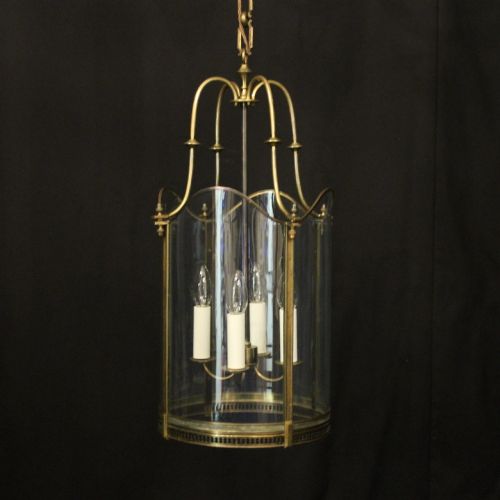
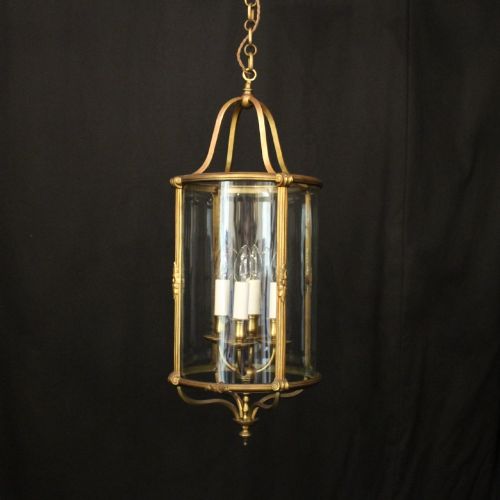
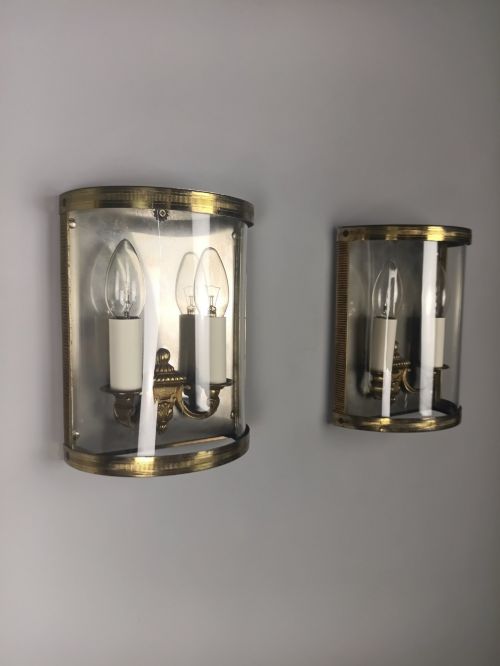
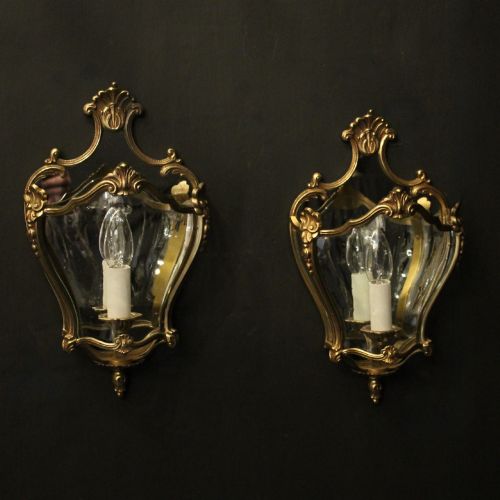
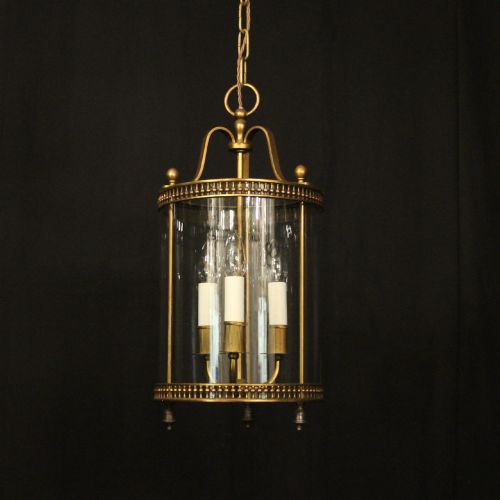


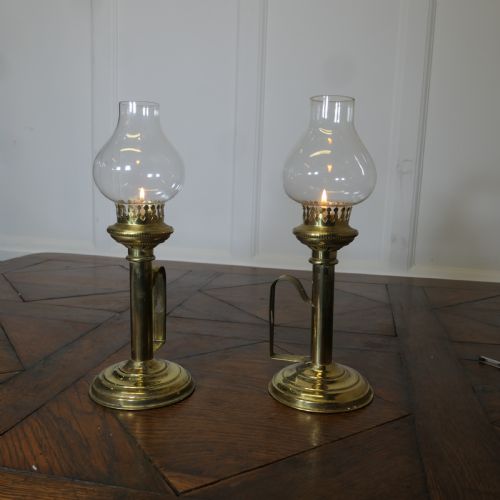


Glass Candle Lantern
Glass candle lanterns bring warm, diffused illumination to hallways and corridors, combining robust metal frames with delicate glazing.
Glass Candle Lantern
A glass candle lantern provides architectural presence while shielding an open flame from drafts in a hallway or reception space. When searching for a glass candle lantern, you encounter examples ranging from compact hanging fixtures to large, multi-light ceiling assemblies.
The pieces seen here lean heavily toward French designs, including convex hall lanterns and half lanterns intended for wall mounting. Production spans from the Victorian era and the Edwardian period through to the 1920s and 1930s.
While many historic examples were subsequently adapted for electricity, their original purpose centred on candle illumination within protective glazed enclosures. Formats vary from simple round hall pendants to elaborate brass and bronze fixtures holding multiple lights.
Materials and construction
Makers constructed the structural framework of these lanterns using cast or wrought metals, predominantly brass, gilt bronze, gilt brass, and steel. These metal components provide the rigid skeleton necessary to support heavy glass panels and suspension hardware.
The transparent or translucent panels are commonly formed from clear or bevelled glass, which refracts the internal light. Certain pieces utilise curved or convex glass panes to soften the illumination and project light evenly across a room.
Glass Candle Lantern Retail Price Guide 2026
Typical asking prices for glass candle lantern among the pieces listed under this phrase on Sellingantiques today, from the lower quarter to the upper quarter. They describe what is for sale here now, not the wider market.
At least one generous Edwardian hall lantern still carries the memory of soot from genuine candle flames.
What separates the tiers
Quality rests in the weight of the metal casting and the precision of the frame assembly. Finer lanterns feature crisp chasing on gilt bronze surfaces and tightly fitted glass panes that sit flush within their metal channels.
Simpler versions rely on plain spun brass or steel with straightforward flat glass panels. The presence of bevelled glass and complex multi-light internal clusters elevates a piece from a utilitarian hanging light to a decorative centrepiece.
The Glass Candle Lantern Glossary
- Convex glass
- Curved glass panels that project outward to diffuse light across a wider angle. This technique softens the interior flame or bulb output.
- Bevelled glass
- Glass panes featuring an angled edge cut around the perimeter. This treatment catches and refracts light.
- Half lantern
- A light fixture designed to mount directly against a wall rather than hang centrally from a ceiling. These often feature a flat back plate.
- Gilt bronze
- Bronze metal treated with a thin layer of gold or gold-coloured finish. It offers a rich, decorative surface resistant to tarnishing.
- Hall lantern
- A pendant light specifically scaled for narrow entrance spaces and corridors. They typically feature enclosed glass sides to protect against passing movement.
Glass Candle Lantern: Frequently Asked Questions
Where should I hang a hall lantern?
These fixtures suit entrance halls, high-ceilinged corridors, and stairwells where their downward illumination and decorative metalwork can be appreciated from multiple angles.
Ensure you hang the lantern high enough to clear head height while maintaining a proportional relationship with the ceiling height.
Are these lanterns still lit by candles?
Most surviving examples from the Victorian period onward have been converted to electricity for modern convenience and safety.
Some retain internal wiring while keeping the classic candle-tube form to preserve their historic aesthetic.
How do I identify French period lanterns?
French pieces often display neoclassical or Empire styling, characterised by gilt bronze or brass mounts, cast foliate details, and refined proportions.
Craftsmanship in these examples typically emphasises decorative metal chasing alongside curved convex glass.
What is the difference between brass and gilt bronze?
Brass is a solid alloy of copper and zinc with a bright golden tone that patinates over time. Gilt bronze involves a bronze base coated with a fine gold finish for added lustre.
Bronze generally permits sharper cast details than standard brass.