
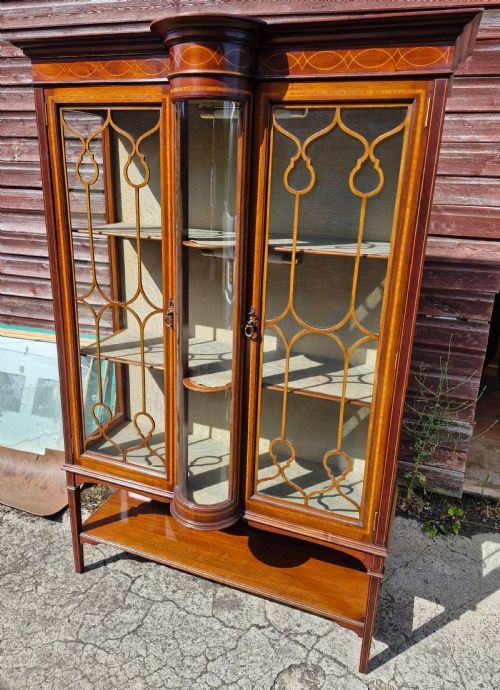


Glass Bijouterie Cabinet
Glass bijouterie cabinets are glazed display pieces designed to hold small treasures and curiosities, combining timber frames with transparent panes for tabletop or floor standing presentation.
Glass Bijouterie Cabinet
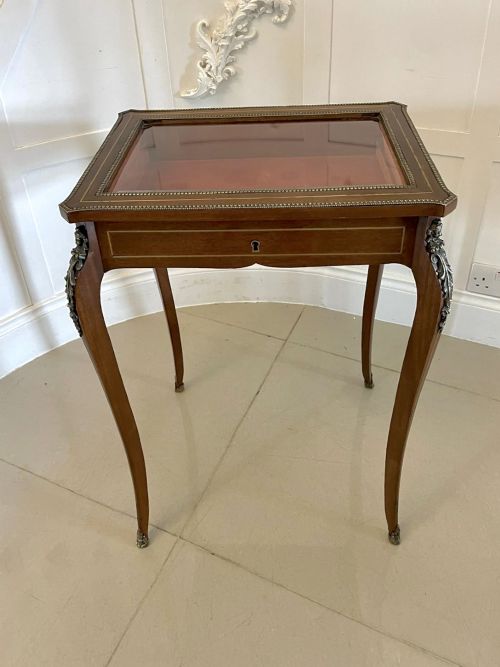
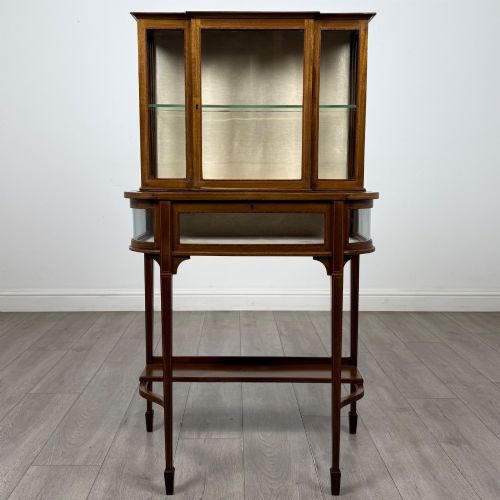
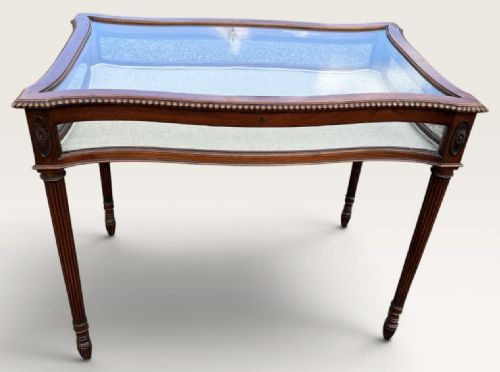
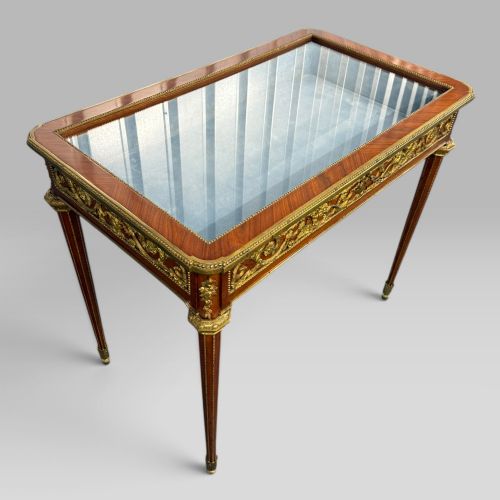
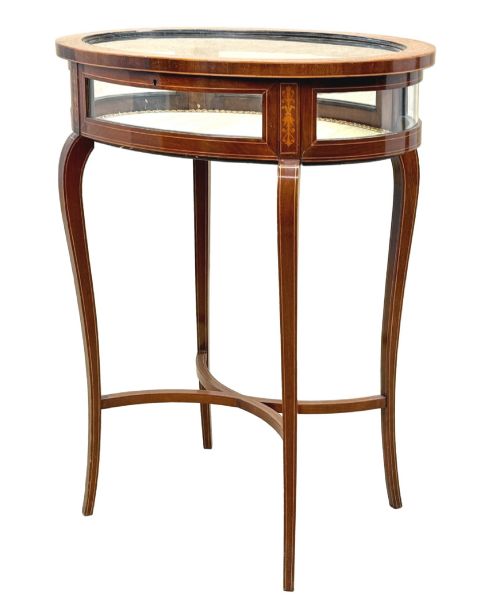
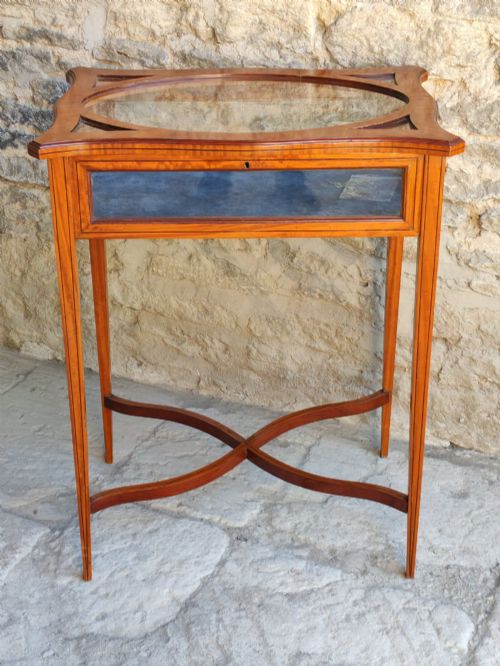
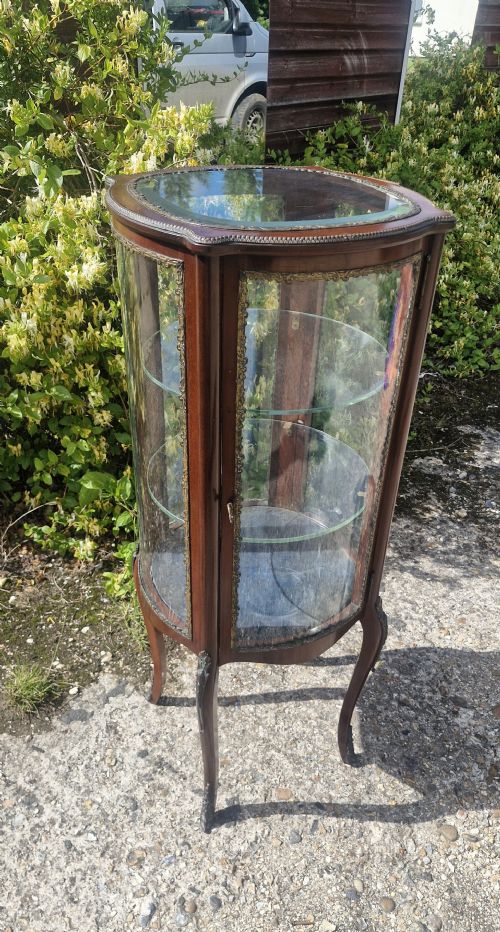
A glass bijouterie cabinet serves to exhibit personal ornaments, medals, and small collectables under glass. When searching for a glass bijouterie cabinet, buyers frequently encounter Edwardian and Victorian examples shaped as tables, vitrines, or freestanding cabinets.
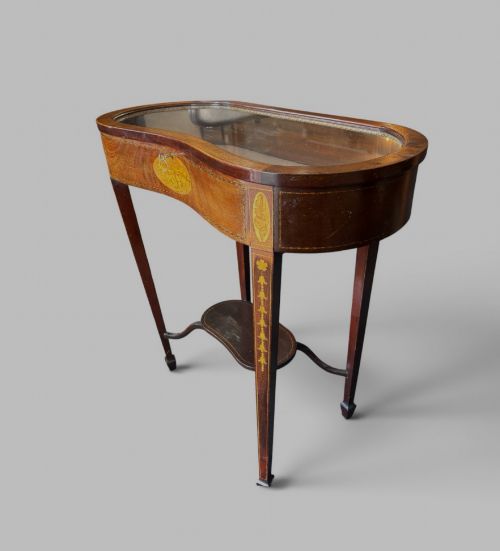
The forms span serpentine, kidney, oval, and octagonal formats designed to catch the eye from multiple angles. Mahogany predominates among the surviving pieces, often paired with satinwood, kingwood, or brass mounts.
Materials and construction
Makers constructed the primary frames of these cabinets using solid or veneered mahogany, satinwood, and kingwood. Timber components were frequently inlaid with contrasting wood bands or supported by slender tapering legs.
Glazing forms the central functional element, utilising bevelled or flat glass panels held within brass, ormolu, and gilt-metal mounts. Interiors are lined with velvet or fabric surfaces to provide a soft resting place for displayed objects.
The listings demonstrate a strong preference for mahogany timber, frequently enhanced with satinwood inlay and brass mounts across the Victorian and Edwardian periods.
Factors that distinguish quality
Quality rests upon the crispness of timber inlay, the weight and detail of brass or ormolu mounts, and the proportion of the legs relative to the display well. Cabinets featuring complex curved profiles like serpentine or kidney shapes demand greater joinery skill than rectangular variants.
The refinement of the interior lining and the clarity of the bevelled glass panels further separate standard production from superior examples. Sustained attention to secondary timbers and hand-carved decorative motifs indicates a higher grade of workshop origin.
François Linke
The Glass Bijouterie Cabinet Glossary
- Bijouterie
- A small decorative item or piece of jewellery. The term applies equally to the glazed tables and cabinets made to house such objects.
- Vitrine
- A glass display cabinet designed for porcelain, silver, or curiosities. These pieces often feature glass on all sides to maximise illumination.
- Ormolu
- Gilt bronze applied as a decorative mount on furniture. This technique appears frequently on French nineteenth-century display tables.
- Bevelled glass
- Glass with an angled edge ground down to create a decorative frame effect. It catches light distinctively around the viewing pane.
Glass Bijouterie Cabinet: Frequently Asked Questions
What is a glass bijouterie cabinet?
A glass bijouterie cabinet is a specialised display case featuring glazed panels designed to exhibit jewellery, coins, and small collectables. They range from low table heights to taller floor-standing vitrines.
These pieces emerged strongly during the Victorian and Edwardian eras, combining timber frames with lined interiors to protect delicate items.
How were these cabinets used?
They served as domestic display furniture in drawing rooms and parlours, allowing hosts to exhibit their collections of curiosities to guests. The top glass surface provided a clear view while keeping items secure.
Some later examples also saw commercial service as retail shop display cases for luxury goods like watches.
How do I care for the interior fabric?
The velvet and fabric linings require gentle dusting with a soft brush to prevent the accumulation of debris. Avoid using liquid cleaners near the old textiles and timber.
Keeping the cabinet out of direct sunlight prevents the fabric lining and wood veneers from fading over time.
How do I distinguish Edwardian from Victorian examples?
Victorian cabinets often display heavier proportions, darker mahogany, and robust brass or ormolu mounts influenced by French revival styles. They date from the mid to late nineteenth century.
Edwardian pieces tend to display lighter satinwood inlays, more delicate Sheraton or Chippendale influences, and slender legs typical of the early twentieth century.