

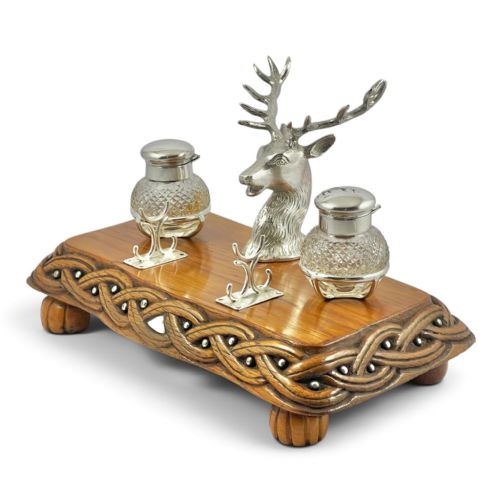


Glass and Wood Inkstand
These glass and wood inkstand pieces combine heavy crystal vessels with rich timber bases to hold your writing tools with proper Victorian weight.
Glass and Wood Inkstand
A glass and wood inkstand brings together cut or pressed glass inkwells and sturdy wooden desk trays from the nineteenth century. You will frequently encounter Victorian and Edwardian examples that combine practical desk furniture with elaborate woodwork.
Makers shaped these desk accessories from timbers like oak, coromandel, mahogany, and ebonised wood to support heavy glass reservoirs. The forms range from simple desk tidies to carved figural pieces depicting animals and birds.
Regional British and Irish variations appear across the selection, alongside continental Black Forest carving styles. These pieces served as functional desk furniture in studies and offices before the widespread use of fountain pens.
Materials and construction
Cabinet makers utilised dense hardwoods such as coromandel and oak, often shaping them with hand carving or contrasting brass mounts. Selected pieces incorporate mother-of-pearl inlay to highlight the wooden surfaces of the base.
Glass inkwells were fitted directly into carved wooden recesses, sometimes accompanied by hinged brass lids or silver collars. Carvers formed detailed animal figures, including owls, dogs, and eagles, from solid blocks of timber.
Glass and Wood Inkstand Retail Price Guide 2026
Typical asking prices for glass and wood inkstand among the pieces listed under this phrase on Sellingantiques today, from the lower quarter to the upper quarter. They describe what is for sale here now, not the wider market.
Listings span the nineteenth century, featuring oak, coromandel, and mahogany combined with glass, brass, and silver elements.
Distinctions in quality
The sophistication of the woodwork marks the distinction between standard desk tidies and superior carved pieces. Deeply undercut Black Forest animal carvings and finely figured coromandel veneers represent the higher tier of desk furniture.
The presence of matching glass inserts and quality metal fittings, such as silver mounts or heavy brass hinges, elevates an inkstand. Integration between the glass vessel and the wooden base determines the overall finish.
The Glass and Wood Inkstand Glossary
- Coromandel
- A dense, heavily figured tropical hardwood prized for dark brown colouring and striking grain patterns. Cabinet makers selected it for luxury desk accessories during the nineteenth century.
- Black Forest style
- A carving tradition originating in Switzerland and Germany known for realistic depictions of animals and natural forms. These pieces utilise local woods like linden and walnut.
- Desk tidy
- A compartmented wooden tray designed to hold pens, stamps, and small stationery items alongside inkwells. It kept writing equipment organised on nineteenth-century tables.
- Ebonised wood
- Timber treated with a dark finish to imitate expensive ebony. Victorian makers applied this technique to create strong visual contrast with brass mounts and glass.
Glass and Wood Inkstand: Frequently Asked Questions
What periods do these inkstands come from?
The available pieces date primarily from the mid to late nineteenth century, spanning the Victorian and Edwardian eras. Dates range across the 1850s, 1860s, 1880s, and 1900s.
Craftsmen in Britain, Ireland, and continental Europe produced these items during a period when handwritten correspondence required daily use of inkwells and pens.
How were these inkstands used?
They sat on writing desks and tables to provide a stable reservoir for ink and a resting place for dipping pens. The fitted glass bottles held the fluid while the wooden base contained pens and stamps.
Owners dipped their metal or quill pens into the glass wells before writing letters and keeping household ledgers.
How do I care for wood and glass desk stands?
Keep wooden bases away from direct heat sources and excessive moisture to protect the timber and veneer. Clean glass inserts gently with warm water while avoiding harsh chemicals near the wood.
Apply suitable furniture wax occasionally to maintain the finish on hardwoods like oak and coromandel.
How do I distinguish Black Forest pieces?
Black Forest inkstands feature distinctive hand-carved animal figures such as dogs, bears, owls, or birds of prey integrated into the wooden base. These continental European pieces often display deep undercutting and realistic glass eyes.
They contrast with the cleaner geometric lines typically found in standard British oak and coromandel desk stands.