


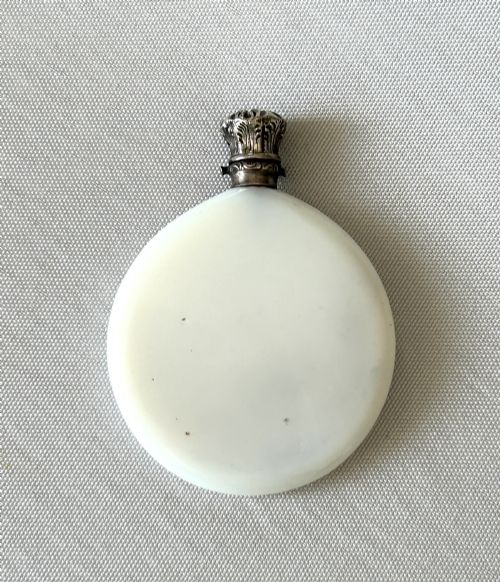
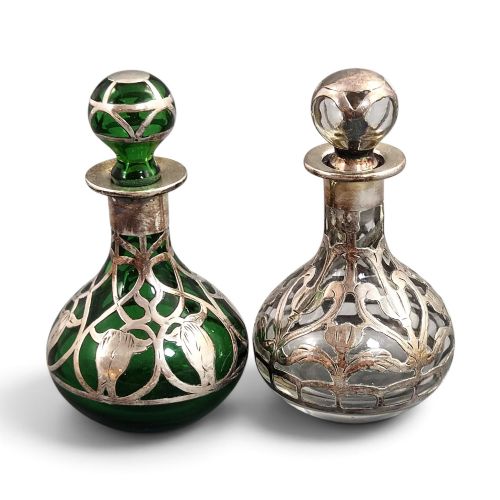
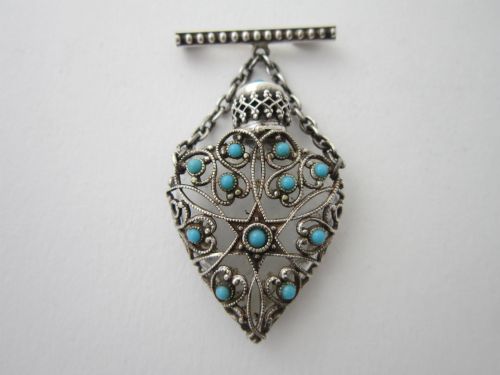
Glass and Silver Perfume Flask
A glass and silver perfume flask brings pocketable nineteenth-century glamour to a modern dressing table.
Glass and Silver Perfume Flask
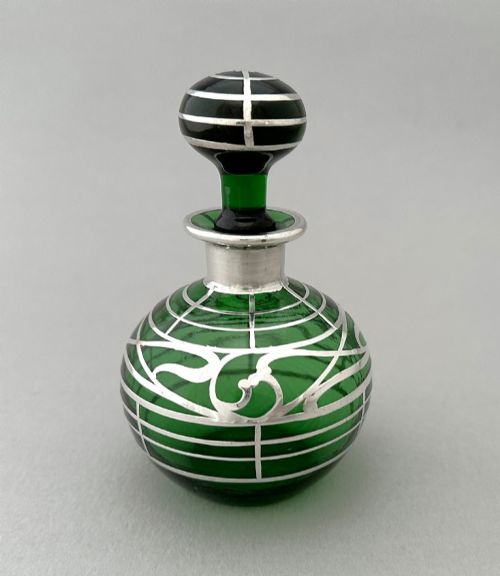
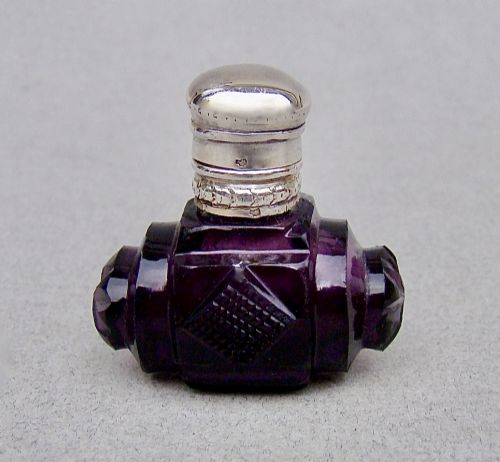
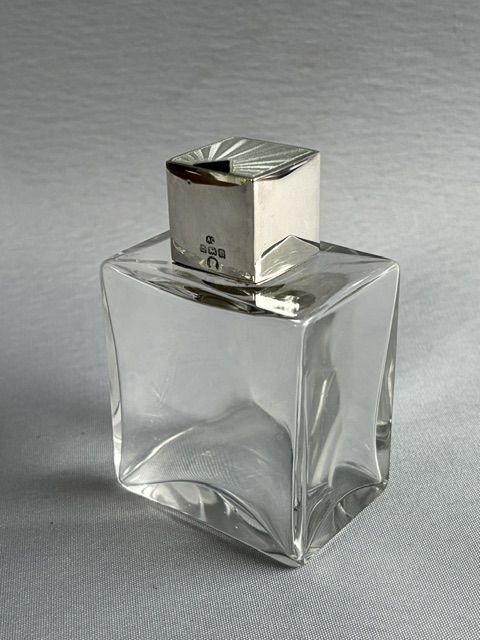
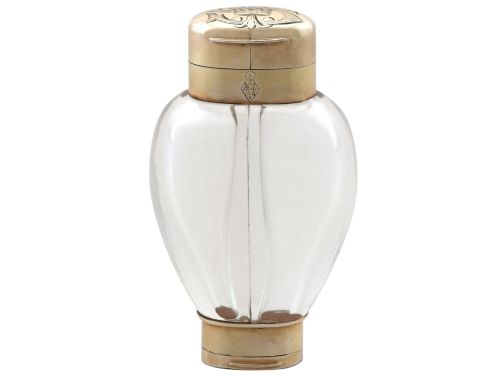
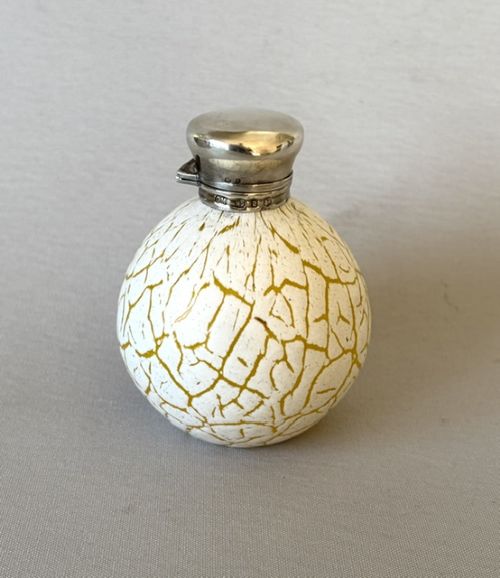
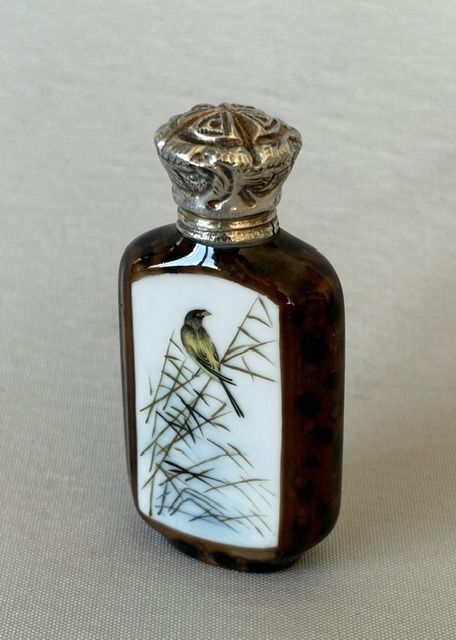
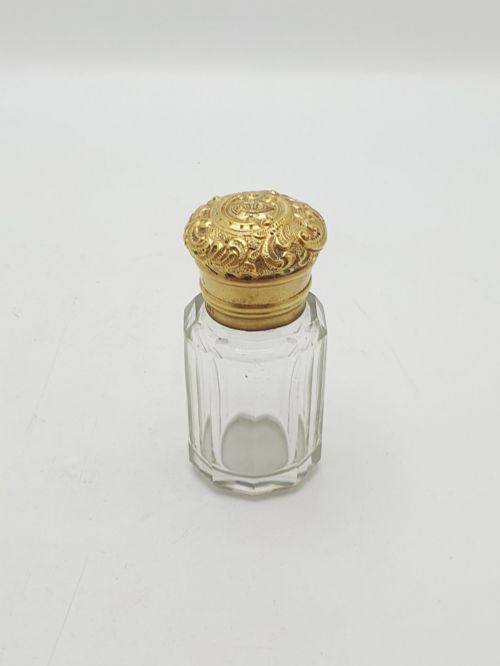
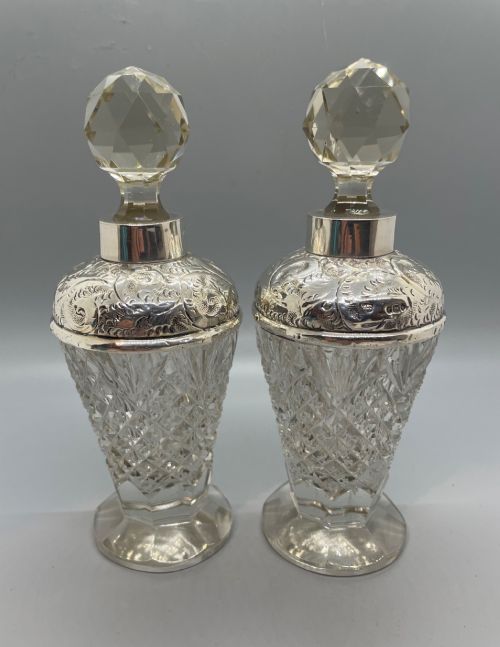
A glass and silver perfume flask combines a small receptacle for scent with precious metal mounts and hinged lids. These portable containers date across the Victorian, Edwardian, and Art Deco periods, originating from British, French, and continental workshops.
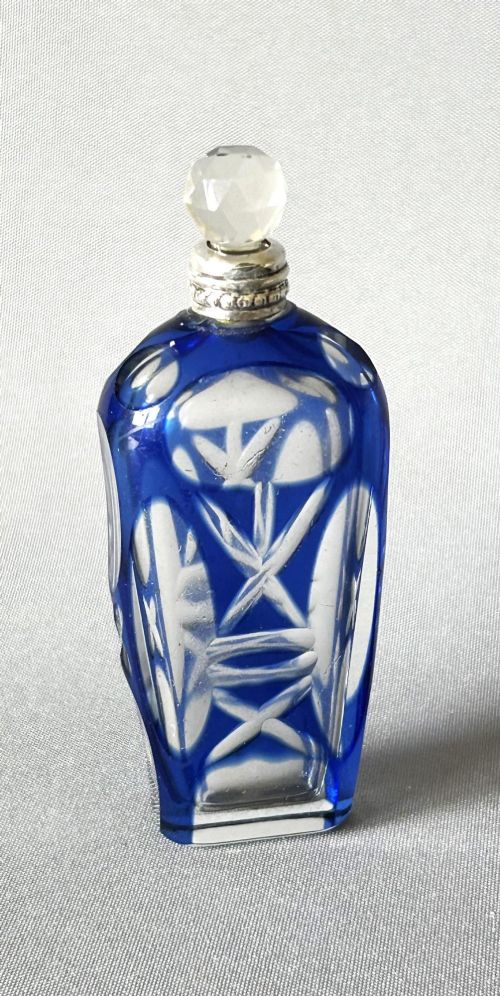
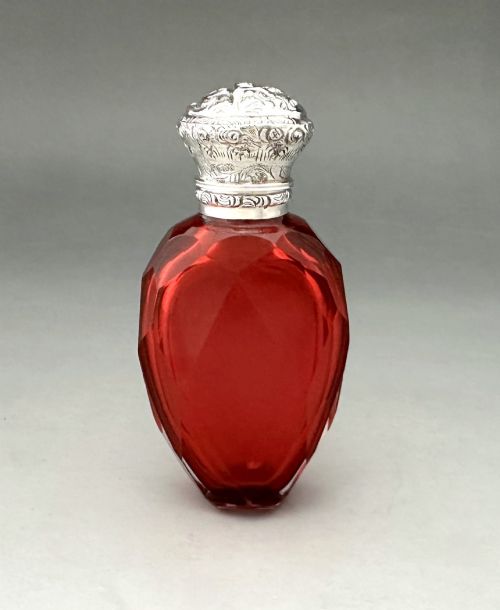
You are most likely to encounter Victorian cut crystal or coloured glass bodies fitted with sterling silver screw caps or hinged tops. Bristol blue, ruby, cranberry, and opaline glass versions appear frequently alongside clear cut crystal.
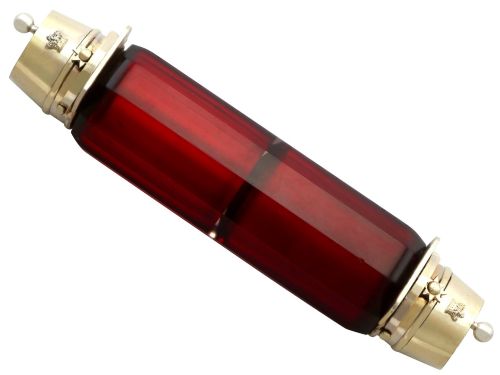
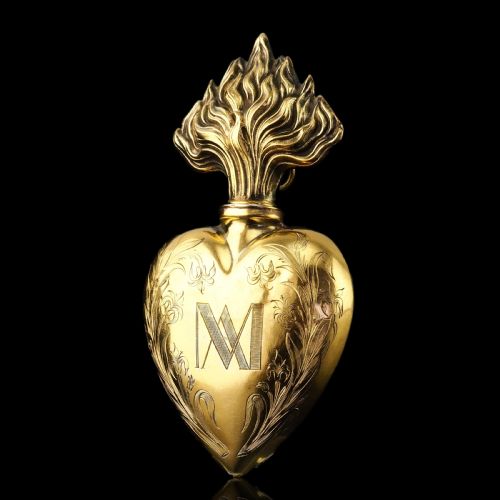
Forms range from straightforward cylindrical and globular bottles to specialised shapes like eggs, hearts, and icicles. Some examples include internal stoppers or double-ended designs intended for both salts and liquid perfume.
Materials and Construction
Vessels take shape from blown or moulded glass, frequently enhanced by deep wheel-cutting, overlay layers, or enamel painting. Coloured glass varieties achieve their rich tones through metallic oxides added during the melting process.
Mounts utilise sterling silver or silver gilt, shaped to grip the glass neck securely and fitted with cork or ground glass stoppers inside screw or snap-shut lids. Art Nouveau and Art Deco pieces incorporate silver overlay work or guilloché enamel panels directly onto the glass body.
Glass and Silver Perfume Flask Retail Price Guide 2026
Typical asking prices for glass and silver perfume flask among the pieces listed under this phrase on Sellingantiques today, from the lower quarter to the upper quarter. They describe what is for sale here now, not the wider market.
Current listings feature cranberry, ruby, opaline, and Bristol blue glass alongside cut crystal and tortoiseshell holders spanning the nineteenth and twentieth centuries.
Evaluating the Pieces
Quality rests upon the crispness of the glass cutting, the depth and saturation of the coloured metal-oxide glass, and the weight of the silver mount. Fine examples maintain an integrity of fit between the silver collar and the glass rim without adhesive residue.
The presence of crisp hallmarks on the silver provides secure dating and attribution. Elaborate hand-painted enamel decoration, intricate silver overlay, and original inner stoppers elevate the execution of a piece.
Gorham·Harold Bushell and Co·Franchini and Bigaglia·Karl Palda·Henry Perkins
The Glass and Silver Perfume Flask Glossary
- Vinaigrette
- A small container with a perforated inner grill designed to hold a sponge soaked in aromatic vinegar.
- Opaline Glass
- An opaque, translucent glass developed in France that mimics the appearance of opal in shades of white, blue, or turquoise.
- Guilloché Enamel
- Decorative metalwork covered in translucent enamel over a mechanically engraved geometric pattern.
- Silver Gilt
- Sterling silver that has been coated with a thin layer of gold on its surface.
- Silver Overlay
- Metal decoration bonded directly onto the exterior surface of a glass vessel, often forming plant or abstract motifs.
Glass and Silver Perfume Flask: Frequently Asked Questions
How were these perfume flasks carried?
Owners slipped these small containers into velvet-lined handbags, pockets, or attached them to chatelaines worn at the waist.
Their robust silver mounts and tight stoppers prevented accidental spills during travel.
What is the difference between a scent bottle and a vinaigrette?
Scent bottles held liquid perfumes meant for direct application or refreshment.
Vinaigrettes contained a sponge soaked in medicated vinegar, accessed through a pierced internal grill to counter unpleasant odours.
How do I clean a glass and silver perfume flask?
Dust glass bodies gently with a soft cloth and avoid submerging pieces with paper liners or cork stoppers in water.
Polish silver mounts carefully using a dedicated cloth while avoiding contact with the glass or enamel.
How can I date a silver mounted glass flask?
British pieces often bear silver hallmarks that reveal the exact assay office and year of manufacture.
Stylistic cues like Art Nouveau organic lines or Victorian cut crystal help date unmarked continental examples.