

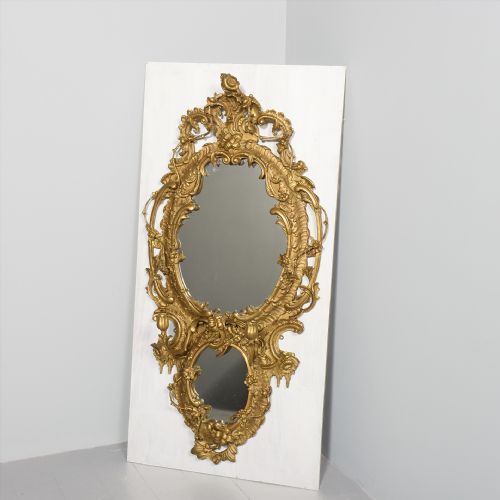
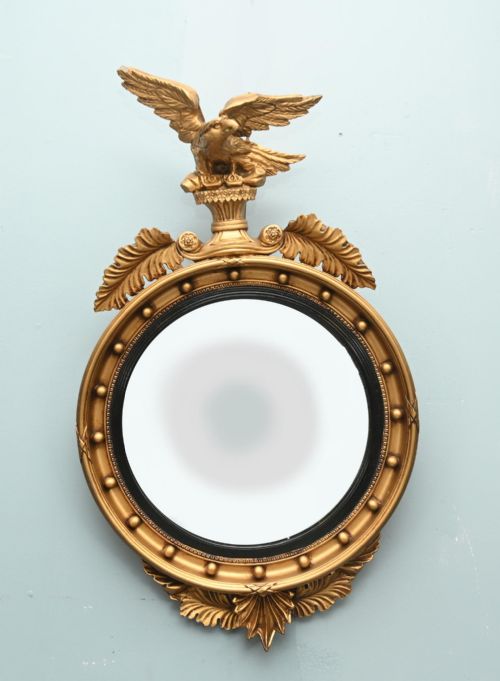


Girandole Style Mirror
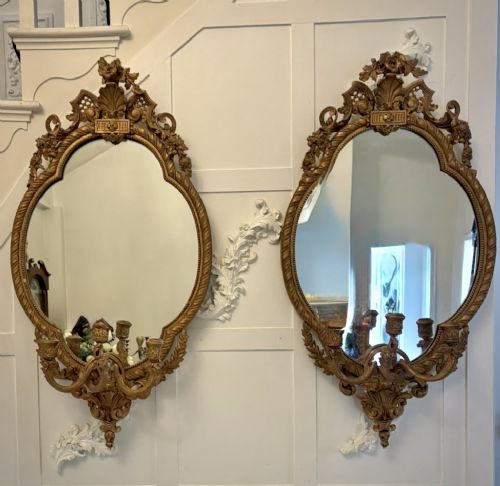
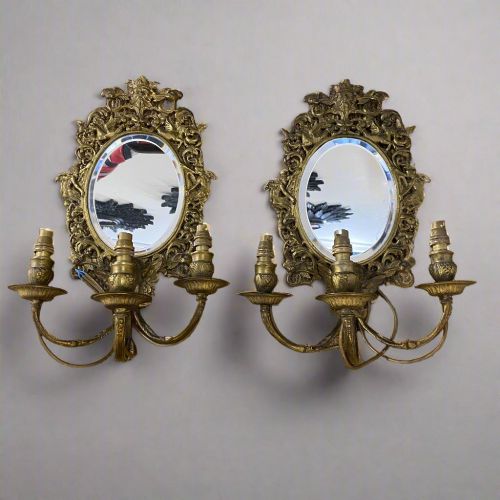
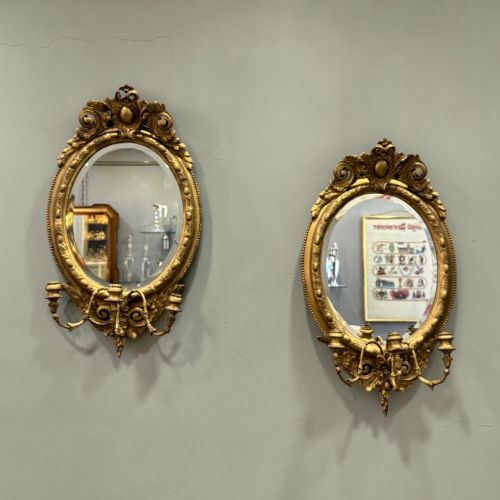
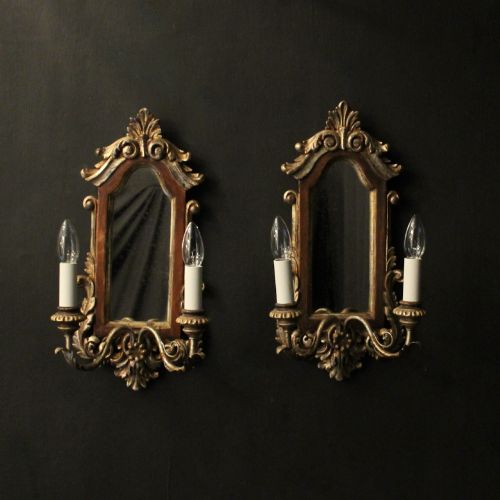
These girandole style mirror pieces combine reflective glass with integrated candle arms to bring period light and depth into a room.
Girandole Style Mirror
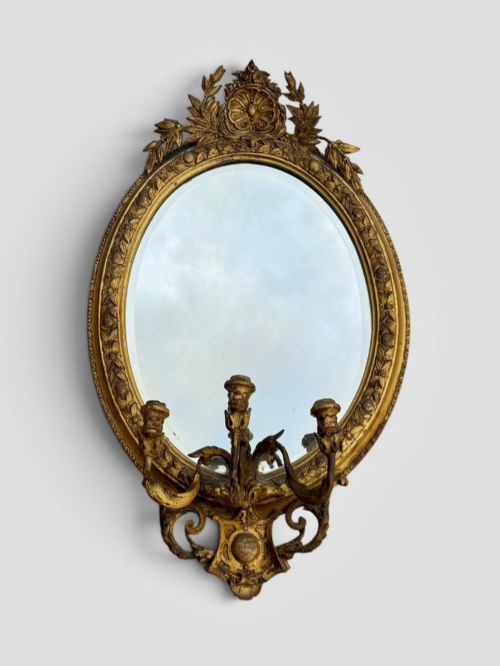
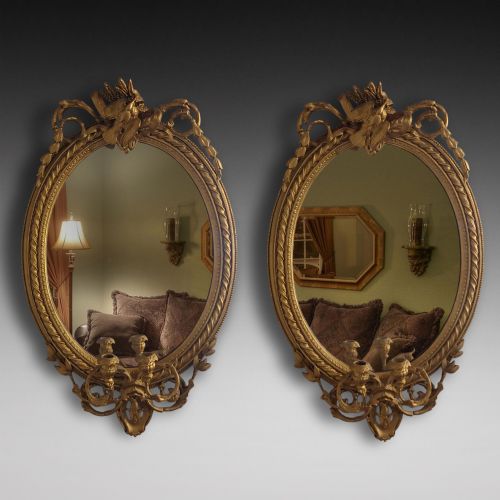
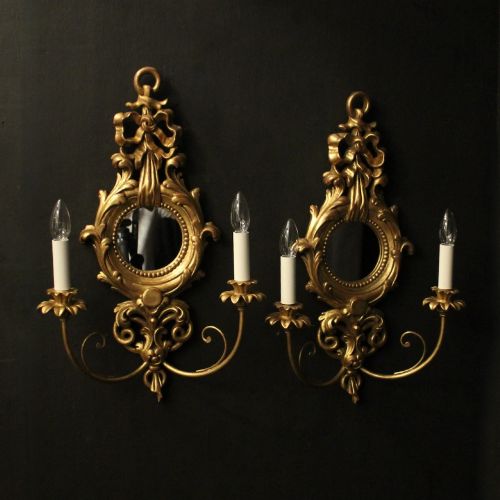
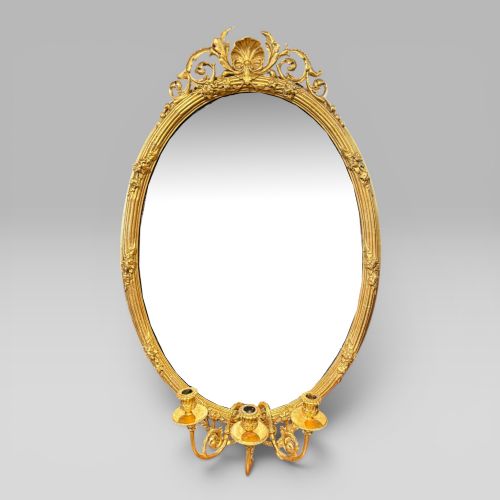
A girandole style mirror serves as both a reflective wall piece and a functional light source through attached candle arms or sconces. You will encounter various formats on this page, ranging from grand convex wall mirrors to symmetrical pairs designed for pier placement.
The selection draws on multiple historical vocabularies, including Victorian Rococo Revival, French Chateau, Florentine Baroque, and Louis XVI styles. Pieces date from the eighteenth century through to the early twentieth century, spanning nineteenth-century Victorian production up to nineteen-thirty interpretations.
Materials and Construction
Frames rely predominantly on timber, gesso, and giltwood, alongside gilt metal, brass, and ebonised wood elements. Carvers shaped the wooden foundations before applying layers of gesso to receive intricate surface gilding or paint.
Reflective surfaces include standard mirror glass and convex mirror glass housed within deep, decorative borders. Candle arms attach securely to the main frame to support illumination alongside the central glass.
Girandole Style Mirror Retail Price Guide 2026
Typical asking prices for girandole style mirror among the pieces listed under this phrase on Sellingantiques today, from the lower quarter to the upper quarter. They describe what is for sale here now, not the wider market.
Judging Quality and Execution
Depth and crispness of carving define the upper tier of these pieces, particularly where gesso is modelled into elaborate scrolls, foliage, or figural motifs. Finer examples display meticulous hand-finishing on both the primary frame and the integrated candle arms.
The integrity of the gilding and the quality of the mirror plate itself dictate visual success. Superior items retain coherent surface ageing across the giltwood or gilt metal without obscuring the original joinery and structural detailing.
The Girandole Style Mirror Glossary
- Girandole
- A branched wall-light or sconce equipped with a reflective mirror backplate. This dual function enhances room illumination by bouncing candle or gas light.
- Convex mirror
- A circular glass plate curved outward to provide a wide-angle reflection of the interior space. These pieces are often called bullseye mirrors.
- Gesso
- A plaster-like mixture applied to wood frames to create a smooth, buildable surface for carving and gilding. It allows for sharp relief work.
- Pier mirror
- A tall wall mirror designed specifically to hang on the narrow pier of wall space between windows. They frequently incorporate candle branches below the glass.
- Sconce
- A wall-mounted bracket fixture designed to hold candles or electric lamps. In this context, they form an integral part of the mirrored frame assembly.
Girandole Style Mirror: Frequently Asked Questions
How do I hang a heavy girandole mirror safely?
These pieces require secure fixing directly into wall studs or masonry using heavy-duty brackets suited to the weight of giltwood and glass. Professional installation ensures the frame remains stable and supports any attached candle arms.
Avoid relying solely on plasterboard or light picture hooks. Distributing the weight evenly prevents strain on the original timber joints and gesso ornamentation.
Can I burn real candles in the sconces?
Using actual candles is possible if the metal drip pans and arms are structurally sound and kept clean. Ensure flames sit well away from the glass frame and surrounding wall surfaces.
Many owners choose modern LED alternatives to eliminate smoke damage and wax drips on antique giltwood. This preserves the delicate surface finish over years of use.
What is the difference between convex and flat mirror plates?
Convex glass curves outward to capture a panoramic, fish-eye reflection of the entire room. Flat mirror plates provide a standard, undistorted perspective of the immediate space opposite.
Convex formats tend to function primarily as optical focal points and decorative art pieces. Flat versions, particularly pier mirrors, offer more functional reflection for dressing or light distribution.
How do I clean an antique giltwood frame?
Dust the carved surfaces gently with a soft, dry artist's brush or feather duster. Moisture and harsh cleaning agents will damage delicate gesso and strip historical gilding.
Keep glass clean using a minimal amount of neutral cleaner applied to a cloth rather than sprayed directly. This prevents liquid from seeping behind the plate or into the wooden joints.