


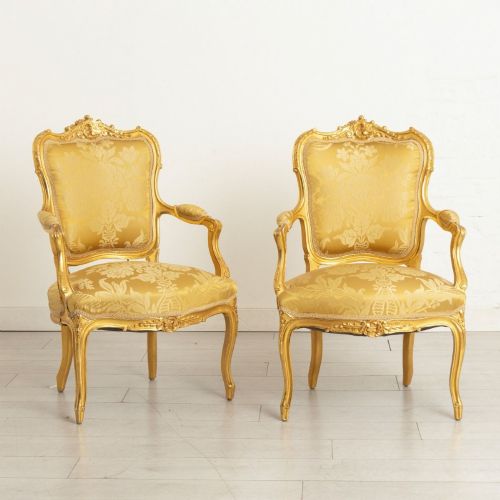


Gilt Wood Fauteuil
A gilt wood fauteuil brings structural elegance and gilded warmth to a room, offering an upholstered seat designed for formal comfort.
Gilt Wood Fauteuil
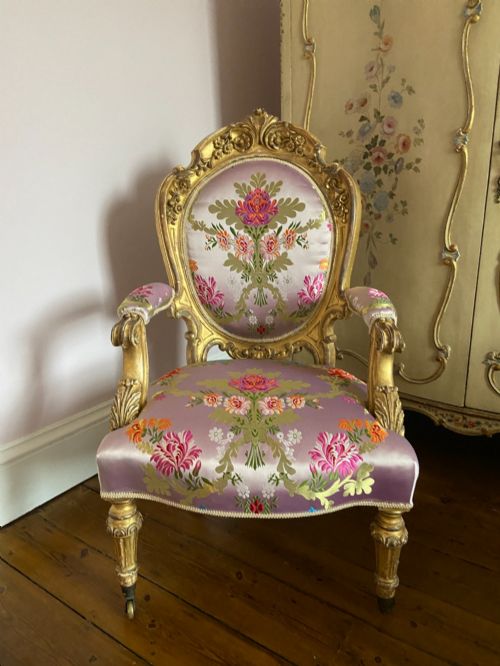
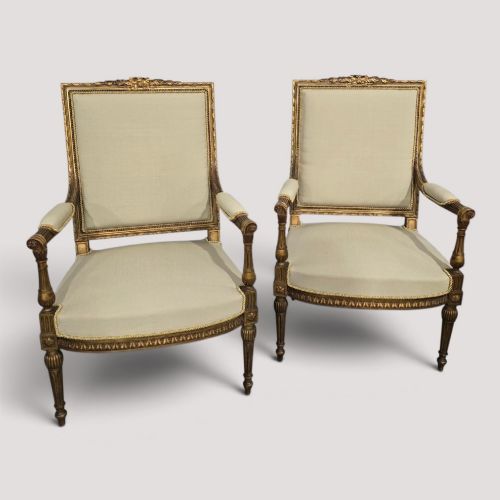
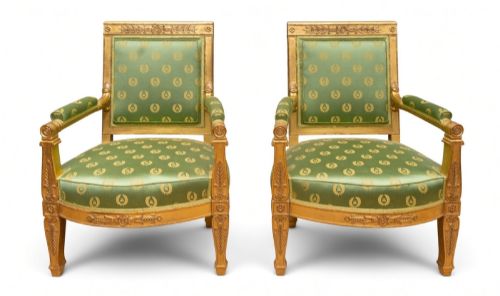
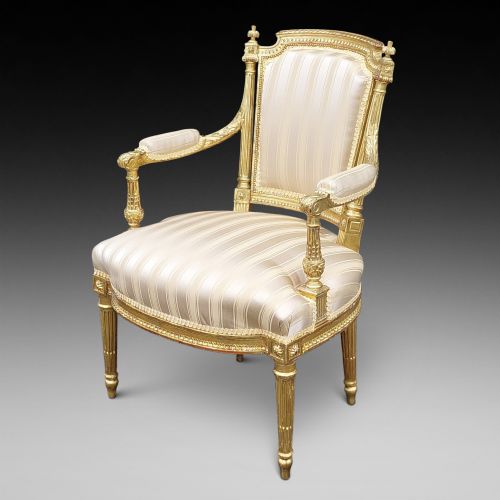
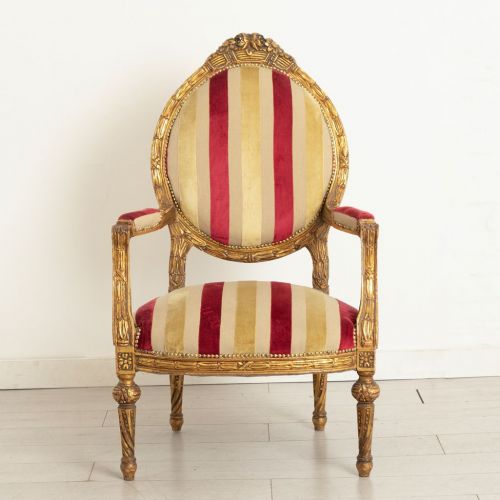
A gilt wood fauteuil is an open-arm upholstered seat originating from French seating traditions, designed for formal reception rooms. These chairs combine carved wooden frames with exposed gilding and upholstered backs and seats.
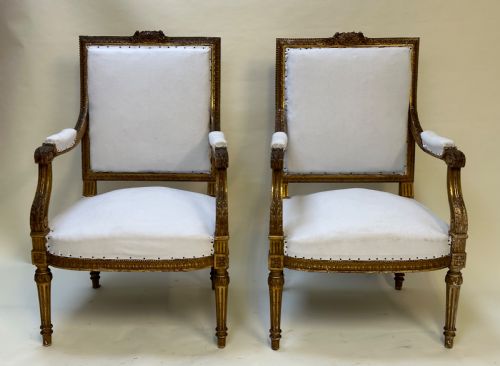
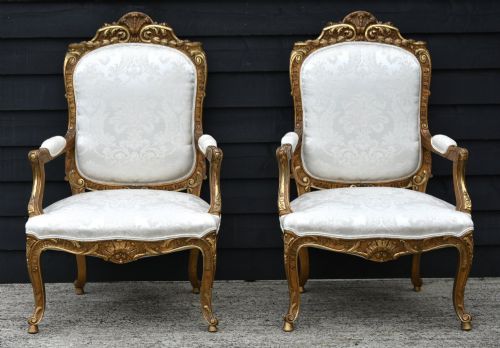
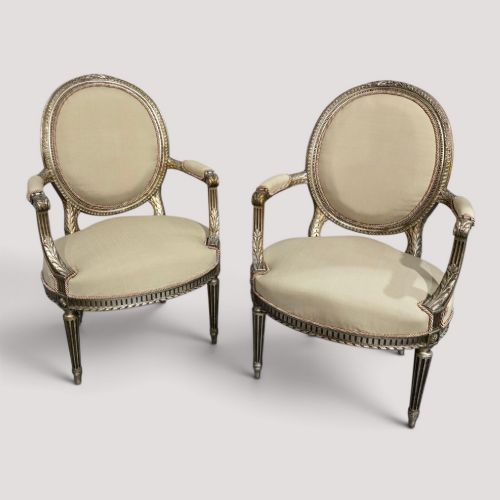
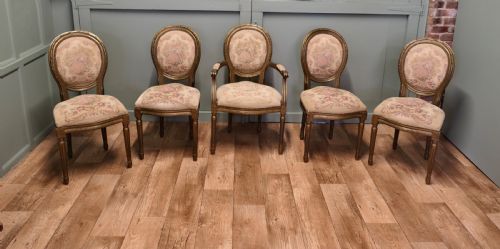
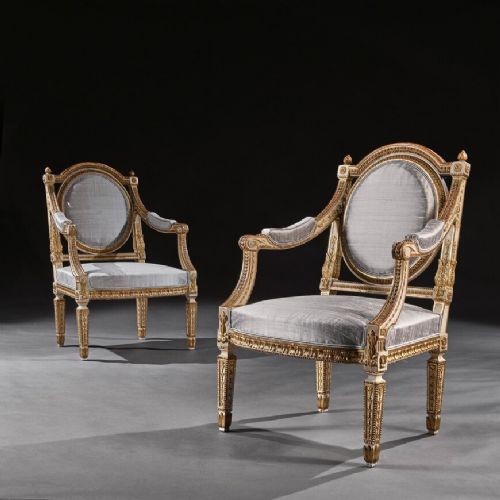
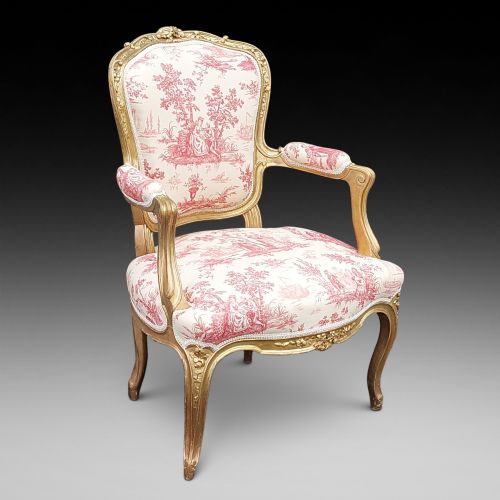
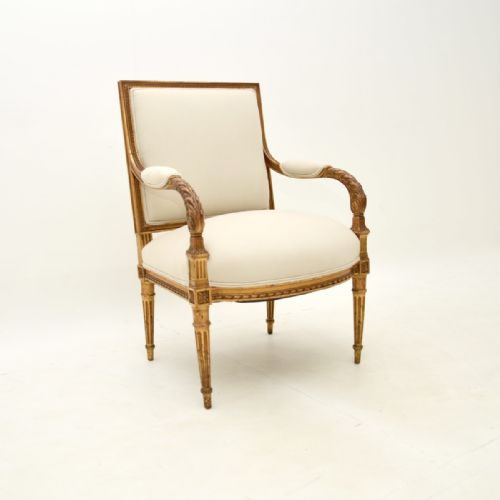
The pieces available here lean heavily toward nineteenth-century revivals of earlier French aesthetics, alongside eighteenth-century originals. Buyers frequently encounter pairs or salon suites reflecting Louis XVI style and Rococo Revival forms.
Makers produced these chairs for formal salons and drawing rooms, often grouping them into sets or suites with matching settees. Their forms range from petite bedroom chairs to large armchairs and full salon groupings.
Distinguishing quality in gilded seating
The crispness of the wood carving dictates much of the visual merit, separating fluid, deeply undercut ornamentation from soft, shallow detailing. Master carvers achieved clean lines and balanced proportions that define the silhouette.
The application and preservation of the gold leaf or painted finish determine the longevity of the surface sheen. Intact gilding with subtle burnishing reflects light differently than flat or heavily restored finishes.
Gilt Wood Fauteuil Retail Price Guide 2026
Typical asking prices for gilt wood fauteuil among the pieces listed under this phrase on Sellingantiques today, from the lower quarter to the upper quarter. They describe what is for sale here now, not the wider market.
Jacob-Desmalter
The Gilt Wood Fauteuil Glossary
- Fauteuil
- An open-armed upholstered armchair with exposed wooden framing, typical of French seating design. These chairs feature padded armrests and distinct back panels.
- Giltwood
- Timber coated with thin leaves of gold metal or gold leaf over a prepared base. This treatment creates a luminous, metallic surface finish on carved furniture.
- Rococo Revival
- A nineteenth-century design movement resurrecting the asymmetrical curves, C-scrolls, and naturalistic motifs of the eighteenth century. This style heavily influences many salon chairs of the period.
- Louis XVI Style
- A neoclassical design vocabulary characterised by straight tapering legs, rectangular backs, and classical architectural motifs such as fluting and beading. It provides the template for many formal armchairs.
- Salon Suite
- A matched group of seating furniture designed for a formal reception room, usually comprising a settee and multiple armchairs. These suites maintain uniform carving and upholstery.
Gilt Wood Fauteuil: Frequently Asked Questions
How do I date a gilt armchair?
Dating relies on examining the joinery, the style of the wood carving, and the materials used in the underlying construction. Nineteenth-century revival pieces often replicate eighteenth-century forms but utilise nineteenth-century assembly methods and secondary timbers.
Comparing the decorative motifs, such as neoclassical straight legs versus curving rococo lines, helps align the piece with specific historical periods like the Louis XVI or Victorian eras.
How were these chairs originally used?
These armchairs functioned as primary seating in formal reception rooms and salons where guests gathered for conversation. Their open arms accommodated the voluminous skirts and court dress worn during the eighteenth and nineteenth centuries.
They were arranged in groups alongside matching settees to encourage social interaction within grand domestic interiors.
Can I use an antique fauteuil daily?
These historic armchairs remain functional for gentle daily use provided the structural frame and joinery are secure. Many pieces feature updated upholstery that supports regular seating while preserving the antique wooden structure.
Placing them away from direct sunlight and excessive heat protects the delicate gilt surface and textile coverings from premature wear.