

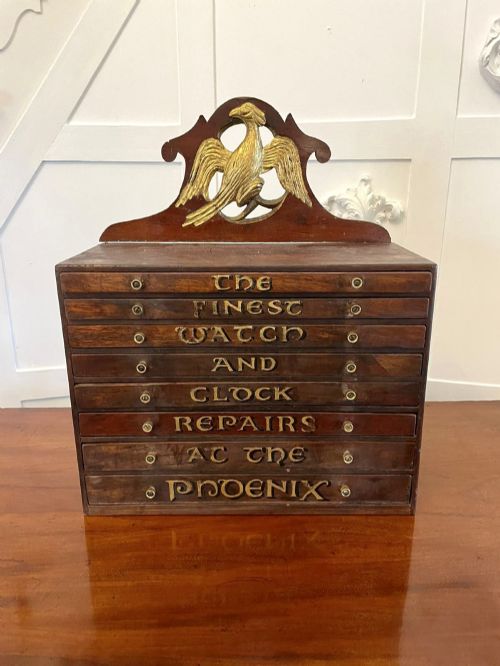

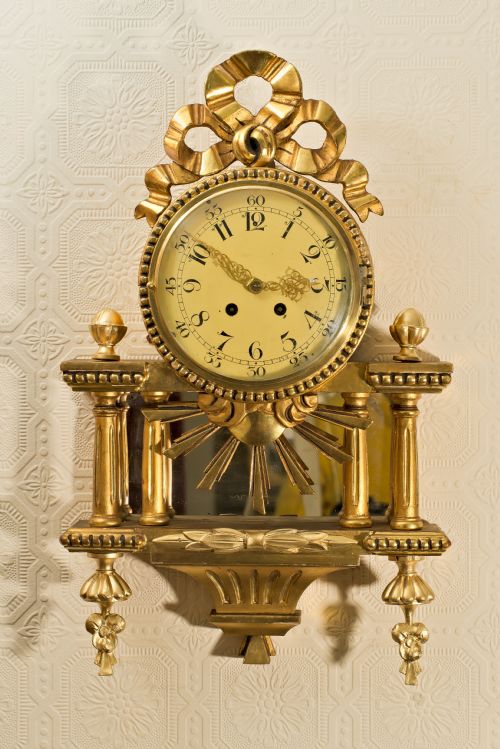


Gilt Wood Clock
A gilt wood clock brings warmth and golden reflection to a room, catching the light across centuries of British and continental design.
Gilt Wood Clock
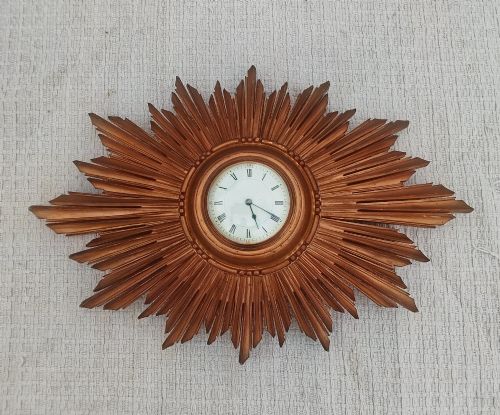
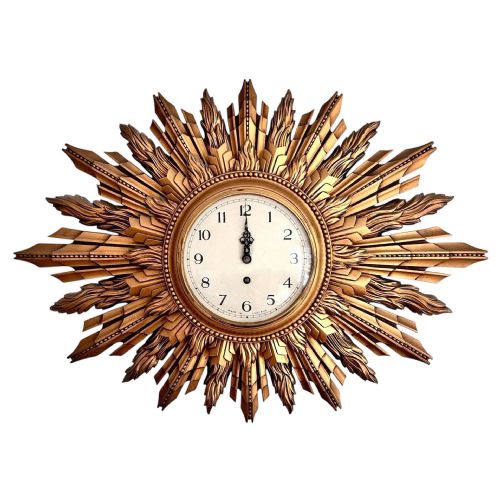
A gilt wood clock combines timekeeping with carved and gilded timber surfaces, taking forms from wall-hanging cartel designs to substantial bracket and mantel clocks. When you search for a gilt wood clock, you encounter pieces spanning from the eighteenth century through the Victorian era and into mid-century sunburst creations.
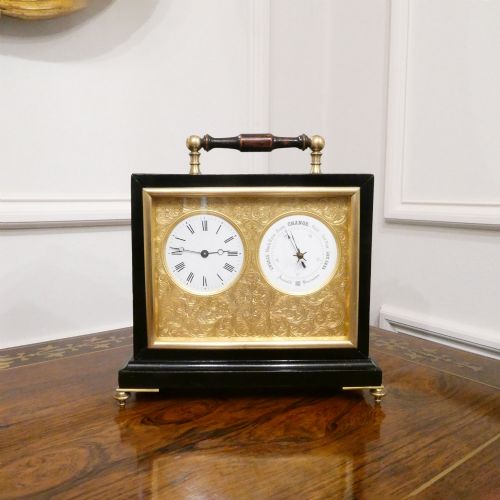
The selection on this page demonstrates considerable variety in regional style and scale. You will find items ranging from grand French-influenced cartel clocks to early twentieth-century starburst wall pieces and architectural mantel timepieces.
These clocks served both practical domestic purposes and decorative roles in period interiors. Their survival reflects the enduring appeal of gilded wooden surfaces combined with mechanical movements.
Materials and construction
Maker construction relies on carved timber carcasses coated in gold leaf or gesso and gilt, paired with brass movements and enamel dials. Ebonised wood, mahogany, and ormolu mounts frequently complement the primary giltwood surfaces.
Makers housed these mechanisms within specialised wooden cases designed to display both the clock face and the decorative carved housing. Glass panels and bronze mounts often protect and accent the delicate dials and pendulum assemblies.
Gilt Wood Clock Retail Price Guide 2026
Typical asking prices for gilt wood clock among the pieces listed under this phrase on Sellingantiques today, from the lower quarter to the upper quarter. They describe what is for sale here now, not the wider market.
Listings feature periods from the 1800s through the Victorian era and 1930s, utilising brass, glass, enamel, giltwood, and mahogany.
Quality and craftsmanship
Distinction across these clocks rests upon the depth of the wood carving and the precision of the gilding. Superior examples exhibit crisp detail in the acanthus leaves, sunburst rays, or architectural mouldings without softness in the gesso.
The sophistication of the mechanical movement further separates standard items from exceptional pieces. Clocks housing signed movements or complex chiming mechanisms demonstrate a higher tier of original workshop output.
Smiths·WETTERSTRANDS·Charles Frodsham·Gardner of London·Perivale·Henri Dasson
The Gilt Wood Clock Glossary
- Cartel clock
- A wall clock housed in an ornate, often asymmetrical or scroll-framed case made of giltwood or bronze. These pieces were designed to be mounted directly onto wall surfaces.
- Giltwood
- Timber that has been coated with a thin layer of gold leaf or powder over a prepared gesso ground. It provides a luminous, reflective golden finish characteristic of decorative furniture and clocks.
- Ormolu
- Finely chased and gilt bronze used as mounts or decorative accents on clock cases. The technique involves applying a mercury and gold amalgam to bronze.
- Fusée
- A conical pulley used in clock and watch movements to equalize the declining power of the mainspring as it unwinds. This mechanism ensures consistent timekeeping accuracy.
Gilt Wood Clock: Frequently Asked Questions
Where should I hang a wall clock?
Choose a wall with stable ambient conditions away from direct heat sources and excessive moisture. Ensure the supporting wall structure can securely bear the weight of the timber case and mechanical movement.
Position the clock at a comfortable eye level to make reading the dial and winding the movement straightforward during daily use.
How can I identify the period of a clock?
Examine the stylistic vocabulary of the wooden case, comparing elements like carved motifs and proportions against known design eras such as Victorian, Edwardian, or Art Deco. Stylistic markers often provide the clearest initial indication of date.
Inspect the backplate and movement components for maker signatures, serial numbers, or patent stamps. These mechanical details frequently narrow down the production decade.
What maintenance do these clocks need?
Keep the exterior surfaces clean by gently dusting the giltwood and glass with a soft, dry brush. Avoid using liquid cleaners or chemical polishes on gilded or ebonised wood.
Arrange for a professional horologist to service the mechanical movement periodically to ensure the train runs smoothly and wears evenly over time.