

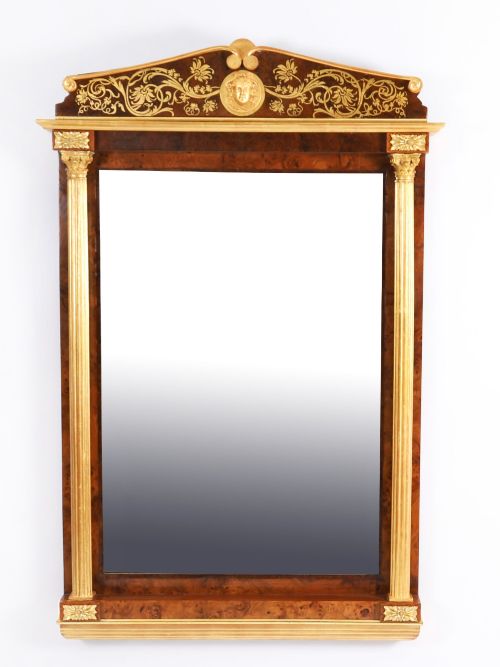
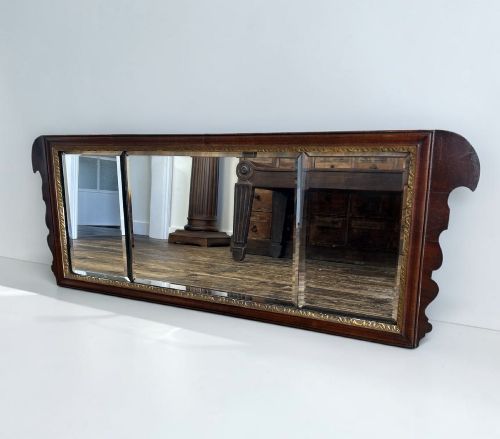


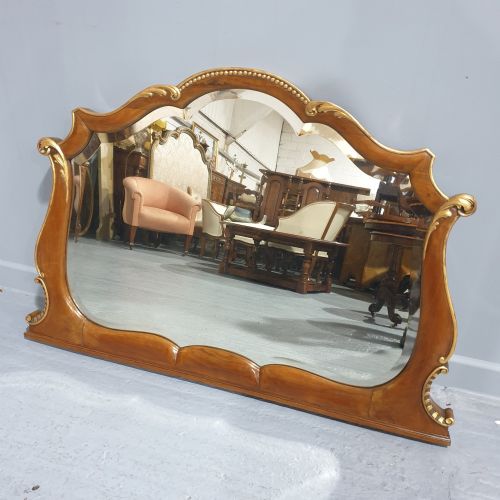
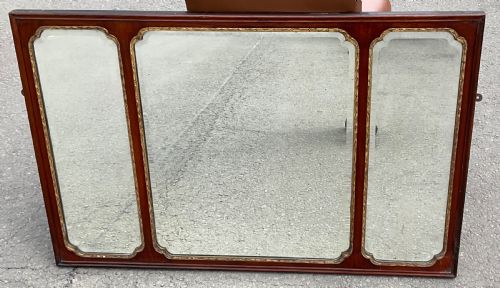


Gilt Walnut Overmantel
A gilt walnut overmantel brings warmth and reflective breadth to a room, combining rich timber with gilded detail above the fireplace.
Gilt Walnut Overmantel
A gilt walnut overmantel is a large mirror designed to hang specifically above a mantelpiece, framing reflective glass with timber and gold. These pieces merge the dark, figured warmth of walnut with parcel gilt or giltwood enrichment, offering a striking focal point for a room.
The versions most commonly met on this page span the nineteenth century and the Georgian era, including Victorian, Regency, and Aesthetic Movement interpretations. Makers often utilised burr walnut or ebonised accents alongside triple plates or large single mirror glass panels.
Forms range from compact country house wall mirrors to grand architectural overmantels designed for high-ceilinged reception rooms. Each piece reflects the decorative tastes of its period, from the restrained elegance of George I styles to ornate French Louis Philippe influences.
How they were made
Makers constructed these frames using solid walnut and burr walnut veneers applied to a secondary timber base, providing stability and a rich grain pattern. Gesso was then applied to carved wooden elements to create a smooth bed for the application of gold leaf or parcel gilt highlights.
Mirror glass was set into the rebates of the frame, often utilising multiple plates divided by slender mullions in the manner of triple plate Georgian and Regency designs. Joinery techniques varied from traditional pinned mortise and tenon joints in earlier periods to machine-assisted framing in later nineteenth-century examples.
Gilt Walnut Overmantel Retail Price Guide 2026
Typical asking prices for gilt walnut overmantel among the pieces listed under this phrase on Sellingantiques today, from the lower quarter to the upper quarter. They describe what is for sale here now, not the wider market.
Some nineteenth-century mirrors still hold the faint whisper of peat smoke trapped behind the original backing boards.
What varies in quality
Quality in a gilt walnut overmantel rests primarily on the selection of the timber and the crispness of the carving and gilding. Pieces featuring highly figured burr walnut veneer and delicate parcel gilt highlights demonstrate superior craftsmanship compared to plain or heavily distressed surfaces.
The integrity of the mirror glass and the depth of the original mercury or silver backing contribute significantly to the character and desirability of the piece. Well-balanced proportions and harmonious integration of the gilt elements with the dark walnut timber elevate certain examples above standard production.
The Gilt Walnut Overmantel Glossary
- Parcel Gilt
- Partially gilded, where gold leaf is applied only to specific carved details or mouldings while leaving the underlying walnut exposed. This technique creates a pleasing contrast between the dark timber and the bright metallic finish.
- Burr Walnut
- A distinctively figured timber harvested from the wart-like growths on walnut trees, prized for its swirling grain patterns. Cabinet makers utilised veneers of this wood to create decorative focal points on mirror frames and furniture.
- Gesso
- A plaster-like mixture applied to wood frames to provide a smooth, prepared surface for subsequent gilding. Traditional gesso allowed artisans to achieve sharp, intricate relief work before laying gold leaf.
- Overmantel Mirror
- A large mirror specifically proportioned to hang on the wall directly above a fireplace mantel. These pieces were historically positioned to reflect candlelight and daylight around a principal room.
- Triple Plate
- A mirror configuration where the glass is divided into three separate vertical or horizontal sections within a single frame. This method was common in Georgian and later revival overmantel designs.
Gilt Walnut Overmantel: Frequently Asked Questions
What is a gilt walnut overmantel?
A gilt walnut overmantel is a decorative mirror designed to be mounted on the wall directly above a fireplace. It combines the deep, figured tones of walnut wood with gilded highlights.
These pieces range from compact nineteenth-century country house mirrors to grand triple-plate designs spanning the Georgian, Victorian, and Regency periods.
Where should I hang an overmantel mirror?
The traditional and most effective placement is directly above a fireplace mantelpiece, where it acts as the visual anchor for the room. Hanging it at the correct height allows the glass to reflect light and architectural details.
Ensure the wall fixings are robust enough to support the substantial weight of timber, gesso, and mirror glass.
How do I identify the period of a mirror?
Dating relies on examining the construction timber, the style of the carving, and the assembly methods used in the frame. Characteristics such as ebonised details, burr walnut veneers, and specific moulding profiles align with eras like the Aesthetic Movement or the Georgian period.
The condition and composition of the mirror glass also provide clues regarding the age of the piece.
Can I use these mirrors in a modern interior?
These mirrors integrate well into contemporary spaces by adding historical texture, warmth, and a sense of scale. The contrast between dark walnut and gold leaf pairs effectively with both minimalist and traditional interior schemes.
Placing the mirror above a mantel or a low sideboard maximises its reflective qualities in a modern room.