



Gilt Sterling Silver Spoon
When you search for a gilt sterling silver spoon, you enter a field spanning Georgian berry spoons to mid-century enamel pieces.
Gilt Sterling Silver Spoon
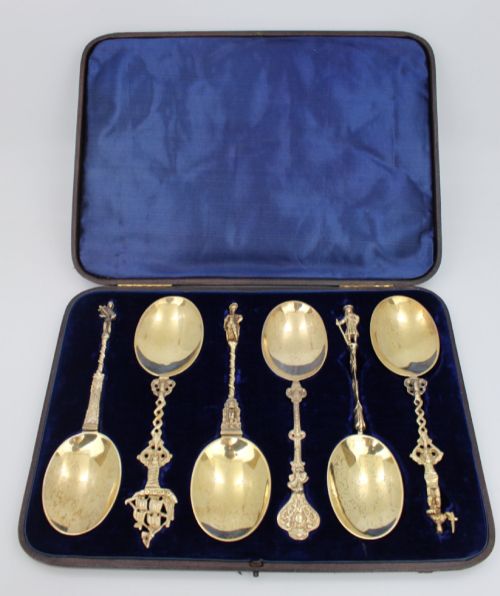
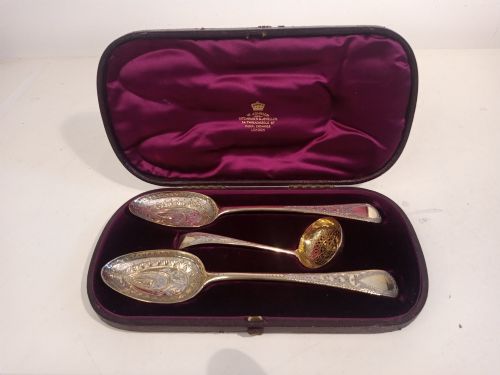
A gilt sterling silver spoon is a silver utensil coated in a layer of gold, historically achieved through fire gilding or later electroplating. These items appear in domestic forms such as caddy spoons, sugar sifters, and berry serving utensils, alongside medical collectibles and coffee sets.
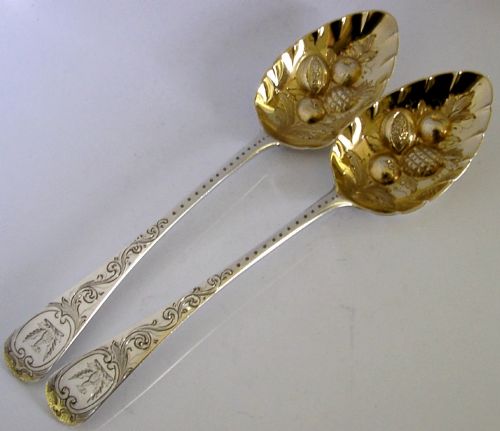
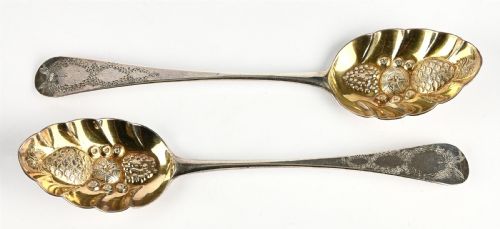
Georgian and Victorian examples dominate the earlier periods, often featuring repoussé fruit motifs, family crests, and engraved handles. Edwardian and mid-century items introduce coloured enamelwork, structural casting, and fitted presentation cases.
Buyers encounter individual items as well as matched sets intended for functional service or display. The object types range from small condiment spoons to large basting and serving utensils.
Materials and construction
The foundation metal is solid sterling silver, worked into shape by hammering, casting, or stamping depending on the period. Silversmiths then applied a gold wash, known as silver-gilt or vermeil, to the surface to provide a rich golden tone and protect the underlying silver from tarnishing.
Decoration techniques vary by era, incorporating hand-engraving, applied crests, chased fruit designs, and naturalistic leaf forms. Later pieces utilise vitreous enamel fused onto the metal surface to introduce vibrant colour panels.
Listings span the Georgian, Victorian, Edwardian, and Mid-Century Modern periods, utilising sterling silver, enamel, and velvet presentation linings.
Assessing craftsmanship and condition
Quality rests in the crispness of the chasing and engraving, where sharp detail indicates a skilled hand rather than a worn stamping die. The retention of the original gold wash across high-wear areas such as bowl interiors and tines also dictates desirability.
The presence of crisp hallmarks, maker marks, and original fitted presentation cases enhances the standing of a piece. Finer examples maintain structural integrity without thinning of the silver bowl or distortion to the handle.
Peter & Anne Bateman·William Chawner II·David Andersen·Sebastian Crespell
The Gilt Sterling Silver Spoon Glossary
- Silver-gilt
- Sterling silver that has been plated or coated with a thin layer of gold. This finish protects the metal and provides a warm yellow hue.
- Berry spoon
- A large serving spoon, typically Georgian or Victorian, decorated with chased or repoussé fruit and leaf designs on the bowl.
- Caddy spoon
- A short-handled spoon designed for measuring loose tea leaves from a caddy. These frequently feature shovel-shaped or shell bowls.
- Sifter spoon
- A utensil with a pierced or slotted bowl used for dusting sugar over food. They appear alongside sugar bowls in matched cased sets.
- Vermeil
- High-quality sterling silver covered with a thick layer of gold. The term is frequently applied to continental European and cased tableware.
Gilt Sterling Silver Spoon: Frequently Asked Questions
What is a silver gilt spoon used for?
These utensils served specific domestic tasks including serving fruit, sifting sugar, measuring tea, and enjoying coffee or grapefruit.
Many larger examples functioned as ceremonial pieces, baptism spoons, or decorative table silver housed in fitted boxes.
How do I care for a gilt spoon?
Gentle washing in warm soapy water with a soft cloth preserves the delicate gold wash without wearing away the surface layer.
Avoid abrasive dips or harsh silver polishes that strip the underlying gilding from the sterling silver base.
Are these spoons solid silver?
The base metal is solid sterling silver, marked with standard hallmarking to denote its purity and origin.
The gold appearance comes from a secondary layer of gold applied to the surface of the silver.
How do I date a silver spoon?
British pieces carry hallmarks that include date letters, city marks, and maker stamps to identify the exact year and place of creation.
Stylistic shifts, from Georgian chased fruit motifs to mid-century enamel work, also help place an item in its period.