


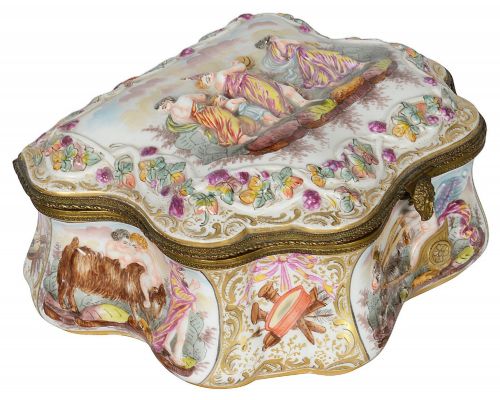


Gilt Porcelain Jewellery Box
These gilt porcelain jewellery box pieces bring together painted ceramics and metal mountings to hold small treasures on a dressing table.
Gilt Porcelain Jewellery Box
A gilt porcelain jewellery box is a small container designed to hold precious trinkets, combining a ceramic body with metal mounts. The pieces seen here span the eighteenth century up to the late nineteenth century, including the Victorian period and Napoleon III era.
You are most likely to encounter French work, particularly pieces associated with Sevres, alongside Italian Capodimonte and German Meissen productions. These items take the form of round boxes, table caskets, and small display boxes that sit upon desks or dressing tables.
The forms frequently draw upon Rococo Revival, French Louis XV Revival, and Neoclassical styles. Alongside traditional trinket boxes, the selection includes larger bijouterie tables and display tables framed in ormolu and gilt brass.
How they were made
The construction relies on combining fired ceramic bodies with cast metal mounts such as ormolu, gilt bronze, and gilt brass. Artisans painted the porcelain surfaces by hand, often utilising deep blue or cobalt grounds before applying gold leaf and fine detailing.
Structural elements incorporate secondary materials including walnut and kingwood for wooden display tables and internal frames. Metal hinges, clasps, and feet are joined to the porcelain using pins and screws to secure the delicate ceramic panels.
Gilt Porcelain Jewellery Box Retail Price Guide 2026
Typical asking prices for gilt porcelain jewellery box among the pieces listed under this phrase on Sellingantiques today, from the lower quarter to the upper quarter. They describe what is for sale here now, not the wider market.
Listings feature items spanning the eighteenth century through the nineteenth century, including Victorian and Napoleon III periods.
What varies in quality
Quality rests primarily on the fineness of the hand painting upon the porcelain and the crispness of the gilt metal mounts. Pieces featuring detailed figural or floral scenes demonstrate a higher standard of ceramic artistry than plain coloured grounds.
The weight and chasing of the ormolu or gilt bronze frame distinguish finer work from simpler brass fittings. Heavier, deeply chased mounts that fit snugly against the contours of the porcelain indicate superior workshop production.
The Gilt Porcelain Jewellery Box Glossary
- Ormolu
- Gilded bronze mounts used to edge and support ceramic panels. This technique involves applying a gold amalgam to bronze before heating.
- Bijouterie table
- A glass-topped display table designed to showcase small valuable items. These pieces elevate the function of a standard jewellery box into furniture.
- Capodimonte
- Italian porcelain originating from the historic Naples factory. Pieces from this tradition often feature relief-moulded figures and detailed hand painting.
- Sevres
- The renowned French porcelain manufactory producing high-status decorative items. Items bearing these marks typically display rich blue grounds and refined gilding.
Gilt Porcelain Jewellery Box: Frequently Asked Questions
What were gilt porcelain jewellery boxes used for?
These boxes served to store rings, brooches, and other small valuables on dressing tables and boudoirs. Wealthy owners used them both for practical organisation and to display their taste.
Larger variants and bijouterie tables functioned as decorative furniture pieces in nineteenth-century salons to exhibit collected curiosities.
How do I date a porcelain jewellery box?
Dating relies on observing the stylistic indicators of the mounts and the painting techniques on the ceramic body. Pieces from the eighteenth century show different enamel palettes compared to later Victorian or Napoleon III revivals.
Examining the construction of the metal hinges and the type of gilt brass or ormolu provides further clues to the manufacturing decade.
Where were these boxes made?
The majority of pieces originate from French workshops, particularly in Paris, drawing on porcelain traditions from Sevres. Other notable origins include Italian centres producing Capodimonte and German factories such as Meissen.
French makers frequently combined local porcelain or imported blanks with elaborate gilt bronze and ormolu framing.
How do I care for antique porcelain boxes?
Keep these pieces away from direct sunlight and areas of high moisture to protect the delicate hand-painted surfaces and gilt highlights. Dust them gently with a soft, dry cloth without applying commercial cleaners.
Handle the metal lids and hinges with care, avoiding strain on the pins that join the porcelain panels to the bronze mounts.