



Gilt Framed Plaster Cameos
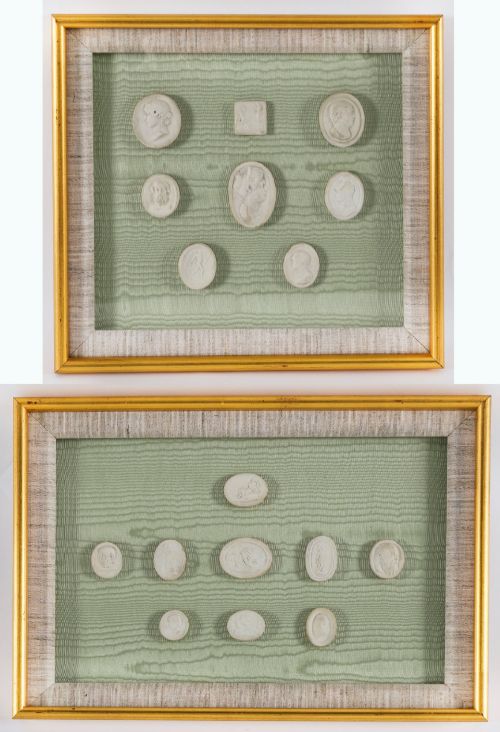
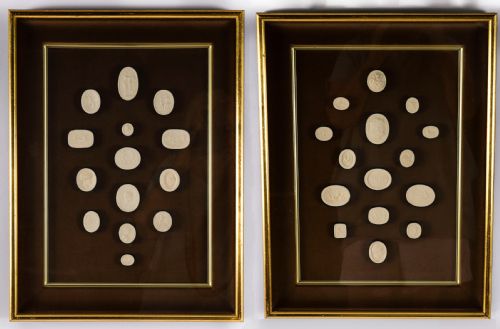
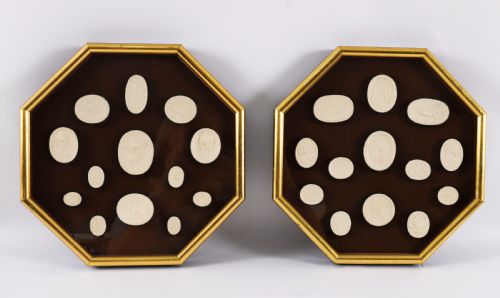
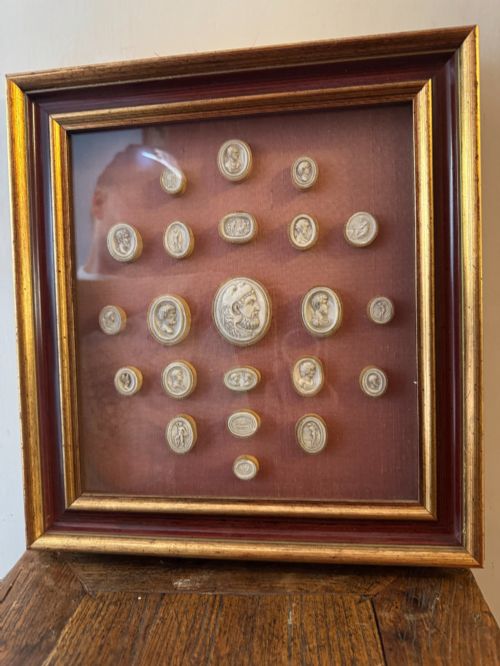
Gilt framed plaster cameos bring classical mythology and portraiture directly into a room through finely cast gypsum profiles.
Gilt Framed Plaster Cameos
When searching for gilt framed plaster cameos, a buyer finds miniature sculptural reliefs modelled after classical antiquities. These decorative objects take the form of individual framed wall art, pairs, or larger structured collections containing multiple medallions. Most examples encountered here originate from the nineteenth century and reflect the grand tour tradition.
The subjects draw heavily on classical mythology, historical emperors, and ancient sculpture encountered by travellers in Italy. Makers arranged these white plaster casts neatly against backing materials inside wood or giltwood frames. Both single panels and elaborate multi-cast sets appear frequently across the selection.
How they were made
Craftsmen produced these works by pouring liquid plaster or gypsum into moulds taken directly from antique gems and carved stones. The resulting crisp white casts were then mounted onto backing fabrics such as velvet or silk inside protective wooden enclosures.
Frames utilised carved wood enhanced with gold leaf or gilt finishes to present the white reliefs sharply. Glazing often protected the delicate plaster medallions from dust and handling within their frames.
Current listings feature nineteenth century grand tour plaster intaglios set in wood, giltwood, velvet, and glass.
What varies in quality
The distinction between standard and superior pieces rests upon the crispness of the plaster casting and the sophistication of the arrangement. Skilled modellers captured minute facial details and classical lettering cleanly, whereas inferior casts appear soft or blurred.
Framing standards also dictate overall merit, with period giltwood mouldings and well-preserved velvet backings elevating the presentation. Sets featuring signed works by established makers command particular attention for their documentary value.
Giovanni Liberotti·Pietro Bracci
The Gilt Framed Plaster Cameos Glossary
- Cameo
- A method of carving where a relief image stands out distinctly from a contrasting background. In this context, plaster casts imitate carved stone cameos.
- Intaglio
- An engraved design sunk below the surface of the material so that an impression taken from it forms a relief. Many grand tour plaster casts reproduce classical intaglios.
- Grand Tour
- A traditional trip through Europe, chiefly Italy, undertaken by upper-class European young men of the eighteenth and nineteenth centuries as a part of their education. Souvenirs included plaster cast collections of ancient art.
- Gypsum
- A soft sulphate mineral used to create plaster of Paris for casting medallions. It provides the smooth, bright surface seen on these classical reliefs.
- Giltwood
- Wood that has been treated with gold leaf or gilt paint to create a metallic golden surface. It frames the plaster reliefs to create a striking visual contrast.
Gilt Framed Plaster Cameos: Frequently Asked Questions
What are grand tour plaster cameos?
Grand tour plaster cameos are small sculptural casts made as souvenirs by travellers visiting classical sites in Italy during the eighteenth and nineteenth centuries. They record famous ancient sculptures and gems for study and display at home.
These pieces were often mounted in sets within decorative wooden frames to hang upon study or drawing room walls.
How should I hang framed plaster cameos?
Hang these framed artworks away from direct sunlight and damp environments to protect the delicate plaster surfaces and backing fabrics. Wall placement at eye level allows the fine details of the classical reliefs to be appreciated properly.
Ensure secure fixings are used, particularly for larger multi-cast frames and heavier giltwood structures.
How do I identify nineteenth century pieces?
Nineteenth-century pieces typically exhibit hand-carved wooden frames finished with genuine gold leaf and backed with period textiles like velvet. The plaster casts themselves display the sharp detailing characteristic of nineteenth-century mould making techniques.
Construction methods on the reverse of the frames, including old fixings and paper tape, further help determine the period.