



Gilt Framed Chinese Art
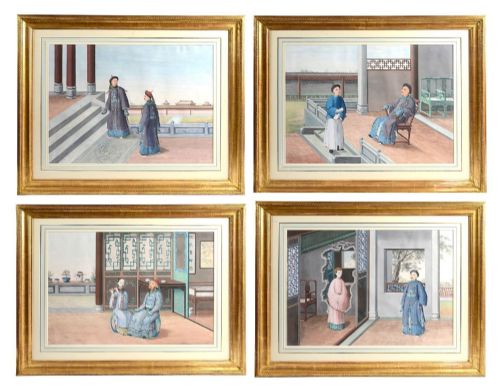
These pieces of gilt framed chinese art bring traditional export subjects and domestic scenes into domestic interiors.
Gilt Framed Chinese Art
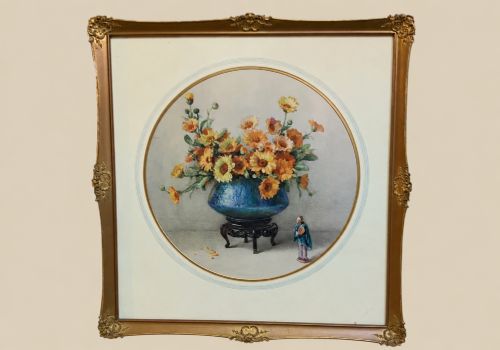
Gilt framed chinese art covers a varied selection of wall art, paintings, oil paintings, watercolour paintings, and framed artwork created for export or within Anglo-Chinese contexts. Buyers searching for gilt framed chinese art will find works spanning the eighteenth, nineteenth, and early twentieth centuries, including the Regency and Victorian periods.
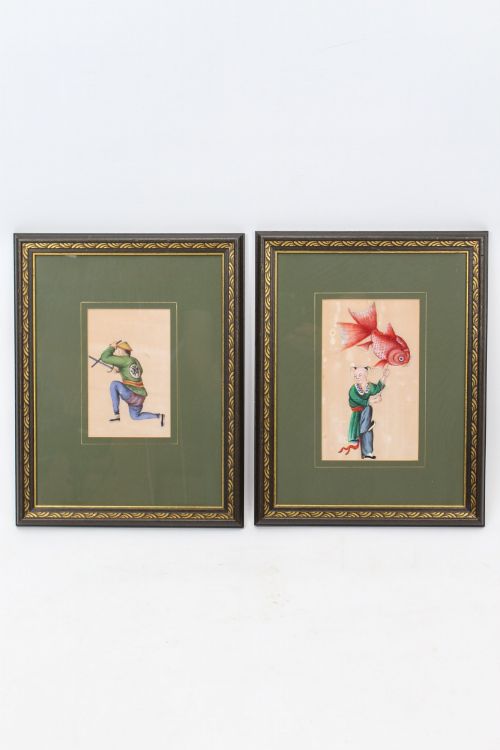
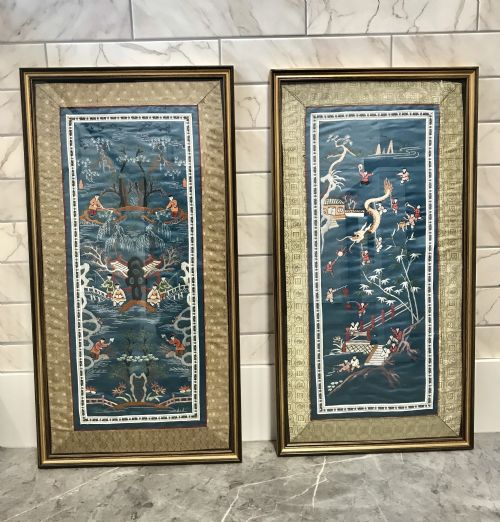
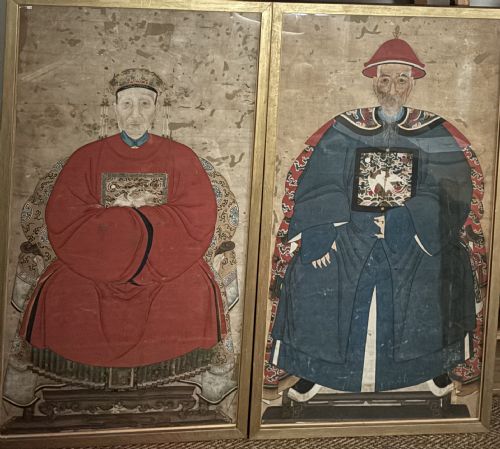
The objects take several forms, ranging from reverse painted mirrors and ancestor portraits to marine paintings of junks on the Pearl River. Textile art, silk embroidery panels, and delicate watercolours on pith paper also appear within this category, housed within decorative surrounds.
Many of these pieces reflect cross-cultural exchange, such as Anglo-Chinese portraits of British gentlemen and ship portraits by the Chinese School. Traditional Chinese motifs, flowers, dragons, and still life compositions feature prominently across the selection.
Materials and construction
The physical works utilise a range of delicate supports including silk, canvas, paper, pith paper, and glass for reverse painting. Pigments such as watercolours, gouache, and oil are applied by hand, alongside detailed silk embroidery with hand-sewn panels.
The framing component relies heavily on wood and gilt wood, providing structural support and decorative metallic brilliance to the artworks housed within. Glass protects fragile surfaces like pith paper and textiles from environmental wear.
Distinctions in quality
Quality rests upon the fineness of the hand execution, whether in the delicate brushwork of a butterfly on pith paper or the intricate needlework of a silk embroidered panel. Works demonstrating precise draughtsmanship and balanced composition stand apart from simpler commercial export pieces.
The preservation of the materials dictates desirability, particularly with fragile mediums like pith paper, silk, and reverse glass paintings that suffer from damp or cracking. Originality and condition of the accompanying gilt wooden frames further influence the standing of each piece.
Ah Hee Studio
The Gilt Framed Chinese Art Glossary
- Pith paper
- A delicate material formed from the pith of the Tetrapanax papyrifer plant, commonly utilised for botanical and insect watercolours in the nineteenth century. It possesses a velvety texture that absorbs water-based pigments brilliantly.
- Reverse painted mirror
- An image painted directly onto the back of a glass panel so that the correct view is seen from the front. This technique was popular for export items sent to Western markets.
- China trade
- A term describing goods, including art and textiles, produced in China specifically for export to Western buyers from the eighteenth through the early twentieth centuries. These pieces often blend Eastern subjects with Western framing preferences.
- Anglo-Chinese
- Art produced either by British artists working in China or Chinese artists adopting Western pictorial conventions. Portraits of British gentlemen and merchant shipping scenes frequently fall into this category.
- Ancestor portrait
- Formal depictions of family forebears created for veneration and domestic ritual within Chinese households. Their formal poses and traditional robes mark them out from casual portraiture.
Gilt Framed Chinese Art: Frequently Asked Questions
What is pith paper art?
Pith paper paintings are watercolours executed on a fragile, spongy plant material that yields a unique luminous quality. Artists utilised this medium extensively for portable export works depicting local flora, fauna, and figures.
Buyers should handle these framed pieces with care because the material is sensitive to moisture and physical pressure. The glass front of the frame helps protect the fragile surface from damage.
How do I date these artworks?
Dating relies on stylistic clues, framing techniques, and subject matter such as trading junks or Victorian costume details. Nineteenth-century pieces often display specific export characteristics that distinguish them from later twentieth-century productions.
Examining the backing boards, fixings, and the composition of the gilt wood frames provides additional chronological evidence. Comparing the pigments and paper types to known dated examples helps narrow the period further.
Where were these pieces made?
These works originated primarily in Chinese export centres such as Canton and Hong Kong, tailored for Western merchants and travellers. Other pieces reflect Anglo-Chinese collaborations where British subjects were painted by local artists.
Many objects returned to Britain via maritime trade routes, which explains their current presence in British collections. The framing often reflects European tastes applied either at the point of origin or upon arrival.
How should I display them?
Display these framed works away from direct sunlight to prevent the fading of delicate watercolours, silk embroidery, and gouache pigments. Maintaining stable indoor humidity prevents the gilt wood frames and fragile paper supports from warping or cracking.
Allowing sufficient wall space around each piece highlights the detailed handwork of the painting or textile. Secure hanging methods are essential due to the weight of the wooden frames and glass.