
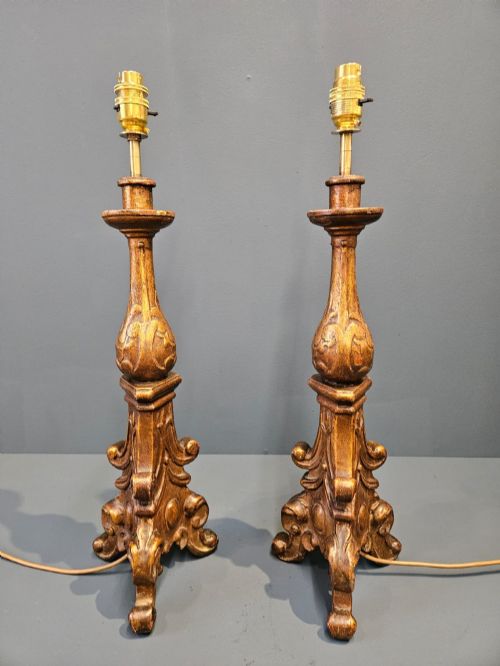

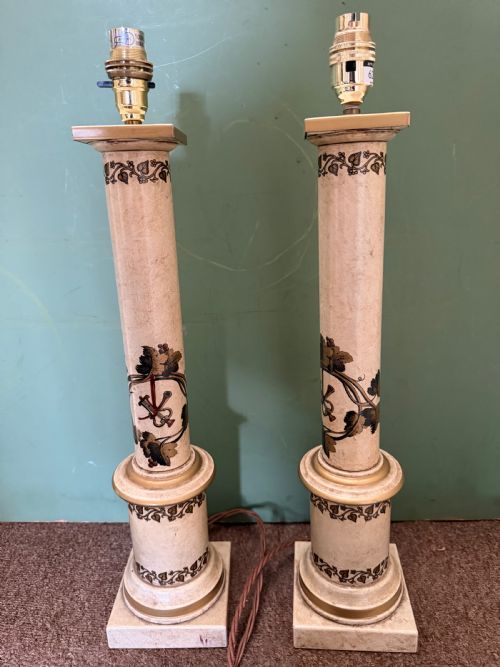


Gilt Column Table Lamps
These gilt column table lamps bring classical proportion and bright metallic warmth to a room, drawing the eye with their upright form and gilded surface.
Gilt Column Table Lamps
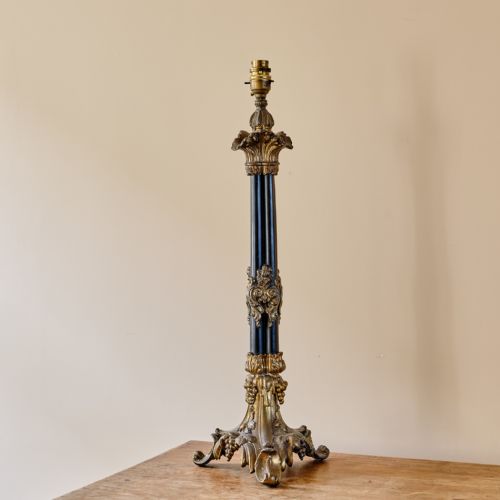
When you search for gilt column table lamps, you are looking at upright lighting pieces that draw inspiration from classical architecture, translating structural pillars into domestic scale. The examples available here span the nineteenth century through the early twentieth century, showing strong French and English influences in their design.
You will frequently encounter pieces styled in the French Empire, Regency, and Victorian periods, often taking the form of adapted candlesticks or oil lamps. Many pieces employ materials like ormolu, gilt bronze, and brass to create the characteristic golden column support.
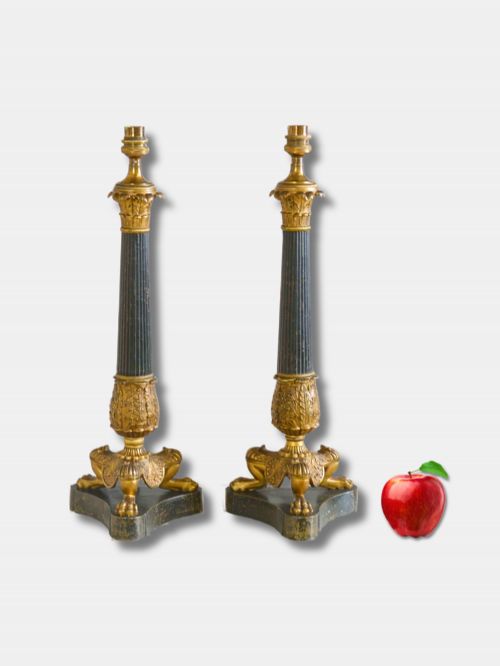
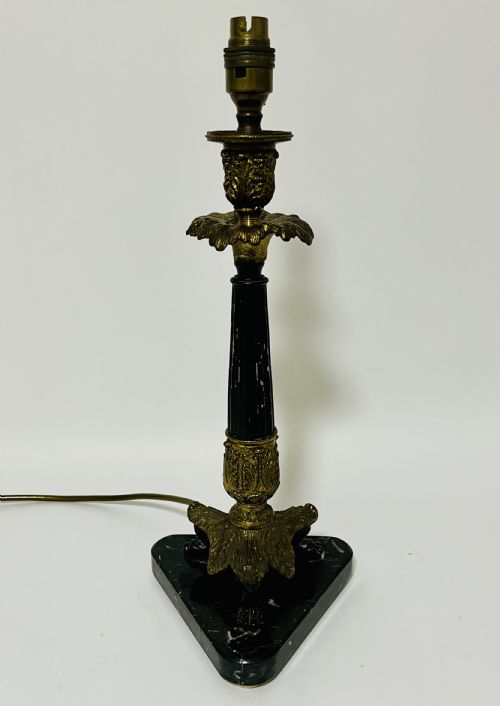
The architectural vocabulary is rich, ranging from plain cylindrical shafts to fluted designs topped with Corinthian capitals. Paired sets appear alongside singular statements, incorporating bases of marble, onyx, or patinated bronze to anchor the metallic sheen.
Construction and Materials
The foundational shafts rely on cast metals such as brass, bronze, and gilt bronze, often assembled in sections to build height and definition. Ormolu components provide rich, fire-gilded surface highlights that contrast sharply against patinated bronze or black toleware bases.
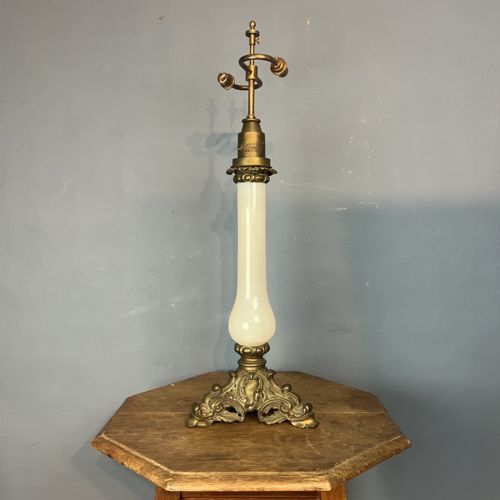
Natural stone elements like marble, alabaster, and onyx frequently form the stepped plinths or central shafts, adding substantial weight and varied mineral veining. Glass elements, including crystal, blue glass, and opaline, introduce translucency and reflect the light from the column above.
Surface decoration extends to carved gilt-wood and lacquered finishes, alongside specialised touches like faux lapis lazuli columns. Craftspeople utilised precise metal-casting techniques to achieve crisp mouldings, lion paw feet, and detailed foliate capitals.
Materials across these listings frequently combine gilt bronze, ormolu, and brass with marble, onyx, and alabaster bases.
Judging Quality
Quality rests heavily on the crispness of the metal casting and the depth of the gilding, where finely chased ormolu details stand well apart from simpler stamped brass. The integration of contrasting materials, such as solid marble bases and genuine rock crystal columns, elevates a piece through weight and material honesty.
Proportion and architectural correctness dictate the visual success of the column, separating balanced classical revivals from heavier, less refined interpretations. Makers who incorporated signed components, patent markings, or unusual decorative motifs like mythical bases add historical weight to the physical object.
Mc Garys Patent
The Gilt Column Table Lamps Glossary
- Ormolu
- Gilt bronze produced by applying a mercury and gold amalgam to a bronze base and firing it to drive off the mercury. This technique creates a durable, warm golden finish seen on fine nineteenth-century mounts.
- Corinthian column
- A classical architectural column style featuring an ornate capital decorated with acanthus leaves and scrolls. It appears frequently on the tops of these lamps.
- Toleware
- Lacquered or enamelled metalware, usually painted in black or dark colours with decorative motifs. It provides a dark, matte contrast to the bright gilt metal columns.
- Patinated bronze
- Bronze that has aged naturally or through chemical treatment to display a darkened, weathered surface. This darker tone often grounds the brighter gilded sections of the lamp.
Gilt Column Table Lamps: Frequently Asked Questions
What periods do these lamps come from?
The pieces span the nineteenth century through the early twentieth century, encompassing Regency, Victorian, and early twentieth-century production.
French Empire and neoclassical revivals dominate the aesthetic, drawing on eighteenth-century architectural motifs translated into domestic lighting.
How were these lamps originally used?
Many examples began life as candlesticks or oil lamps before undergoing later conversion to electricity for modern interior lighting.
Their upright columnar form was designed to sit on side tables, etageres, or mantelpieces, providing elevated illumination within principal rooms.
How do I style a gilt column lamp?
These pieces suit traditional and transitional interiors where their classical proportions can anchor a room's decorative scheme.
Pair them with simple fabric shades to let the gilded bronze, marble, and crystal columns remain the visual focus of the arrangement.
How can I tell the difference between periods?
Regency and early nineteenth-century pieces often feature crisp ormolu casting and classical motifs like lion paw feet and bronze patination.
Later Victorian and early twentieth-century examples frequently incorporate onyx, opaline glass, or painted finishes alongside standard brass and gilt components.