
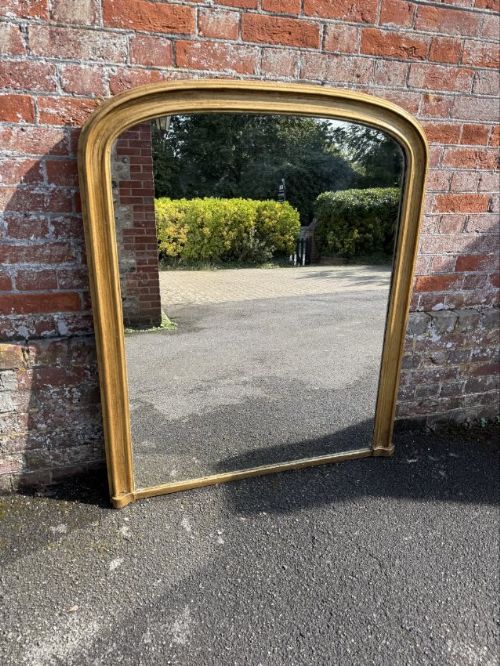
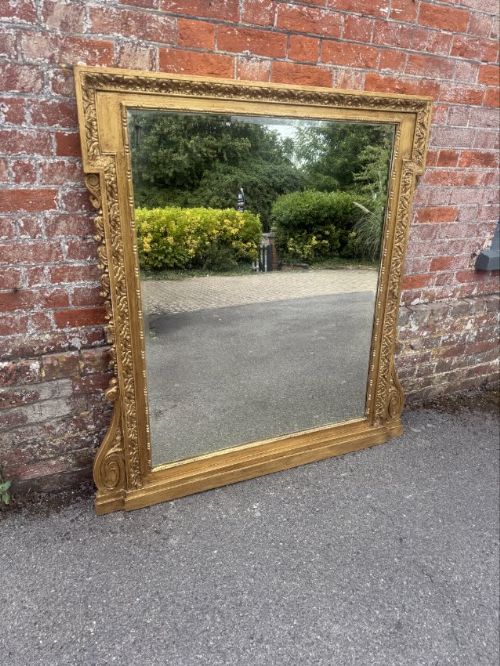
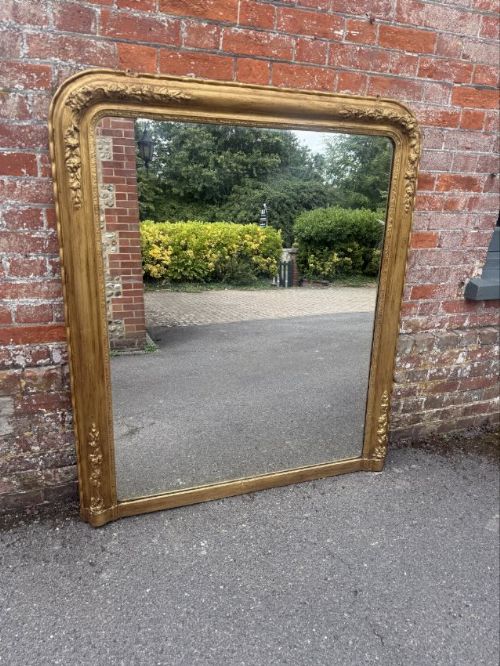
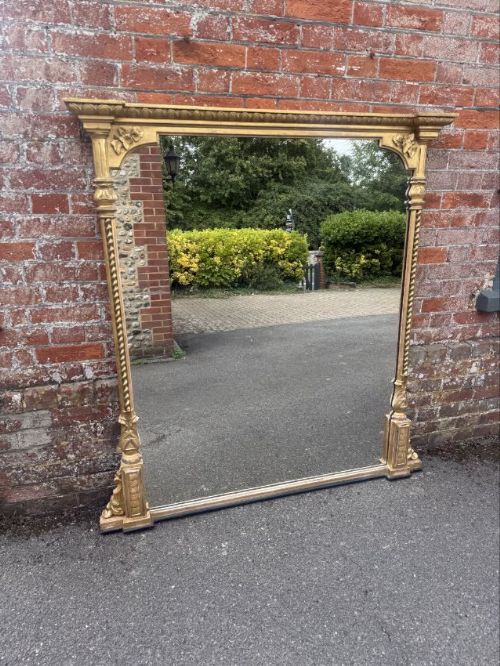
Gilt Chimney Mirror
A gilt chimney mirror brings warmth and reflection to a room, sitting naturally above a hearth as a grand focal point.
Gilt Chimney Mirror
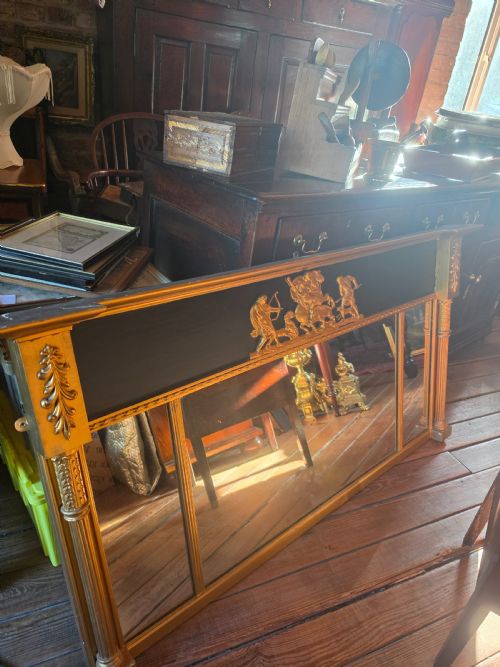
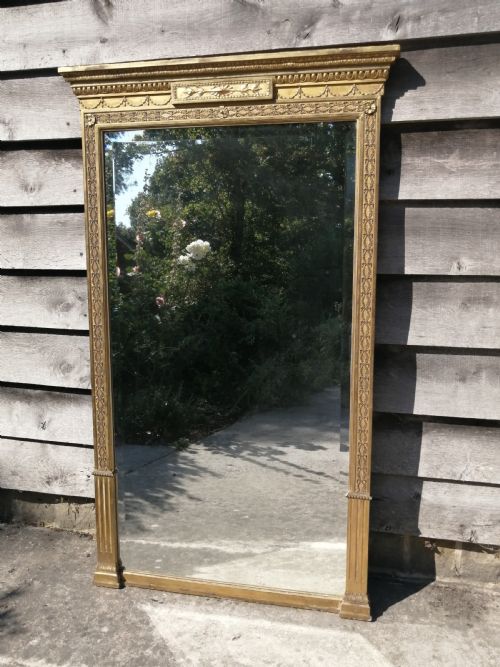
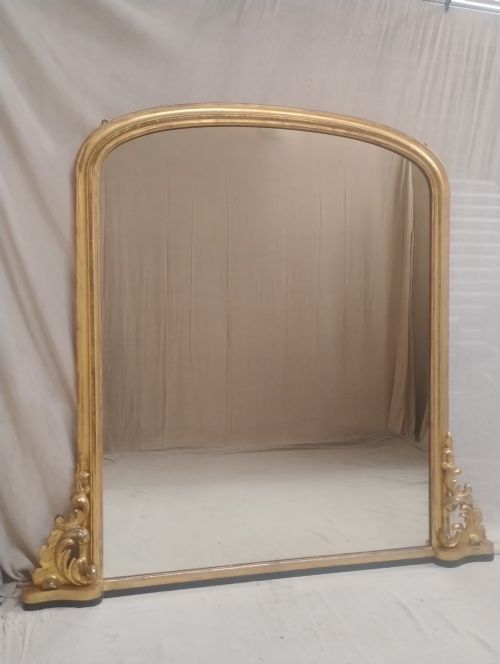
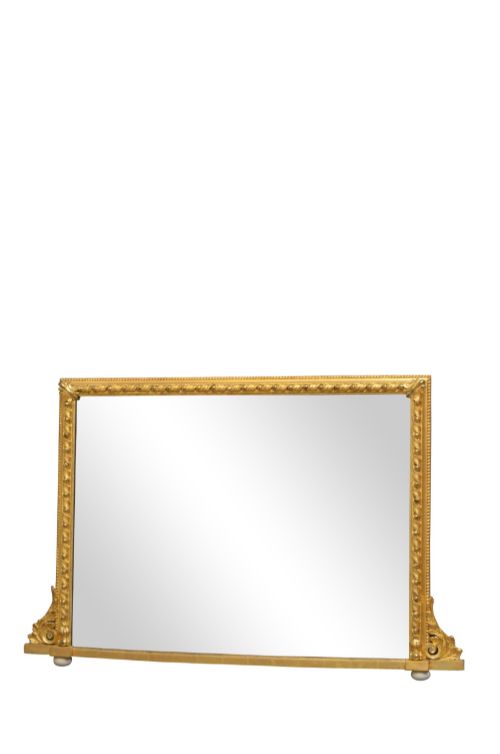
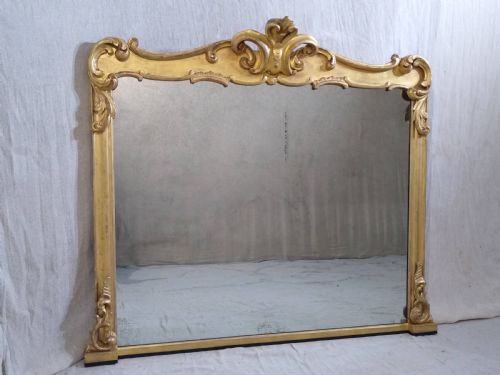
A gilt chimney mirror is a large wall-hanging looking glass designed to sit above a fireplace, frequently referred to in listings as an overmantel mirror. These grand pieces originate predominantly from the nineteenth century, encompassing Regency, Victorian, and Edwardian periods.
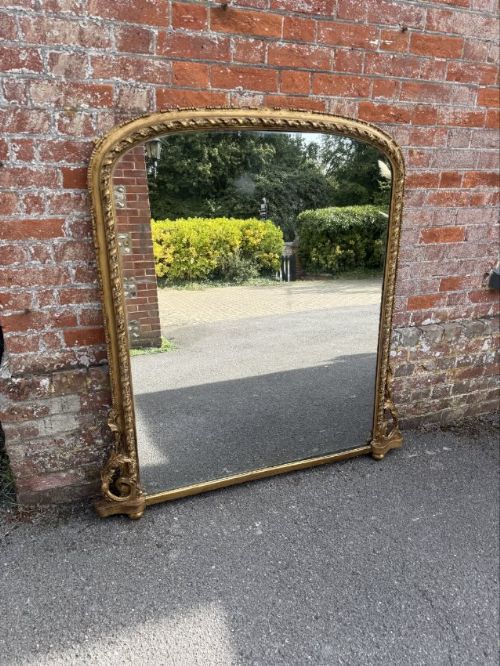
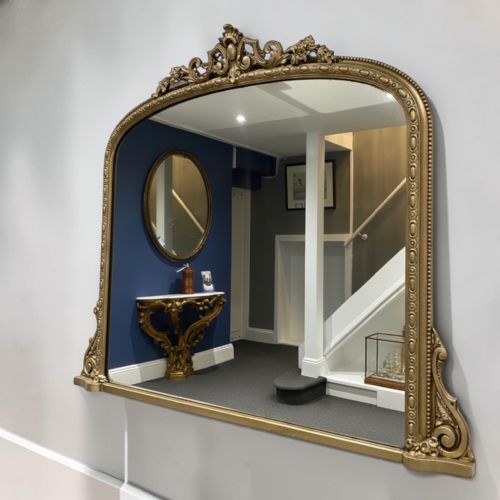
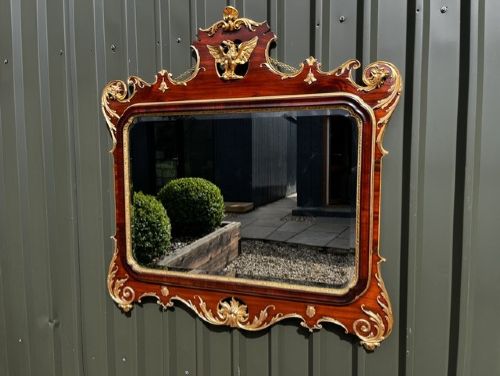
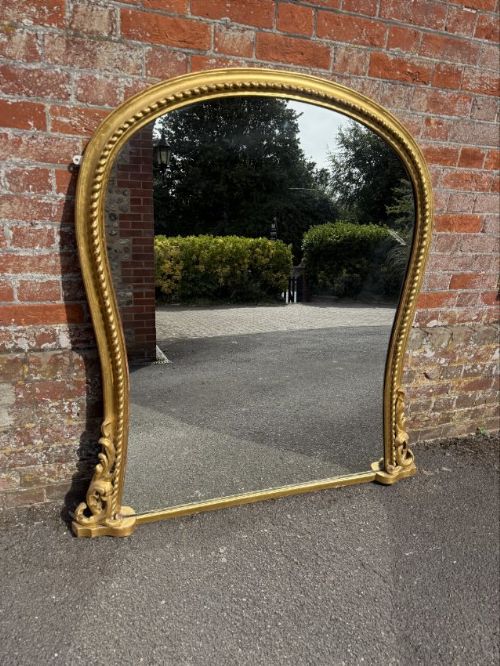
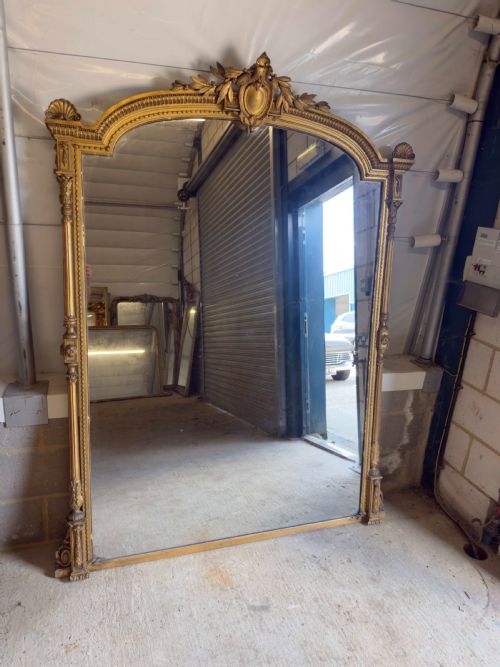
The most common form on this page is the large nineteenth-century overmantel mirror, often constructed with an arched or shaped top. Examples span various aesthetic traditions including Neoclassical, Chippendale, and Louis Philippe styles.
Makers and craftsmen produced these mirrors in considerable dimensions to occupy the wide wall space above mantelpieces, serving both practical reflection and decorative presence.
How they were made
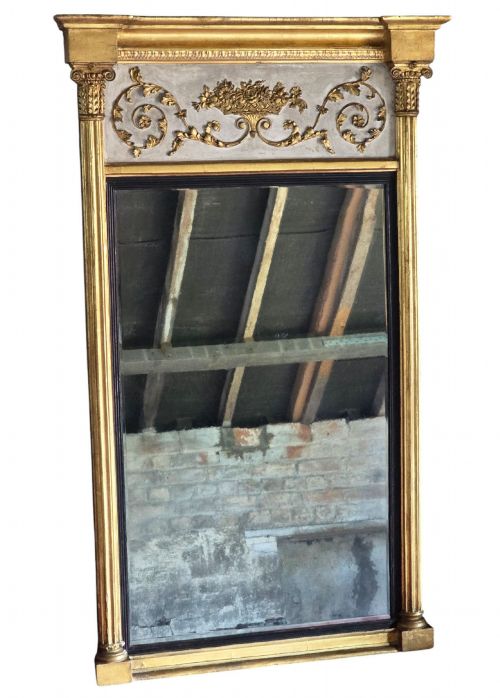
Carved wood provides the primary structural framework for these mirrors, frequently combined with gesso to build up intricate surface ornamentation. Artisans applied gold leaf or composition mouldings over the wooden base to achieve the characteristic metallic finish.
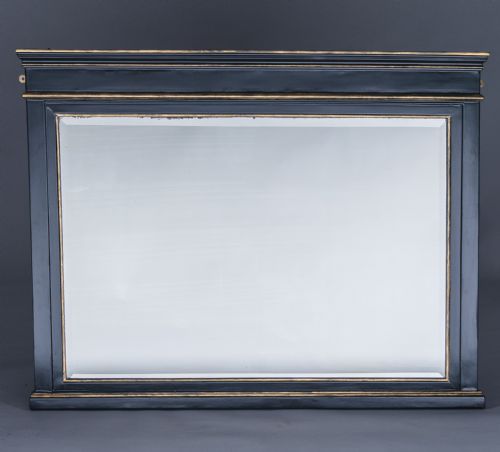
Mirror glass panels are set within these frames, sometimes showing original foxing or ageing. Certain pieces incorporate ebonised wood or mahogany alongside the standard gilt surface treatments.
Certain nineteenth-century Irish pieces conceal charming sculptural surprises, including hand-carved squirrels and Ho Ho birds perched within the gilt framework.
What varies in quality
The depth and crispness of the carved wood and gesso ornamentation dictate the visual distinction of a piece. Finer examples display meticulously shaped frames, rope twist details, or ribbed columns executed with precision rather than simplified moulding.
The integrity of the original mercury or silvered mirror glass plate, alongside the preservation of the original gilding, separates standard decorative pieces from exceptional collector items.
The Gilt Chimney Mirror Glossary
- Gesso
- A plaster-like mixture applied to wood frames to create a smooth surface for gilding. It allows for intricate relief moulding.
- Giltwood
- Timber that has been coated with gold leaf or a gold-coloured finish. This material defines the bright, reflective appearance of the frames.
- Overmantel
- A large mirror or painting designed specifically to hang above a mantelpiece. These pieces anchor the visual weight of a fireplace wall.
- Trumeau
- A decorative wall mirror or panel featuring a combination of glass and painted or carved artwork. These originate from classical interior design traditions.
- Foxing
- The brown spots and speckles that develop on antique mirror glass over time due to the degradation of the backing. Collectors often value original foxing as proof of age.
Gilt Chimney Mirror: Frequently Asked Questions
Where should I hang a gilt chimney mirror?
These mirrors traditionally anchor the space directly above a fireplace mantelpiece, where their scale reflects light across the room.
They also function effectively on large expanse walls in reception rooms to create an illusion of depth and space.
How do I identify a Regency period mirror?
Regency pieces often incorporate classical motifs, architectural framing, and bold giltwood mouldings reflecting early nineteenth-century design.
They frequently feature tripartite plate layouts or distinct convex and concave surface profiles.
What is foxed glass?
Foxed glass refers to the natural spotting and ageing that occurs on antique mirror plates as the reflective backing oxidises over decades.
This characteristic confirms the authenticity of the glass rather than indicating a modern replacement.
How do I care for antique gilding?
Dust the giltwood frame gently with a dry, soft brush to prevent the accumulation of particles without disturbing the delicate gold leaf.
Avoid liquid cleaners, chemical sprays, and direct moisture which can damage the underlying gesso and wood.