






Gilt Bronze Showcase
These gilt bronze showcase pieces are French display cabinets and vitrines that house precious objects safely behind glass.
Gilt Bronze Showcase
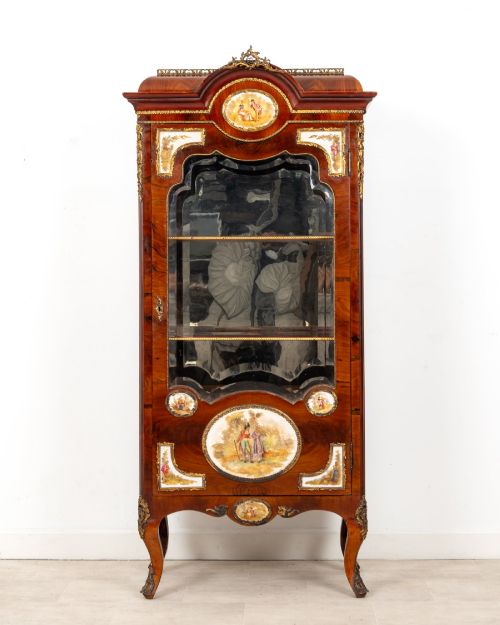
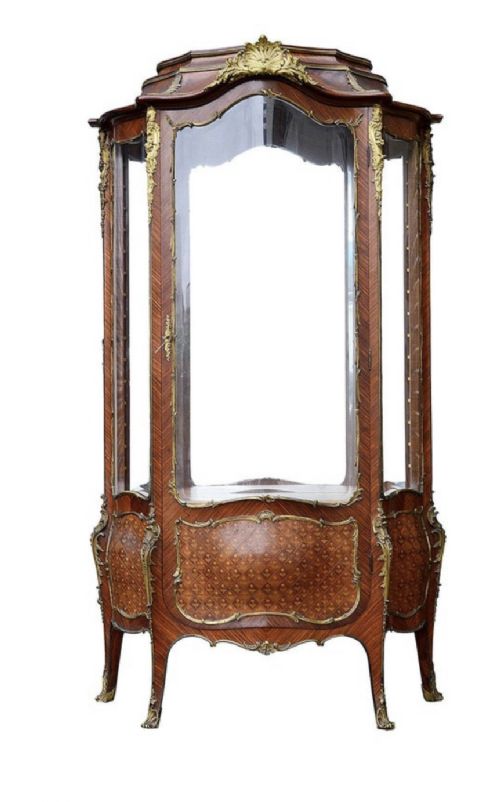
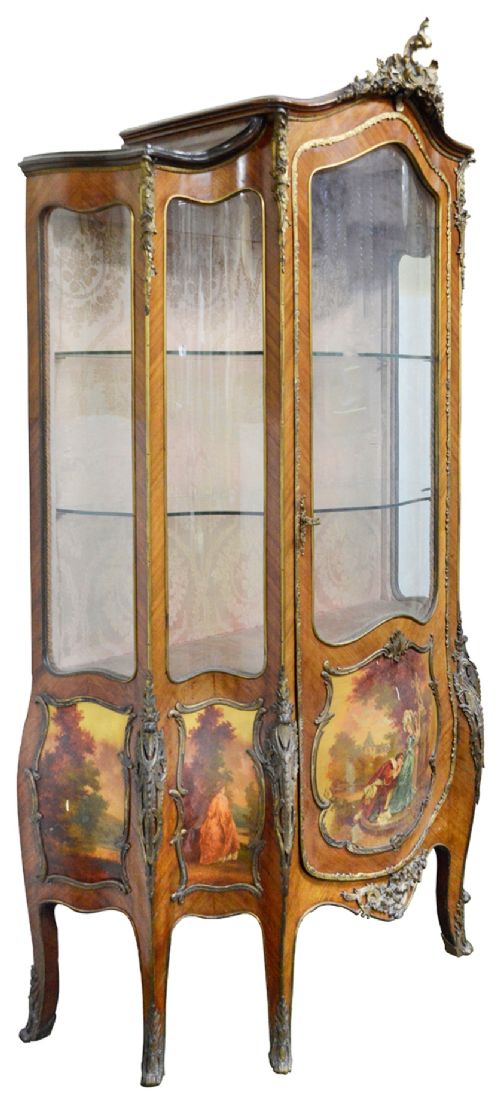
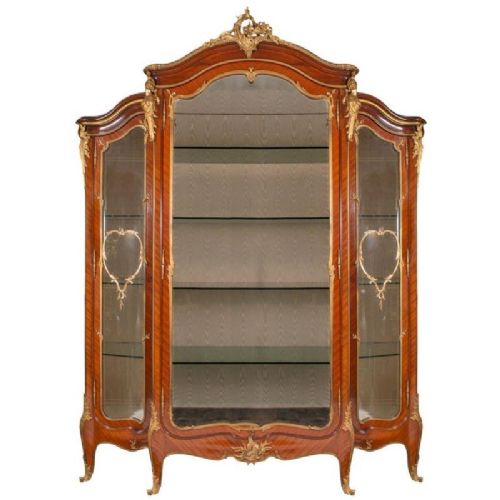
A gilt bronze showcase is a French display cabinet, vitrine, or bijouterie table designed to exhibit porcelain, china, and small collectables. These pieces predominantly date from the nineteenth century, including specific years around eighteen sixty, eighteen seventy, eighteen eighty, eighteen ninety, and nineteen hundred.
You will encounter pieces executed in Louis XV Revival, Louis XVI Style, French Rococo Revival, and Napoleon III designs. Forms range from low table-height vitrines with glass tops to substantial standing cabinets with marble tops and porcelain plaques.
Materials and construction
These items combine hardwoods such as walnut, mahogany, kingwood, and rosewood with cast ormolu mounts in the French manner. Ormolu mounts are applied to frame glass panels, accentuate corners, and trim the feet of the cabinetry.
Interiors are frequently lined with fabric or velvet to provide a contrasting background for displayed items. Vernis Martin painted panels appear alongside glazed doors and marble table tops to complete the construction.
Gilt Bronze Showcase Retail Price Guide 2026
Typical asking prices for gilt bronze showcase among the pieces listed under this phrase on Sellingantiques today, from the lower quarter to the upper quarter. They describe what is for sale here now, not the wider market.
Some display tables were built so deep that guests spent entire dinner parties distracted by the jewellery shimmering beneath their elbows.
Judging quality in vitrines
Quality rests in the crispness of the ormolu casting and the selection of cabinet timbers such as kingwood and mahogany. Better examples demonstrate finer chasing on the gilt metal mounts and more harmonious proportions between wood and glass.
Attribution to makers like Linke elevates certain pieces through superior joinery and heavier bronze mounts. The integration of painted Vernis Martin panels or porcelain plaques also distinguishes standard production from finer work.
Francoise Linke
The Gilt Bronze Showcase Glossary
- Ormolu
- Gilded bronze used for decorative mounts and furniture trim. It provides a bright golden finish that catches ambient light.
- Vitrine
- A glass-fronted display cabinet intended for fine porcelain and small objects. These cabinets protect contents from dust while allowing full visibility.
- Bijouterie Table
- A glazed display table with legs, designed for showing jewellery and small collectables at a comfortable height. The top lifts or opens to access the interior.
- Vernis Martin
- A form of simulated Japanese lacquer developed in France, featuring painted decorative scenes. It is commonly found on panels within nineteenth-century cabinets.
- Louis XVI Style
- A neoclassical design aesthetic characterised by straight lines, symmetry, and classical motifs. It contrasts with the more flowing curves of earlier revival styles.
Gilt Bronze Showcase: Frequently Asked Questions
What fits inside a gilt bronze showcase?
These cabinets and bijouterie tables hold small decorative items such as porcelain plaques, china, and collectables. The glass panels and glazed doors keep dust away while showing the contents clearly from multiple angles.
Velvet or fabric linings create a soft background that enhances the appearance of metalwork and ceramics resting inside. The shallow depth of bijouterie tables suits flat items and jewellery particularly well.
How do I date a nineteenth-century vitrine?
Dating relies on stylistic markers from the various nineteenth-century revivals, alongside timber choices like kingwood and walnut. Pieces often bear characteristics associated with Napoleon III manufacture or specific decades up to nineteen hundred.
Construction methods inside the cabinet carcass and the style of the ormolu mounts offer further clues to the period. Attribution to workshops such as Linke also helps narrow down the decade of production.
Where should I place a display cabinet?
Position these cabinets away from direct sunlight to protect fabric linings and wood finishes from fading over time. Placing them against a stable interior wall ensures the heavy marble tops and glass doors remain level.
Sufficient clearance around the doors or lifting table tops is essential for accessing the interior safely. Good ambient lighting helps illuminate the ormolu mounts and the objects displayed within.
How do I tell styles apart?
Louis XV Revival pieces display flowing curves, asymmetry, and elaborate rococo ormolu mounts. Louis XVI Style pieces feature straighter lines, symmetry, and neoclassical geometric details.
Napoleon III items often combine varied woods like mahogany and rosewood with heavy gilt bronze ornamentation. Vernis Martin vitrines are distinguished by their specific painted lacquer panels rather than wood grain alone.