

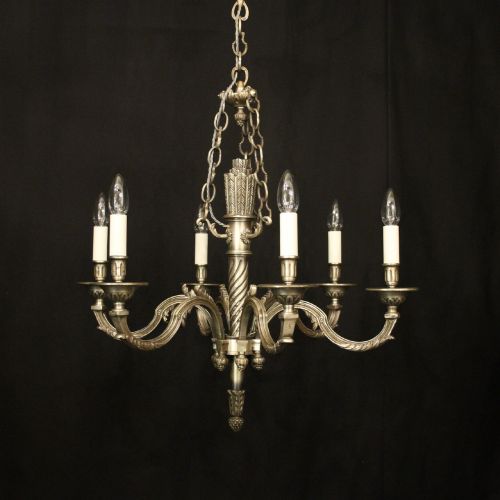


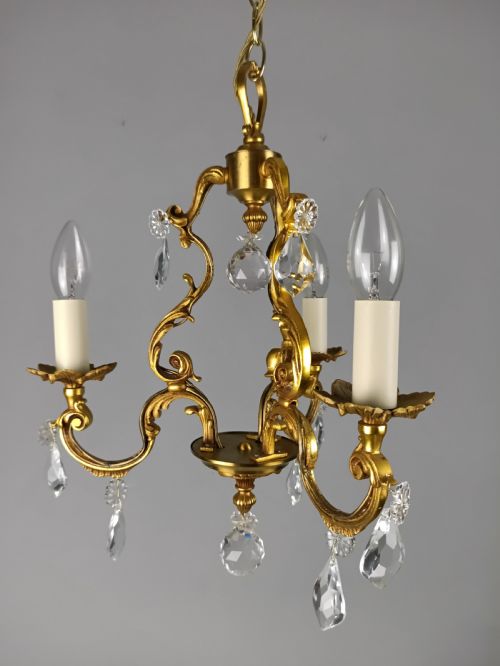
Gilt Bronze Ceiling Lamp
A gilt bronze ceiling lamp brings warmth and grandeur to a room, casting light through crystal drops and gilded metal.
Gilt Bronze Ceiling Lamp
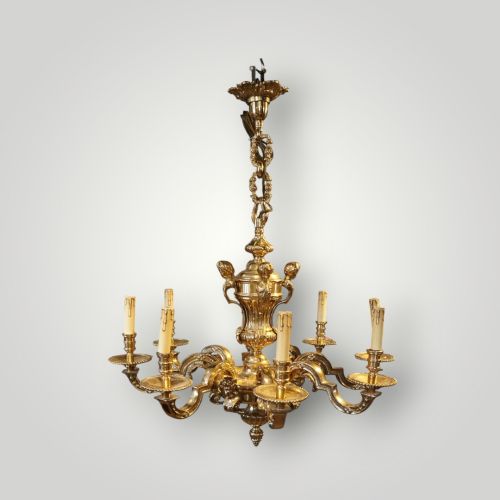
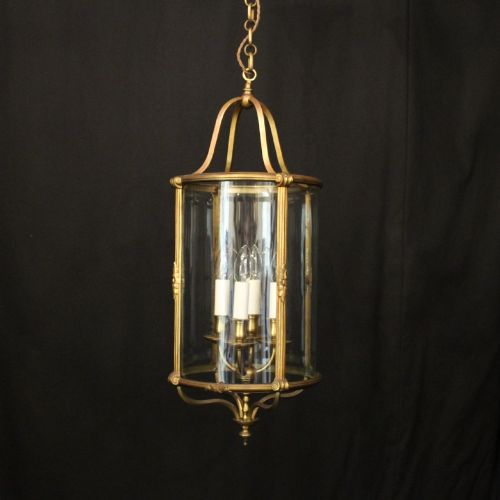
A gilt bronze ceiling lamp encompasses a grand variety of chandeliers, pendant lights, and hall lanterns designed to illuminate interior spaces from above. You will most frequently encounter French examples styled in neoclassical, rococo revival, or baroque revival tastes originating from the nineteenth and early twentieth centuries.
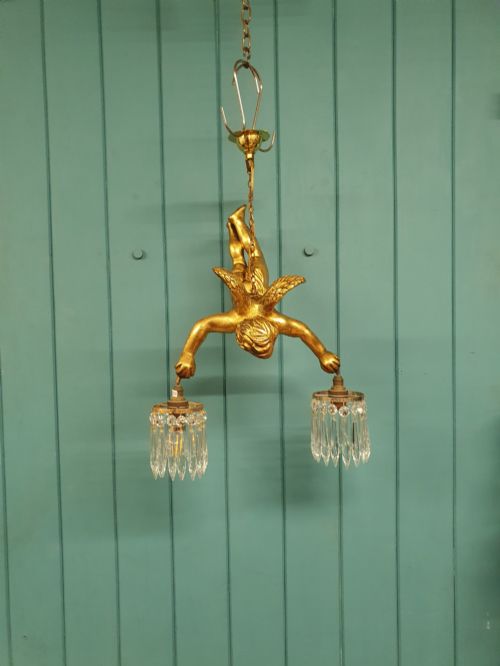
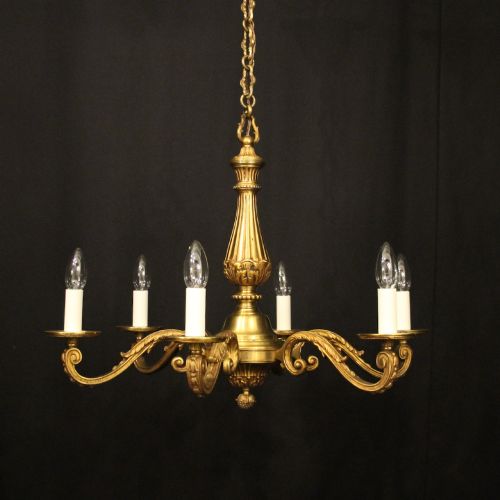
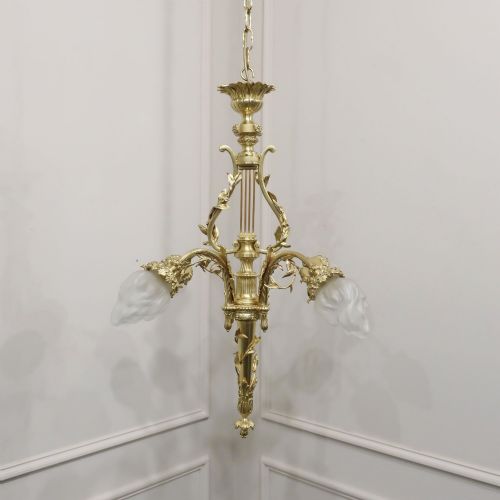
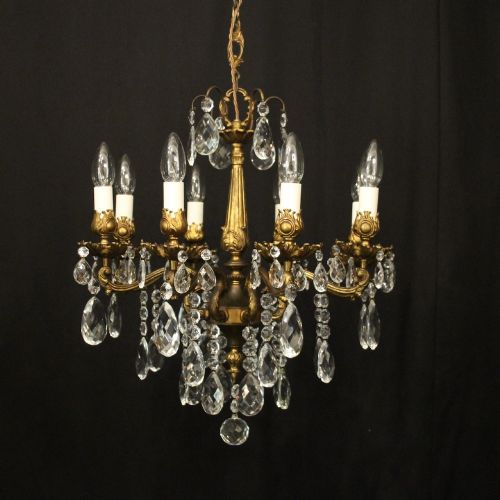
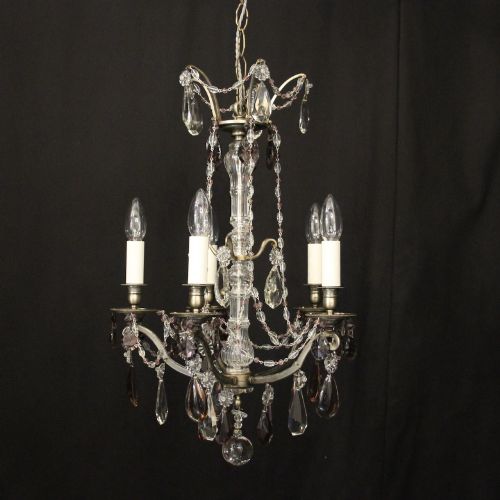
The selection ranges from single-light hanging lanterns and compact brass fixtures to massive multi-armed chandeliers hung with numerous crystal drops. Many pieces incorporate decorative figures such as cherubs or specific motifs like lyres, rams heads, and cascades of cut glass.
Makers and lighting firms of the period utilised durable metals alongside sparkling glass components to create centrepieces for reception rooms and hallways. Buyers searching this phrase seek both the heavy presence of cast metal and the brilliance of suspended crystal.
How they were made
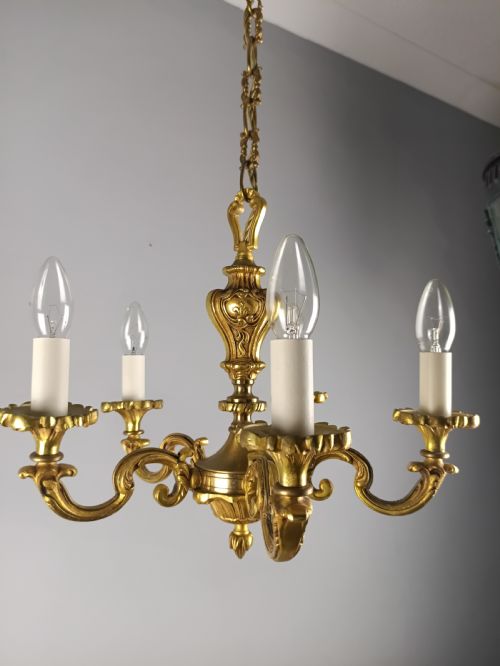
These fixtures rely on heavy cast bronze, brass, or ormolu as the structural foundation for arms, frames, and ornate decorative mounts. Gilding or silver gilding was applied to the metal surfaces to create a rich, reflective finish that catches ambient light.
Cut glass and crystal drops, spikes, or beads were hand-wired to the metal frameworks to amplify illumination from the bulbs or candles within. Opaline glass and specialised shades were also employed on select pendant lanterns and wall-adjacent fixtures.
Metal components often display chased detailing, decorative casting of figures like cherubs, and structured arm assemblies fixed securely to central columns or bowls. The integration of glass panels in hanging lanterns required precise metalwork frames to secure each pane safely.
Look closely among the metal arms to spot winged cherubs keeping watch over your hallway from above.
What varies in quality
The standard of a gilt bronze ceiling lamp is determined by the crispness of the metal casting and the depth of the chased ornamentation. Superior examples show finely rendered details on figures and foliage rather than soft, mass-produced contours.
The integration and grade of the glass components also dictate overall quality, with hand-cut crystal spikes and drops providing superior refraction compared to plain pressed glass. Heavier metal gauges and robust structural joints ensure the fixture hangs true and supports its own weight securely.
Perry & Co·Baccarat
The Gilt Bronze Ceiling Lamp Glossary
- Ormolu
- A technique of applying finely ground high-carat gold to a bronze object using a mercury amalgam. This creates a deep, durable golden surface characteristic of fine French lighting.
- Chandelier
- A branched ornamental light fixture suspended from the ceiling. These hold multiple light sources and often incorporate hanging crystal elements.
- Plaffonier
- A bowl-shaped ceiling light fixture mounted flush or close to the ceiling surface. They frequently combine gilt metal frames with cut glass panels.
- Spelter
- A zinc alloy frequently used as a cheaper alternative to bronze for decorative figures. It is often painted or gilded to imitate heavier metals.
- Colza
- A type of vegetable oil utilised in nineteenth-century lamps before widespread electrification. Hanging colza lights accommodated specific fuel reservoirs and burner mechanisms.
Gilt Bronze Ceiling Lamp: Frequently Asked Questions
How do I clean a crystal chandelier?
Cleaning requires a gentle solution of warm water and mild soap applied carefully with a soft cloth to each glass drop and metal arm.
Take care to support dangling crystals so the wiring is not strained during the cleaning process.
Were these lamps originally electrified?
Many nineteenth and early twentieth-century pieces were originally designed for candles or oil before being converted to electricity later in life.
Rewiring is common to ensure modern electrical safety standards are met while preserving the antique metalwork.
How do I know if a piece is French or English?
French pieces often display distinct decorative traits such as rococo scrolls, cherubs, and heavy ormolu casting styles typical of Parisian workshops.
English lighting from the same eras tends towards slightly more restrained classical proportions and distinct framing construction.