





Gilt Bronze Candle Lustres
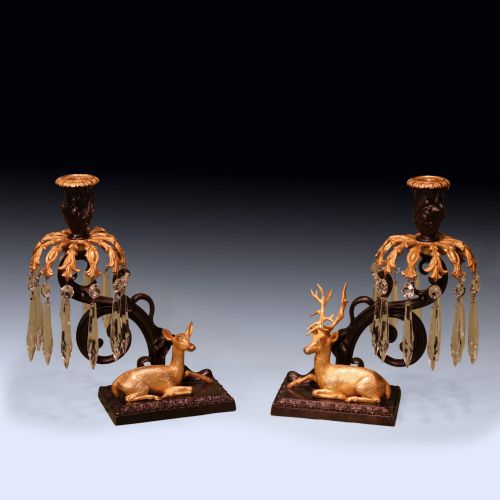
These gilt bronze candle lustres combine polished metal with hanging prisms, catching and throwing candlelight across a room.
Gilt Bronze Candle Lustres
Gilt bronze candle lustres bring together cast metal figures and hanging crystal prisms designed to hold and reflect candlelight. Buyers seeking gilt bronze candle lustres encounter pairs and sets originating from the eighteenth, nineteenth, and early twentieth centuries.
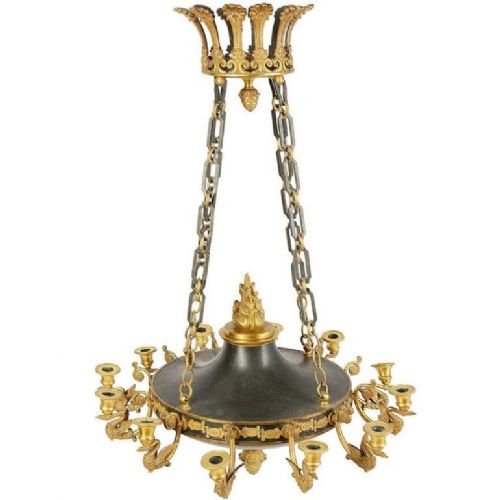
The selections span Regency, William IV, French Empire, and Rococo Revival styles, alongside related forms like candelabras and chandeliers. Many pieces pair gilt or ormolu finishes with patinated bronze elements, often incorporating glass or crystal drops.
How they were made
Maker's workshops cast bronze into detailed figures, animals, and architectural mounts before applying a gilt or ormolu surface. This metalwork was combined with hand-cut glass and crystal prisms, suspended from the candle arms to scatter the light.
Moulders used patinated bronze alongside gilded components to create tonal contrast, securing the crystal drops with wire loops or pins through the nozzle rims.
Gilt Bronze Candle Lustres Retail Price Guide 2026
Typical asking prices for gilt bronze candle lustres among the pieces listed under this phrase on Sellingantiques today, from the lower quarter to the upper quarter. They describe what is for sale here now, not the wider market.
Stags, does, and exotic figures join the usual candle holders, proving that nineteenth-century dining tables appreciated a touch of theatre.
What varies in quality
Quality rests in the crispness of the bronze casting and the depth of the gilding, where finer examples retain sharp chisel work on fur, plumage, and acanthus leaves. The integration of patinated bronze with bright ormolu shows a deft hand in composition.
The cut of the glass prisms and the completeness of the hanging drops separate standard production from superior pieces. Matched pairs and sets with their original crystal components command greater attention than assembled groupings.
The Gilt Bronze Candle Lustres Glossary
- Ormolu
- A gilded bronze finish achieved by applying an amalgam of gold and mercury to the metal base. This technique creates a rich, matte yellow surface characteristic of fine decorative objects.
- Lustre
- A candlestick or candelabrum fitted with hanging glass or crystal prisms designed to refract candle flame. The pendants amplify the light output.
- Patinated Bronze
- Metal treated with chemicals to darken the surface, providing contrast against the bright gilded elements. It appears frequently on nineteenth-century figural bases.
- Candelabra
- A branched candlestick holding multiple lights from a single base. These share materials with standard lustres but offer wider illumination.
Gilt Bronze Candle Lustres: Frequently Asked Questions
Can I use real candles on them?
Real wax candles function correctly if they fit securely into the nozzles without leaning. Ensure the flame sits well below any hanging crystal drops to prevent heat damage.
Keep drafts away from the table to prevent wax from dripping onto the gilt bronze or ormolu surfaces.
How do I date a pair of lustres?
Examine the casting style and the manner in which the bronze components fit together. Regency and William IV pieces often display heavier cast bases and distinct figural subjects.
Compare the cut of the crystal prisms against known period profiles, noting that later twentieth-century replacements usually show machine-cut precision rather than hand-polished facets.
What is the difference between ormolu and gilt bronze?
Ormolu specifically describes the traditional French mercury gilding process used on decorative bronzes up to the nineteenth century. Gilt bronze is a broader term covering any bronze object with a gold-coloured surface application.
Both finishes require gentle handling to preserve the gold layer over the underlying bronze metal.