



Gilt Bronze Branch Sconces
Gilt bronze branch sconces bring sculptural warmth to walls, cast as organic boughs and classical arms that catch candle or electric light.
Gilt Bronze Branch Sconces
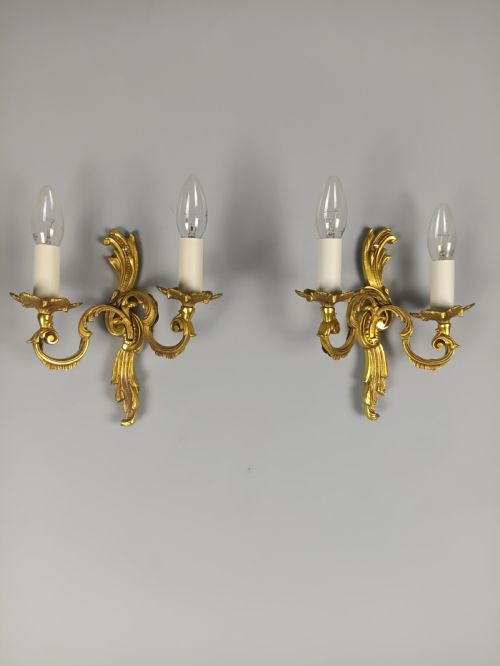
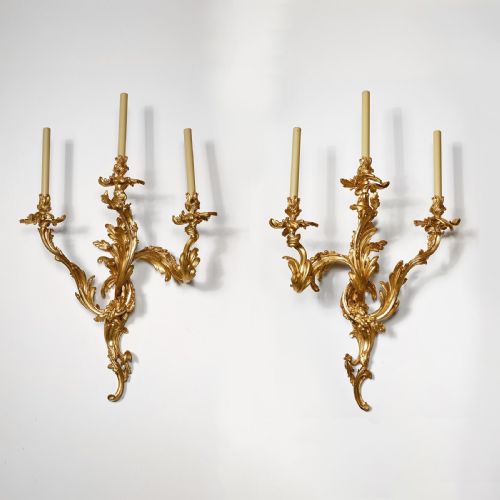
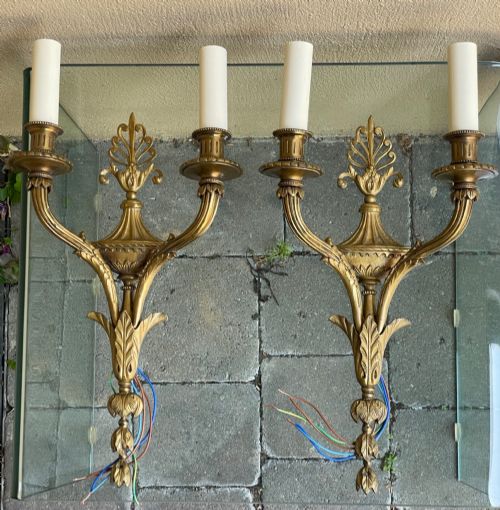
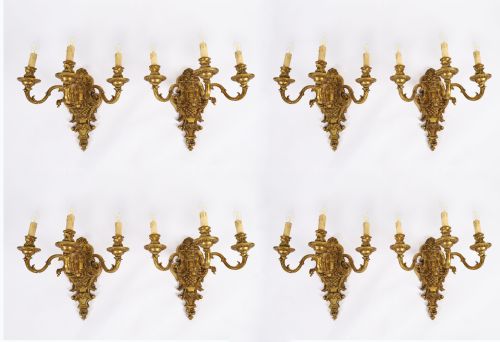
Gilt bronze branch sconces are wall-mounted lighting fixtures designed to hold candles or lamps along branching arms. When searching for gilt bronze branch sconces, buyers encounter pairs and sets originating mostly from nineteenth century French workshops.
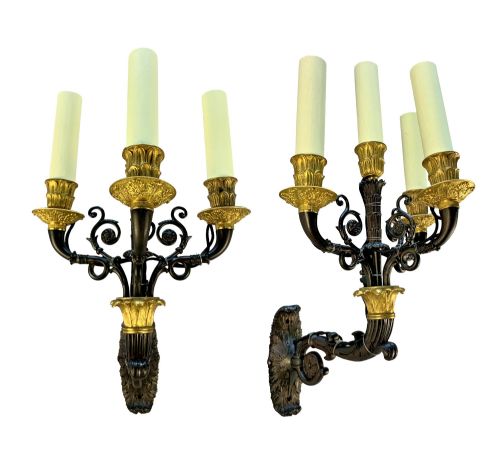
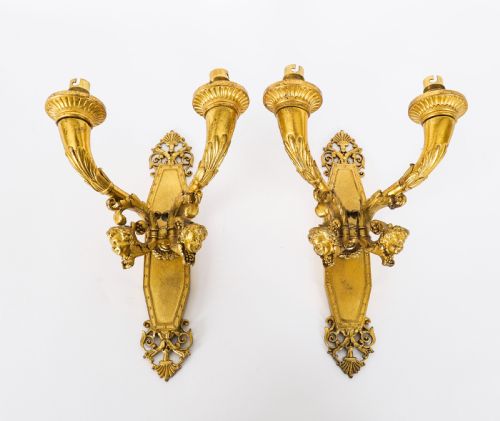
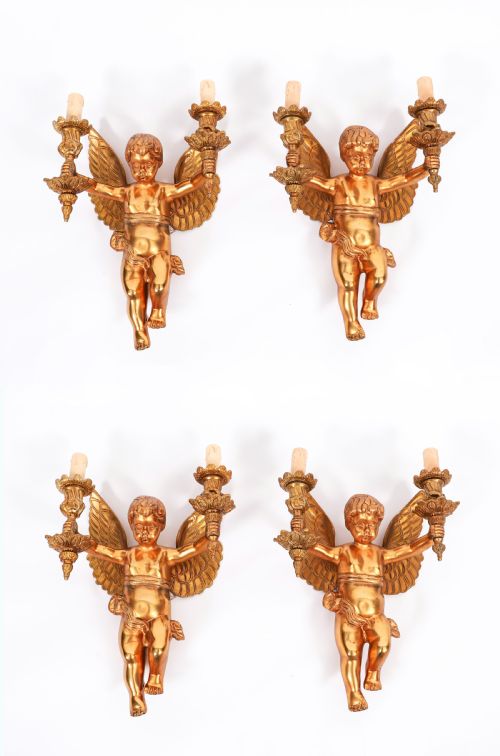
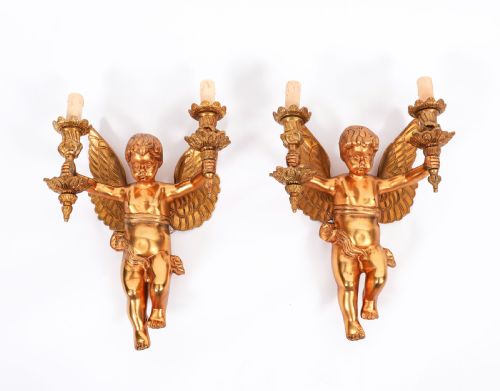
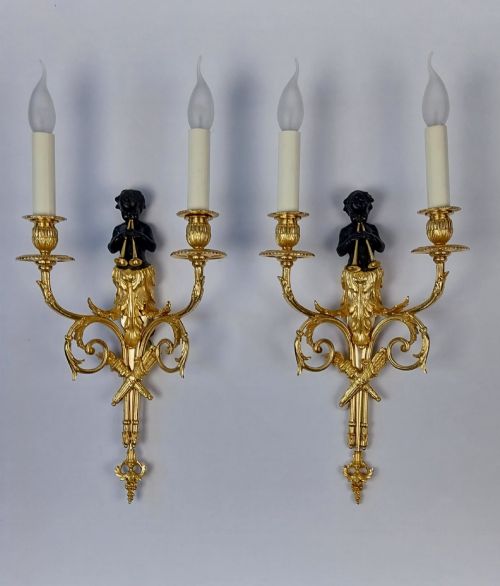
The selections span styles from French Rococo and Louis XVI revival to Adam revival and Art Nouveau. Most examples take the form of twin or triple branch wall lights, frequently paired with cherubs or architectural backplates.
Origins stretch across the eighteen hundreds into the early decades of the twentieth century. French production dominates, though English and Italian interpretations also appear.
Materials and methods of construction
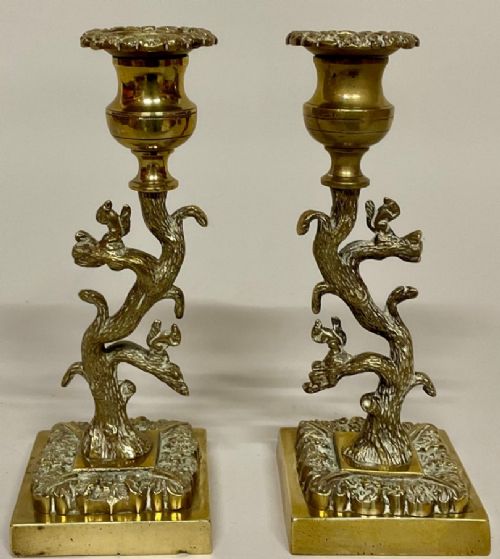
Makers utilised bronze, brass and gilt metal, applying mercury gilding or ormolu to achieve a rich golden surface. Casting techniques allowed artisans to shape intricate foliage, squirrels and cherubs directly into the metal arms.
Individual components were cast separately then joined with pins or screws before finishing. Backplates, drip pans and candle nozzles were assembled to form robust wall sconces capable of supporting multiple branches.
Distinguishing quality in execution
Quality rests upon the crispness of the chasing and the depth of the original gilding. Finer pieces display sharply defined leaves and feathers where the artisan has hand-chased the cast metal after removal from the mould.
Substantial weight and secure joints indicate superior construction. Lesser examples show softer details and uniform machine finishes lacking hand-tooled precision.
Maison Baques
The Gilt Bronze Branch Sconces Glossary
- Ormolu
- Gilt bronze produced by applying a mercury and gold amalgam to a bronze base and heating it. This historic technique yields a deep, enduring lustre.
- Girandole
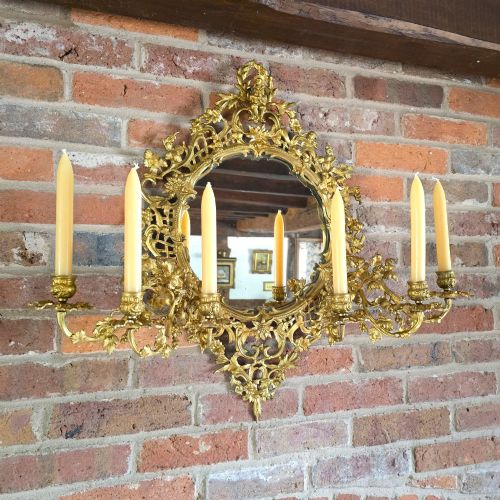
- A branched wall light or sconce featuring a reflective backplate. The mirrored surface multiplies the illumination cast by the candles.
- Campana
- A candle sconce or nozzle shaped like an inverted bell. It sits atop the branch to catch melting wax.
- Chasing
- The process of hand-tooling cast metal with small punches and chisels to refine surface details. Skilled chasing separates basic casts from masterworks.
Gilt Bronze Branch Sconces: Frequently Asked Questions
How do I mount heavy branch sconces?
Heavy bronze sconces require secure fixing directly into wall studs or solid masonry using appropriate wall anchors. The substantial weight of multi-branch ormolu demands robust support to prevent pulling away from the plaster.
Professional installation is recommended for older wiring conversions or fragile plaster walls. Ensure the backplate sits flush against the surface to distribute the load evenly.
Are these sconces wired for electricity?
Many surviving wall lights have been adapted for electricity during the twentieth century, while others retain their original configuration for candles. Conversions typically route hidden wiring through the hollow branch arms.
Buyers should inspect the internal wiring and consult an electrician to ensure compliance with current safety standards. Original candle tubes and drip pans often remain intact regardless of electrification.
How do I clean gilt bronze safely?
Dust gilt bronze gently with a soft dry cloth or a feather duster to remove surface particles. Avoid chemical polishes, abrasive cloths and water, which can strip the delicate ormolu layer.
Accumulated grime requires professional conservation rather than domestic cleaning methods. Preserving the original mercury gilding protects the historical integrity of the piece.
How do I date an antique sconce?
Dating relies upon stylistic markers, casting techniques and construction methods visible on the reverse of the backplate. Nineteenth-century French pieces often exhibit distinct Louis XIV or Rococo revival motifs combined with hand-filed components.
Screw types, mounting lugs and patination provide further clues regarding age. Comparing the piece to documented examples from periods like the Regency or Second Empire helps narrow the decade.