

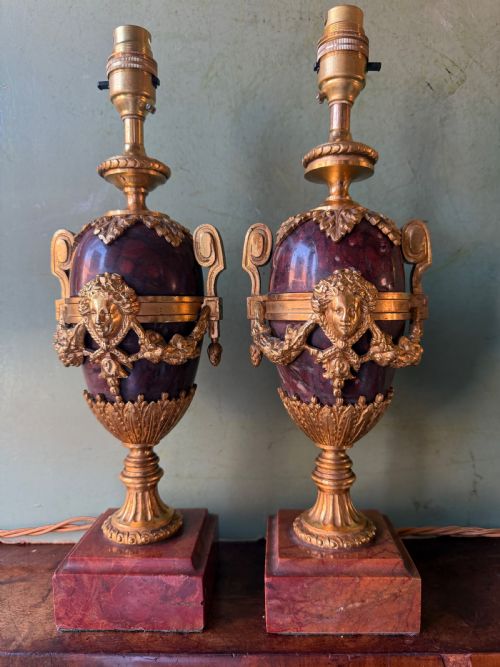


Gilt Brass Mounted Lamps
These gilt brass mounted lamps combine cast metal enrichment with ceramic or stone bodies, offering steady illumination and period character.
Gilt Brass Mounted Lamps
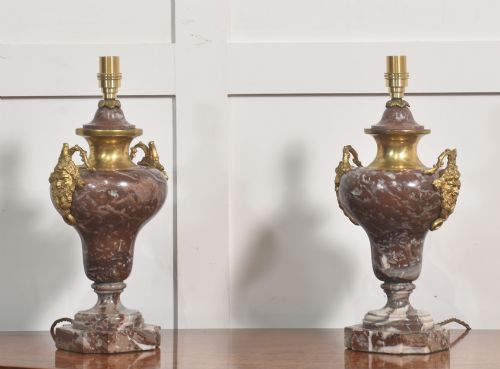
Gilt brass mounted lamps take the form of table lamps built from earlier vases, porcelain bodies, and carved stone columns. You will frequently meet nineteenth-century examples pairing cast metal mounts with marble bases or porcelain bodies.
The selection also includes forms derived from oil lamps and converted vessels, alongside architectural column designs. These pieces draw heavily on French Neoclassical, Louis XVI, and Empire styles, reflecting continental design preferences of the nineteenth and early twentieth centuries.
Materials and construction
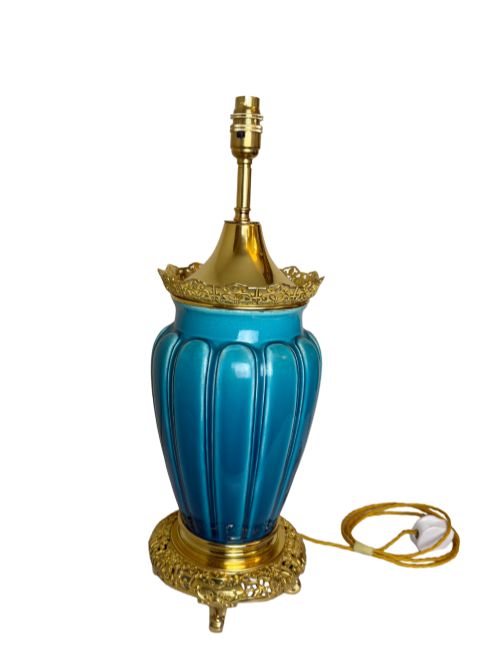
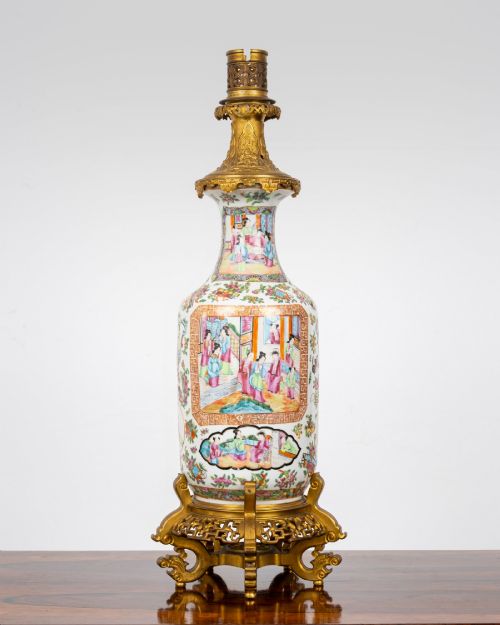
Maker workshops combined cast brass, bronze, and ormolu mounts with ceramic bodies such as Paris porcelain, cloisonné, and Chinese export wares. Stone components including rouge marble, Siena marble, onyx, and alabaster provided solid foundations for the metal enrichment.
Mounts were cast, chased, and gilded before being fitted to turned stone or ceramic sections using threaded rods and internal wiring adaptations. Surface decoration involved hand-painting, pate-sur-pate, and applied metal collars, bezels, and feet.
Several heavy marble columns started out holding up palace oil fumes before finding a second career as evening reading companions.
Assessing quality
Quality rests upon the crispness of the metal chasing and the depth of the gilding on the brass and ormolu mounts. Finer examples display sharp definition in leaf scrolls and bezel mounts, whereas simpler pieces show softer casting lines.
The integration of the body materials dictates overall balance, with superior items utilising heavy marbles or fine porcelain vases paired symmetrically with proportioned metal hardware.
The Gilt Brass Mounted Lamps Glossary
- Ormolu
- Gilded bronze or brass applied as decorative mounts to furniture, clocks, and lighting. The technique involves mercury gilding on older pieces or electroplating on later examples.
- Pate-sur-pate
- A ceramic decoration method where wet porcelain slip is built up in layers on a contrasting body to create a low relief cameo effect.
- Cloisonne
- Enamelling work where metal wires are soldered to a base to form compartments filled with coloured paste and fired.
- Gueridon
- A small circular table often featuring a marble top and gilt metal mounts, occasionally utilised as a stand for lighting.
- Sang de boue
- A rich ox-blood red monochrome ceramic glaze developed in Chinese kilns and later imitated by European potteries.
Gilt Brass Mounted Lamps: Frequently Asked Questions
How do I date these lamps?
Dating relies on examining the mounting style, the wiring components, and the ceramic or stone body. Pieces reflecting Louis XVI or Empire aesthetics often date from the nineteenth century.
Maker marks, screw threads, and the composition of the underlying bronze or brass offer further clues to the decade of manufacture.
Were these originally oil lamps?
Many surviving examples began life as oil lamps, vases, or decorative urns before conversion to electricity. Vases and oil containers were drilled and fitted with collars during the nineteenth or early twentieth centuries.
This secondary adaptation process is standard for period lighting found in the current market.
What styles are most common?
French Neoclassical, Louis XVI style, and Empire designs dominate the available selection. These pieces utilise classical column forms, urn shapes, and symmetrical foliate mounts.
Chinoiserie and Japanese export bodies mounted in Europe also appear frequently among the listings.
How do I clean the metal mounts?
Maintenance requires gentle dusting with a soft dry cloth to protect the gilt surface. Avoid abrasive polishes that strip the thin layer of gold wash or ormolu from the brass.
Professional conservation is recommended if oxidation threatens the stability of the metal finish.