
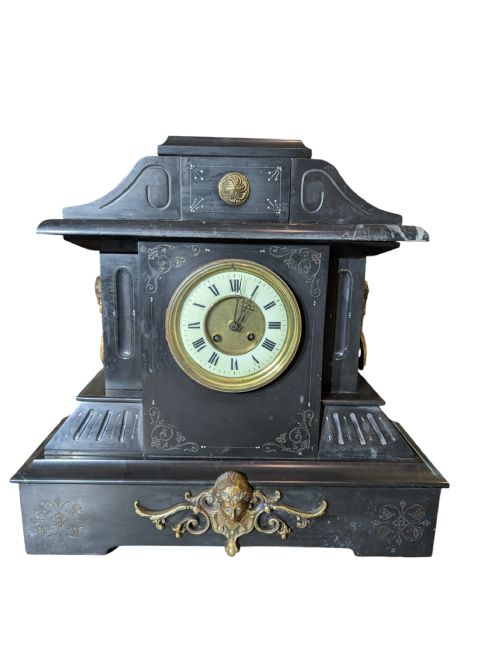


Gilt Brass Mantle Timekeeper
A gilt brass mantle timekeeper brings heavy metal structure and precise movement together on the shelf, offering both function and decorative weight.
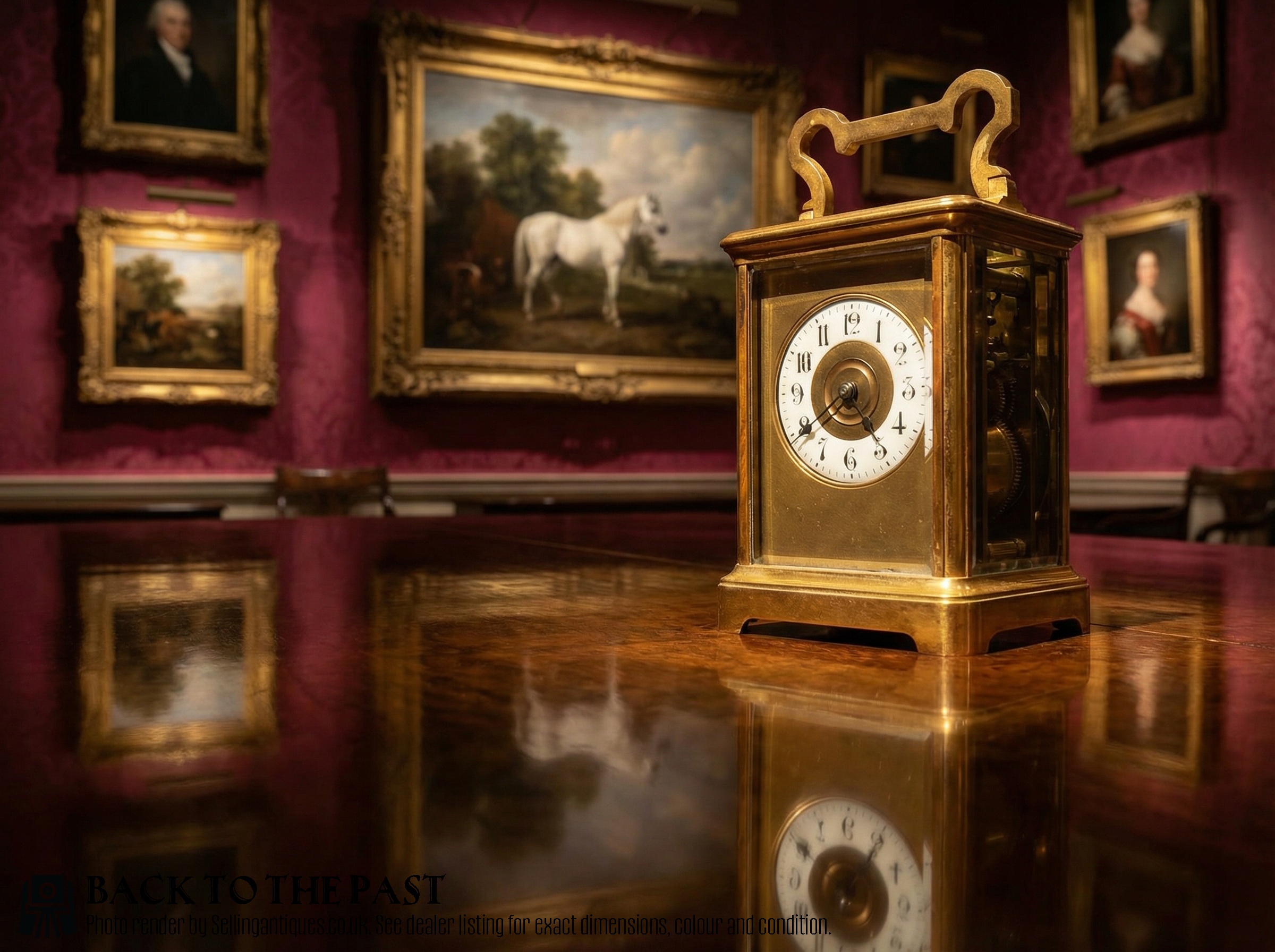
Gilt Brass Mantle Timekeeper
A gilt brass mantle timekeeper covers domestic timepieces produced across the nineteenth century, drawing heavily on French and Victorian sensibilities. These objects primarily take the form of mantel clocks and carriage clocks, constructed to sit steadily on a shelf or desk.
The versions most commonly met on this page span the 1860s through to the 1880s, reflecting Victorian tastes alongside French Second Empire and Louis XVI Revival influences. Makers housed these mechanisms in cases fashioned from brass, gilt bronze, and ormolu, frequently pairing them with marble, black slate, and glass panels.
Buyers examining these pieces encounter both portable carriage clocks with corniche cases and larger mantel timepieces designed for a static domestic setting. The aesthetic leans towards ornamental engraving, visible enamel dials, and structural heft.
How they were made
Workshops constructed these timepieces using heavy brass, gilt bronze, or ormolu for the structural cases, often combining them with inset glass panels to reveal the internal mechanics. Enamel provided a smooth, legible surface for the dial faces, while black slate and marble added substantial weight to the larger mantel clock bases.
Makers applied intricate hand engraving across the brass and bronze exterior surfaces, particularly on carriage clock panels from the 1860s onwards. Movements were engineered for eight-day operation or repeater functions, requiring precise fitting by skilled horologists.
Listings feature brass, gilt bronze, and ormolu clock cases frequently paired with marble and black slate.
What varies in quality
The distinction between standard and superior pieces rests on the depth of the casting and the crispness of the hand engraving across the brass or gilt bronze surfaces. Heavier gauge metalwork and robust, signed movements elevate a clock beyond routine domestic production.
Condition of the delicate enamel dial and the clarity of the glass panels alter the visual integrity of the piece. Cases that retain their original gilding without excessive rubbing demonstrate better preservation over the decades.
Brunelot
The Gilt Brass Mantle Timekeeper Glossary
- Carriage clock
- A portable spring-driven timepiece designed for travel during the nineteenth century, typically housed in a brass case with glass panels. These objects feature a swinging handle on top.
- Corniche case
- A traditional rectangular carriage clock case style characterised by moulded framing pillars at the corners and a flat top supporting the carrying handle.
- Repeater
- A mechanical complication in a clock that chimes the hours and quarters on demand when a lever or button is pressed. This feature required advanced gear work.
- Ormolu
- Finely ground high-carat gold mercury-gilded to a bronze object, creating a bright golden finish. It appears frequently on French nineteenth-century decorative clocks.
- Enamel
- A glassy substance fused to a metal dial plate through high-temperature firing, providing a hard, white background for painted numerals.
Gilt Brass Mantle Timekeeper: Frequently Asked Questions
How do I wind a carriage clock?
Most nineteenth-century carriage clocks require a specific winding key inserted into the arbours on the backplate. Turn the key gently until you feel resistance, avoiding overwinding the mainspring.
Ensure you handle the case carefully by the fixed handle rather than grabbing the glass panels during the process.
What is the difference between a carriage clock and a mantel clock?
Carriage clocks are smaller, portable timepieces fitted with folding handles and glass panels designed for travel or easy relocation. Mantel clocks are larger, heavier stationary objects built with marble, slate, or substantial bronze housings.
Mantel clocks generally stay in one room to anchor the decoration of a fireplace surround.
How can I tell the period of a brass clock?
Nineteenth-century pieces often display specific stylistic clues such as Louis XVI Revival motifs or heavy Victorian engraving. Examining the complexity of the movement and the style of the case framing helps narrow down the decade.
Signatures or maker marks inscribed on the backplate provide further historical context.
Do these clocks strike the hours?
Many of the listed pieces include striking trains that ring out on the hour or half-hour using internal gongs or bells. Repeater versions go a step further by sounding the time when activated manually.
Simpler timekeeper models measure hours without an audible strike mechanism.