




Gilt Brass Lamps
Gilt brass lamps bring a warm metallic radiance to a room, spanning styles from French Rococo and Neoclassical to Victorian.
Gilt Brass Lamps
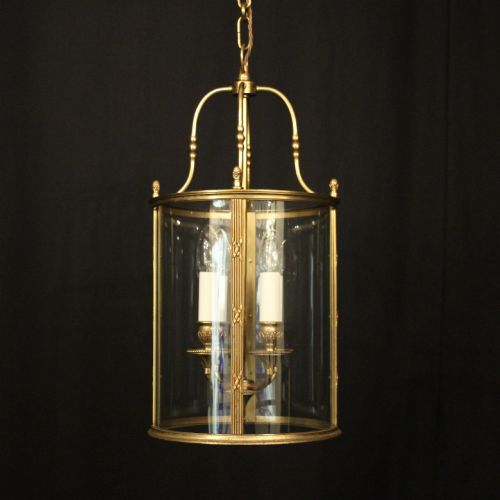
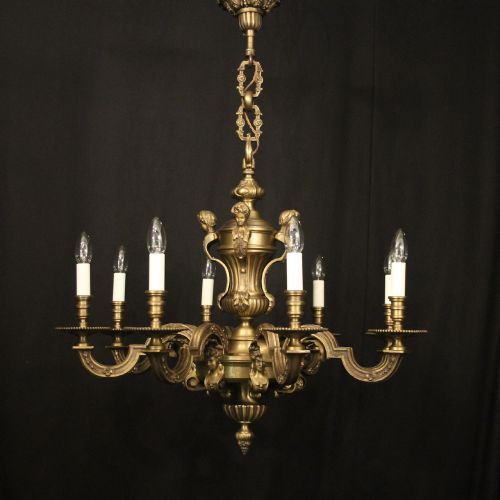
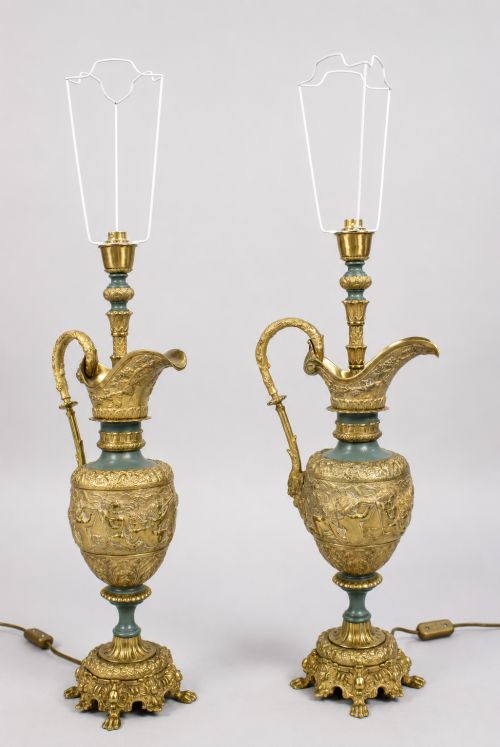
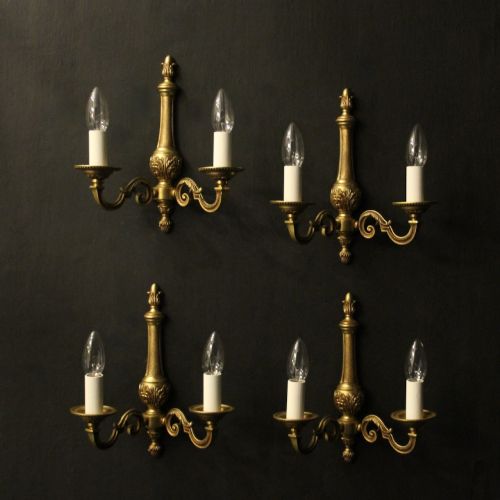
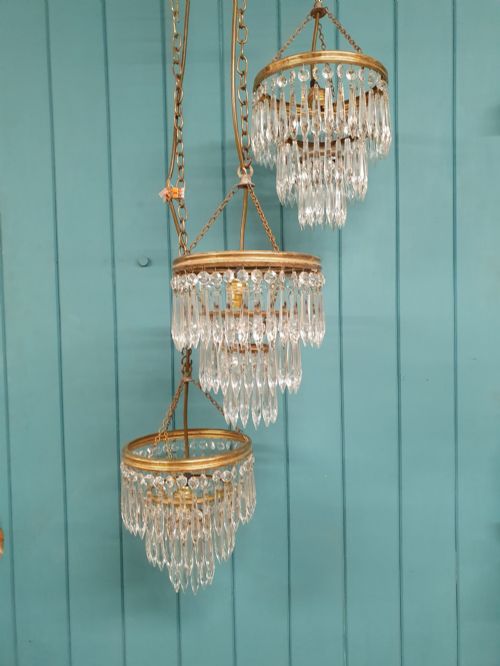
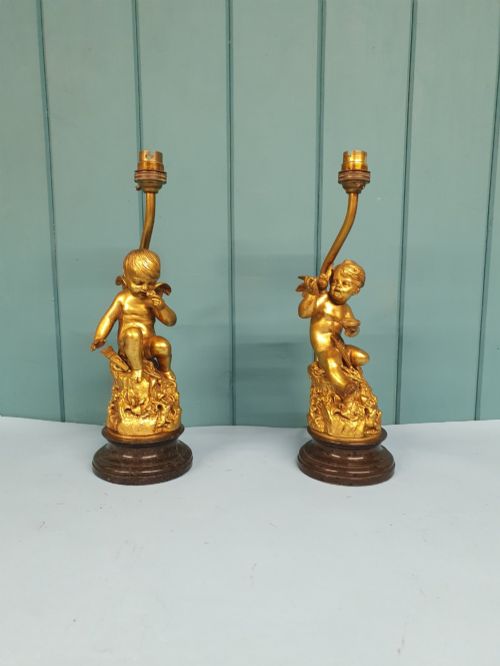
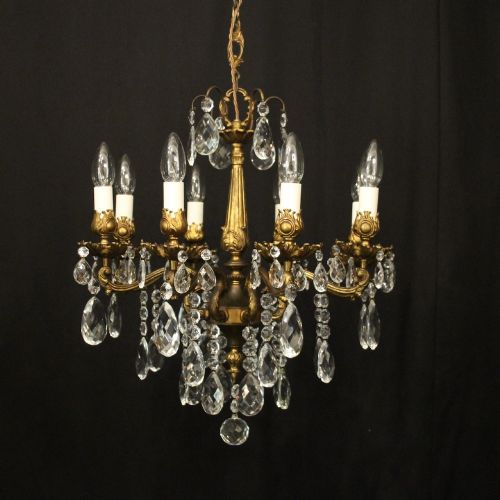
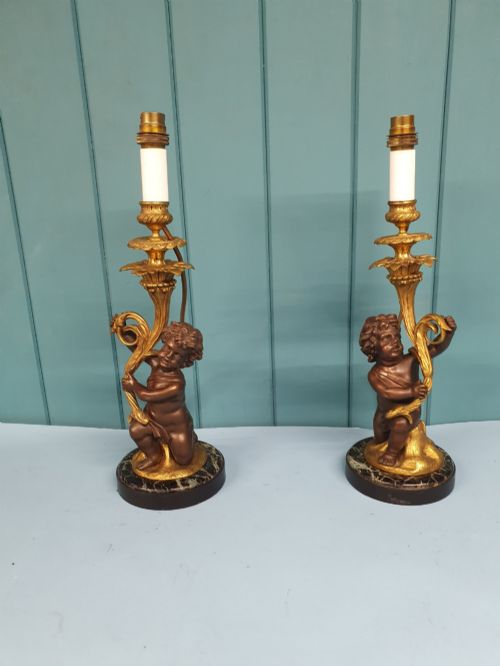
Gilt brass lamps encompass a range of lighting forms, from sturdy table lamps and heavy candelabra to multi-light chandeliers and wall sconces. You will frequently encounter table lamps and wall lights originating from nineteenth-century and early twentieth-century French workshops.
How they were made
Manufacturers utilised cast brass, bronze, and ormolu as the primary structural foundations for these decorative light fixtures. Artisans applied mercury gilding or modern electroplating to impart a durable golden surface layer onto the underlying metal base.
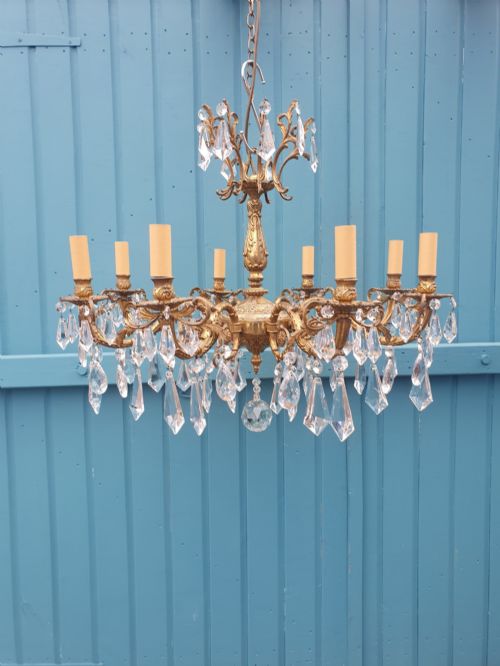
Makers integrated delicate components such as cut crystal drops, porcelain bodies, and carved marble or onyx plinths into the metal frames. These mixed-media assemblies required skilled bronze-workers and fitters to secure decorative mounts and electrical or oil-burning components.
Listings feature items spanning the 19th century through the 1930s, utilising brass, gilt bronze, crystal, marble, and porcelain.
What varies in quality
Weight and structural integration signal the tier of manufacture, where heavy gauge metals and securely anchored stone or crystal elements create a solid presence. Refined proportion and balanced decorative symmetry set apart pieces produced by established makers and dedicated design periods.
Maison Bagues
The Gilt Brass Lamps Glossary
- Ormolu
- Gilded bronze, where finely ground gold is amalgamated with mercury and applied to a bronze base through heat. This technique was widely employed in French decorative lighting during the eighteenth and nineteenth centuries.
- Champlevé
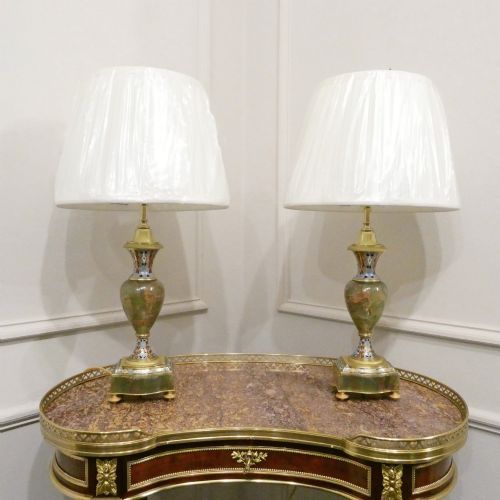
- An enamelling technique where troughs or cells are hollowed out of a metal surface and filled with vitreous enamel before firing. It frequently appears on nineteenth-century decorative items and clock cases.
- Chandelier
- A branched ceiling-mounted lighting fixture designed to hold multiple candles or light bulbs. Elaborate historical versions often incorporate crystal pendants and gilt metal armatures.
- Photophore
- A glass shade or enclosure designed to protect a candle flame from drafts while diffusing light. Mid-nineteenth-century examples occasionally utilise marble bases combined with gilt brass mounts.
- Corinthian column
- A classical architectural order featuring an ornate capital decorated with acanthus leaves. This motif is frequently adapted for the stems of nineteenth-century table lamps.
Gilt Brass Lamps: Frequently Asked Questions
How do I date an antique lamp?
Dating relies on observing stylistic markers, manufacturing techniques, and materials associated with specific periods like the nineteenth century or the 1930s. Details such as cast ornamentation and wiring methods offer further clues to the age of the piece.
Comparing the construction methods to documented pieces from similar workshops helps narrow down the production decade. Certain styles, such as French Empire or Rococo Revival, point directly to the prevailing aesthetics of their era of origin.
Were these lamps originally electrified?
Many older lighting fixtures began their service life burning oil or candles before being converted to electricity during later decades. Chandeliers, wall sconces, and table lamps frequently underwent rewiring to meet modern domestic safety standards.
Converted pieces retain their original cast metal bodies, glass shades, and candle tubes while discreetly incorporating modern internal wiring. This adaptation allows historical lighting to function safely in contemporary interiors.
How do I clean gilt brass?
Maintenance requires gentle dusting with a soft, dry cloth to prevent the accumulation of grime on the delicate metallic surfaces. Avoid abrasive cleaners or harsh chemical polishes that can strip away the historical gold finish or patination.
Preserving the original surface is essential, as aggressive cleaning damages the underlying gilding on bronze and brass mounts. Light surface care maintains the aged character accumulated over the decades.
What is the difference between brass and ormolu?
Brass is an alloy composed primarily of copper and zinc, valued for its bright golden tone and durability in domestic objects. Ormolu specifically refers to high-grade cast bronze that has been coated in a fine layer of gold amalgam.
While standard brass often forms the structural base of simpler items, ormolu denotes the refined, heavy-gauge gilding found on high-status decorative pieces. Both materials share a similar visual warmth but differ significantly in composition and historical application.