

Gilt and Mahogany Mirror
When you search for a gilt and mahogany mirror, you enter a tradition where rich timber meets bright leaf and carved detail.
Gilt and Mahogany Mirror
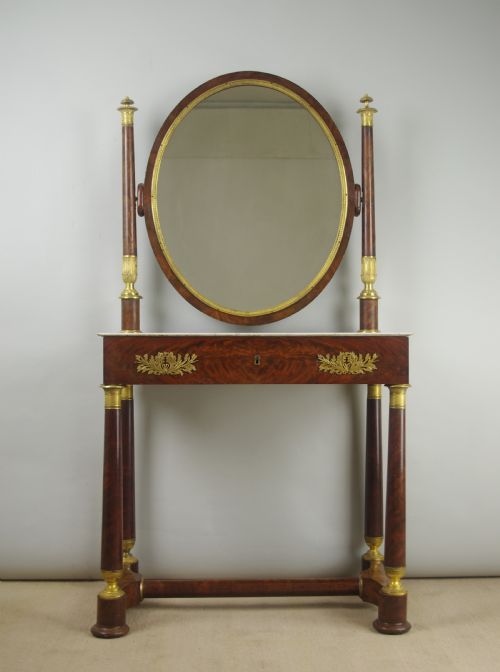
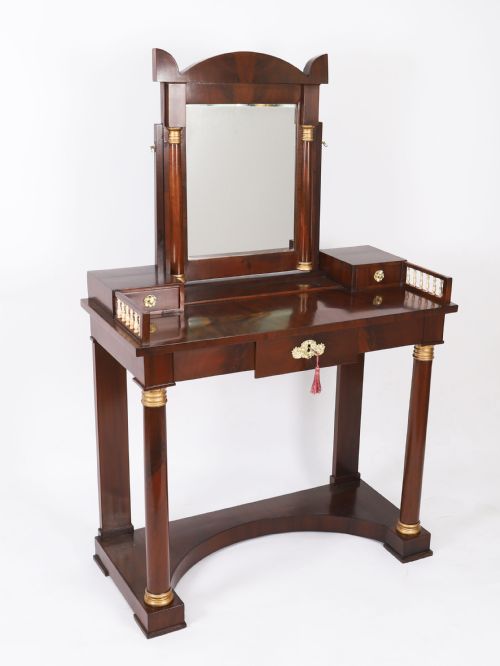
A gilt and mahogany mirror brings together dark tropical hardwood and bright gilding, creating a contrast that defined British and continental interiors across multiple centuries. Buyers searching for a gilt and mahogany mirror encounter forms ranging from compact eighteenth-century dressing glasses to large overmantels designed for grand chimney breasts.
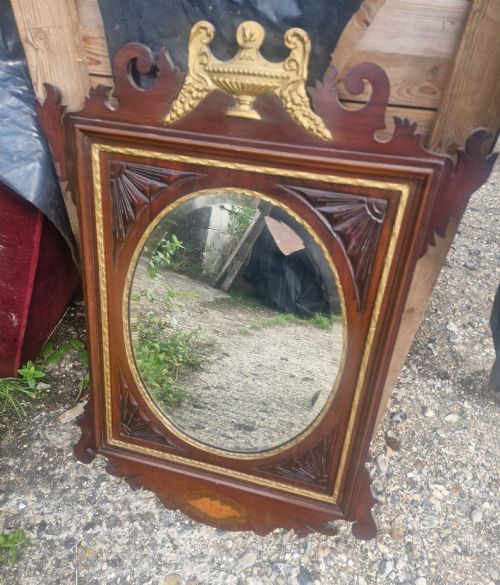
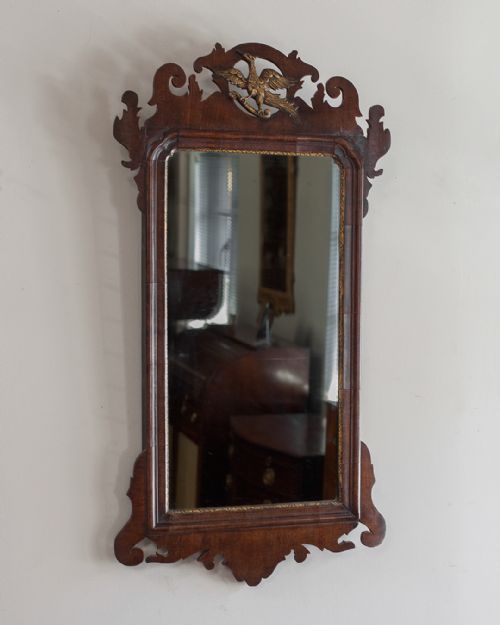
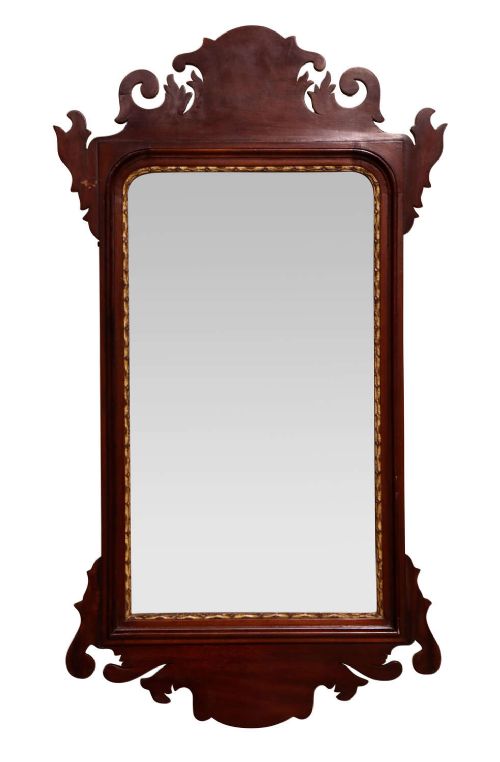
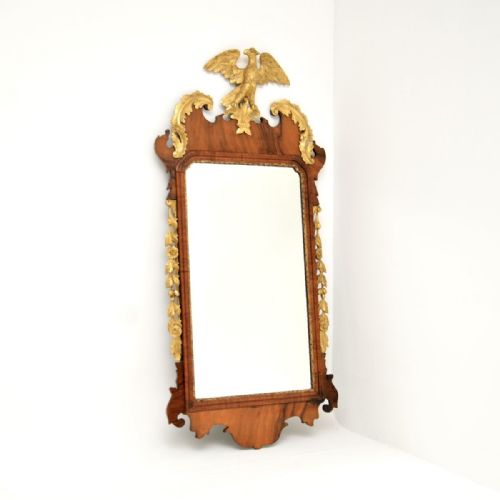
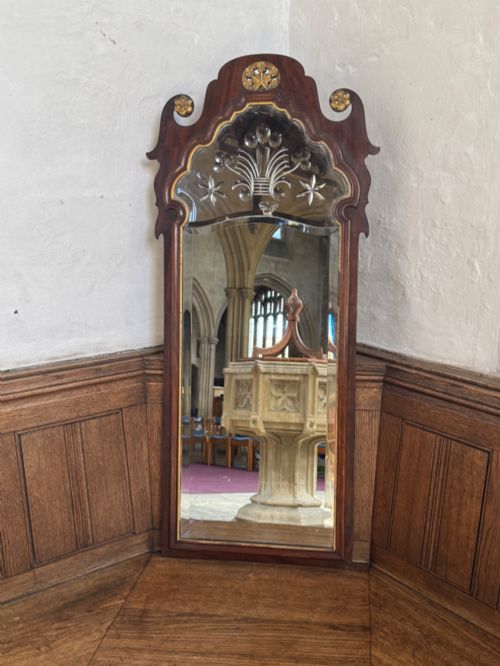
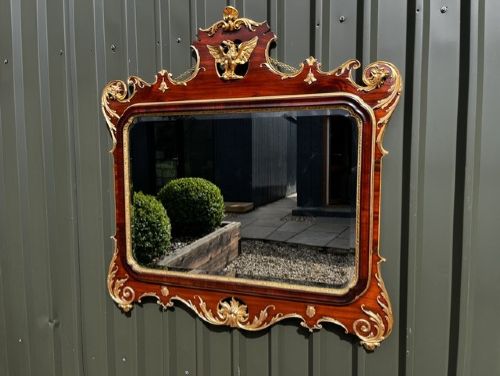
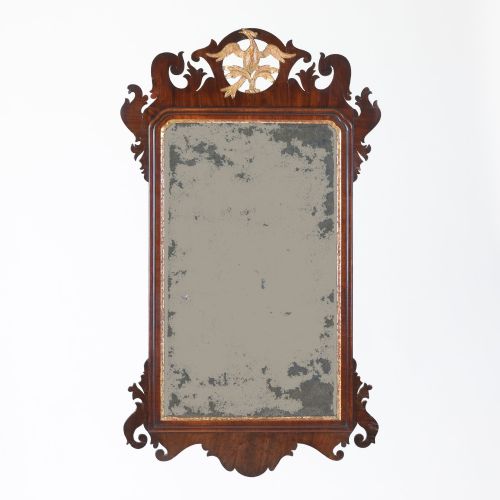
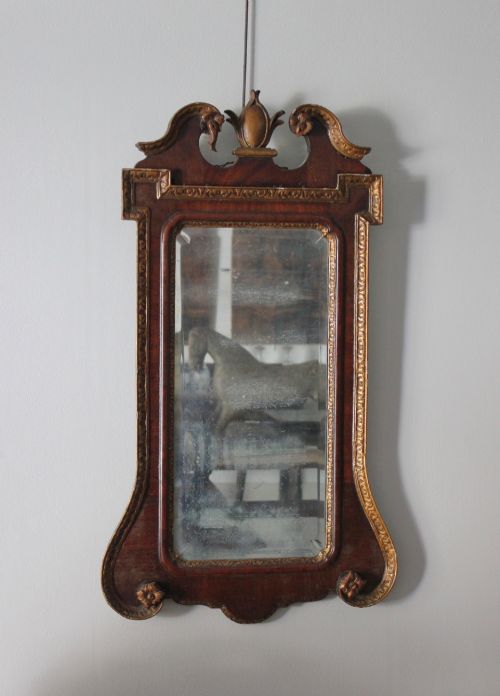
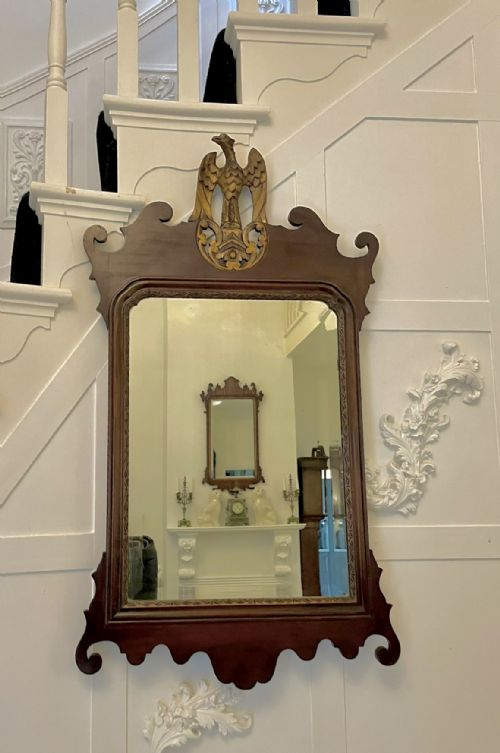
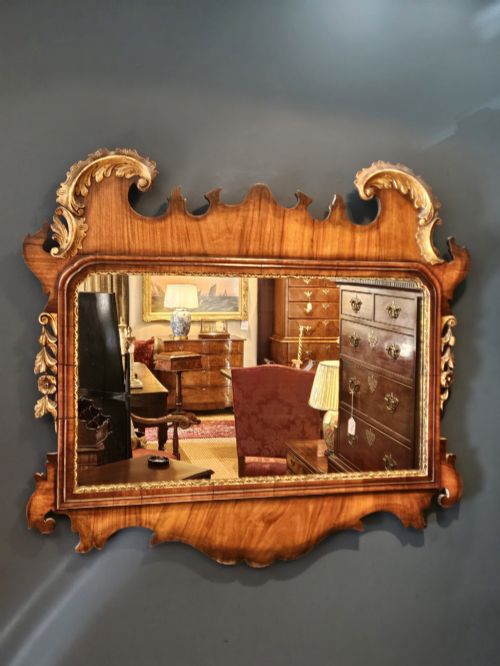
The most common examples on this page are wall-hanging fretwork mirrors from the Georgian and Edwardian periods, frequently featuring scrolled outlines and gilded crests. These pieces bridge utilitarian function and decorative display, serving as focal points within both period rooms and modern spaces.
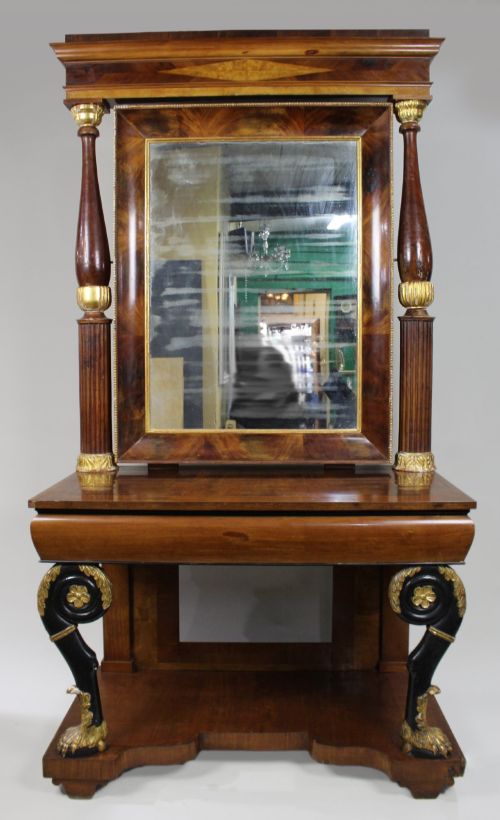
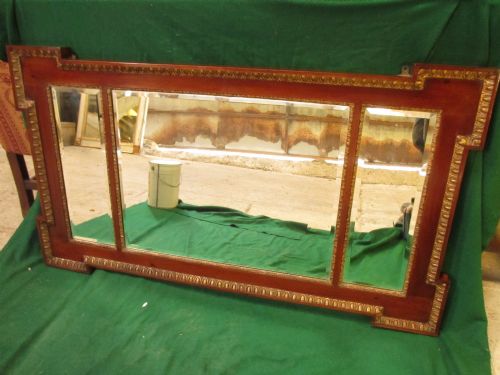
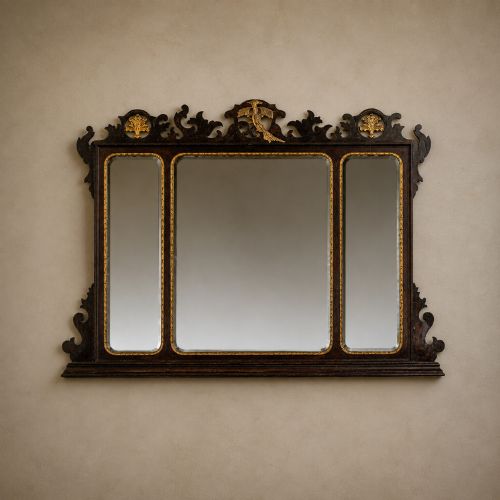
Beyond standard wall mirrors, the selection includes pier mirrors, console combinations, and triple-plate overmantels from the Victorian era and the early twentieth century. Each variation demonstrates how cabinet-makers combined mahogany frames with parcel-gilt highlights or carved birds and foliage.
Materials and construction
Makers constructed the primary frames from solid mahogany or mahogany veneers applied to secondary softwood bases, providing a stable foundation for intricate fret-cut profiles. Artisans then applied thin sheets of gold leaf or giltwood highlights to carved details such as mouldings, bezel edges, and crestings.
Mirror plates evolved from early seventeenth- and eighteenth-century float glass with bevelled or reverse-cut edges to later nineteenth-century machine-rolled glass. Joinery typically involved pegged mortise and tenon joints for the main frames, alongside delicate fretwork panels sawn by hand or with early mechanical saws.
Materials recorded across current items include solid mahogany, mirror glass, giltwood, gold leaf, and cast bronze or ormolu mounts.
Assessing quality
Quality rests in the crispness of the hand-carving and the depth of the mahogany grain, particularly on fret-cut crests where lesser examples appear flat and mechanical. Superior items retain their original mercury or early silvered glass plates, showing subtle age foxing rather than modern flat-surface reflections.
The application of the gold leaf also distinguishes finer pieces, showing genuine burnished metal leaf rather than later metallic paint. Structural integrity in the frame joints and the retention of original backboards further separate workshop masterworks from later decorative reproductions.
The Gilt and Mahogany Mirror Glossary
- Parcel-gilt
- Partially gilded, where gold leaf is applied only to specific carved elements, mouldings, or highlights while the surrounding mahogany grain remains visible.
- Fretwork
- Openwork ornamentation cut from a thin board using a fret saw, creating geometric or scrolling patterns typical of eighteenth-century frames.
- Overmantel
- A large horizontal mirror specifically scaled to hang on the wall directly above a fireplace mantelpiece.
- Pier mirror
- A tall mirror designed to hang on the narrow section of wall between two windows, often paired with a matching console table.
- Ho-ho bird
- A stylized Chinese phoenix commonly carved onto the crests of mid-eighteenth-century Chippendale-style mirrors.
Gilt and Mahogany Mirror: Frequently Asked Questions
Are these mirrors suitable for bathrooms?
High humidity and fluctuating temperatures in bathrooms can damage historic wood glue, cause mahogany veneers to lift, and degrade original silvered mirror glass.
It is best to place these items in dry living areas, hallways, or bedrooms where the environment remains stable.
How do I clean the antique glass?
Use a soft, dry microfibre cloth to gently remove dust from the glass surface without applying excessive pressure to aged plates.
Avoid spraying liquid glass cleaners directly onto the mirror, as moisture can seep behind the bevelled edges and cause the silvering to flake.
Can I polish the mahogany frame?
Apply a microcrystalline wax sparingly with a soft cloth to nourish the dry timber and protect the original patina without building up heavy residues.
Take care to keep polishing waxes away from any giltwood sections, as solvents can damage delicate gold leaf.