

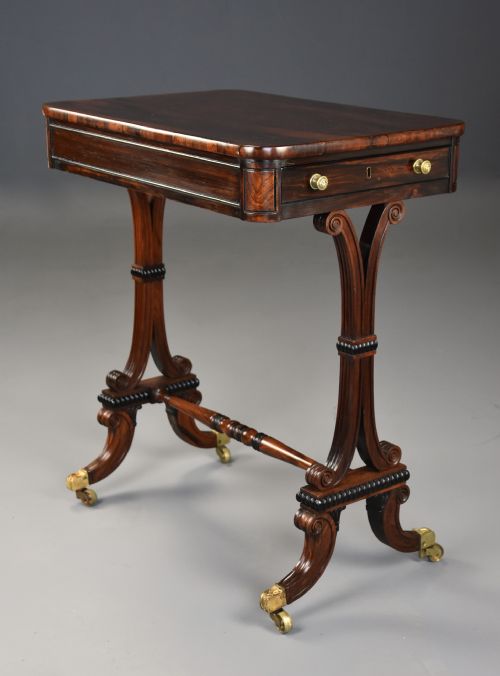


Gillows Sewing Table
A gillows sewing table is a masterclass in domestic utility, combining refined timber construction with clever fitted interiors for the discerning nineteenth-century household.
Gillows Sewing Table
When you search for a gillows sewing table, you are looking at specialised furniture designed for needlework, correspondence, and light leisure during the nineteenth century. These pieces combine compact proportions with ingenious internal compartments, drop leaves, and suspended fabric bags.
The versions you are most likely to meet on this page span the Regency, William IV, George IV, and Victorian periods, with materials ranging from rich rosewood and flame mahogany to burr walnut. Many pieces reflect the distinctive design hallmarks of Gillows of Lancaster and London, while others are attributed through construction and style.
Forms vary from Pembroke drop-leaf tables to multi-functional writing, reading, and games tables. They serve equally well today as bedside tables, lamp stands, or compact occasional desks in modern interiors.
Materials and construction
Cabinetmakers utilised dense tropical hardwoods such as rosewood and mahogany, often selecting figured veneers and flame mahogany to create visually striking table tops. Burr walnut appears in later Victorian examples, providing a softer, highly figured grain pattern.
Secondary structural elements incorporate precision turning for legs, subtle wood inlay, and fitted brass castors for mobility. Drop-leaf mechanisms and sliding work bags require intricate joinery that conceals storage without compromising the stability of the frame.
Gillows Sewing Table Retail Price Guide 2026
Typical asking prices for gillows sewing table among the pieces listed under this phrase on Sellingantiques today, from the lower quarter to the upper quarter. They describe what is for sale here now, not the wider market.
Current listings feature pieces spanning the 19th Century, Regency, George IV, William IV, and Victorian periods, constructed from rosewood, mahogany, walnut, and burr walnut.
Assessing quality and execution
The distinction between standard workshop output and the finest commissions lies in the selection of timber and the precision of the hardware. Superior examples feature perfectly matched veneer grains across multiple drawers and drop leaves, alongside robust brass fittings.
Internal organisation also dictates grade, with bespoke fitted compartments for thread, needles, and writing implements showing meticulous attention to detail. The integration of multi-purpose functions, such as combined writing slopes and reading ledges, elevates the complexity and merit of the piece.
Gillows of Lancaster·Waring & Gillow
The Gillows Sewing Table Glossary
- Pembroke table
- A small table featuring hinged drop leaves on two opposing sides. These flaps allow the surface area to expand or contract according to domestic needs.
- Work table
- A dedicated piece of furniture designed for sewing and needlework, typically fitted with an under-slung fabric bag or rigid box to hold materials.
- Flame mahogany
- A veneer cut from the fork of the mahogany tree where the branch meets the trunk. This cutting method produces a distinctive flickering, flame-like pattern.
- Drop leaf
- A hinged flap of wood attached to the main table top that can be raised and supported by folding brackets. It provides flexible surface space in compact rooms.
- Sofa table
- A rectangular occasional table traditionally placed in front of a sofa, featuring drop leaves and often twin pedestal supports.
Gillows Sewing Table: Frequently Asked Questions
What is a gillows sewing table used for?
These pieces were originally built to assist ladies with sewing, needlework, and writing tasks in the parlour. The fitted drawers and hanging fabric bags kept threads, pins, and documents neatly organised out of sight.
Today, they function brilliantly as compact bedside tables, lamp stands, or occasional desks. Their refined proportions allow them to fit easily into smaller spaces without dominating a room.
How do I date a Regency sewing table?
Dating relies on observing timber choices, leg turning styles, and overall architectural proportions. Regency and George IV examples frequently feature rosewood or mahogany with brass inlay and sabre legs.
Later Victorian versions tend to utilise burr walnut and heavier, more ornate pedestal bases. Comparing construction methods against documented workshop practices helps confirm the era.
Are all these tables made by Gillows?
Not every piece carries a stamped signature or paper label from the firm. Many are attributed to the manner of Gillows based on distinctive construction techniques, hardware, and design details characteristic of their Lancaster workshops.
Pieces marked as in the manner of reflect the high standards and popular aesthetic popularized by the firm during the nineteenth century. These unsigned items share the same structural integrity and material quality.
How do I care for rosewood and mahogany?
Maintain timber surfaces by keeping them away from direct sunlight and sudden temperature shifts, which can dry out old veneers. Occasional application of quality beeswax helps preserve the natural lustre of the wood.
Avoid placing damp items or hot cups directly onto the polished top to prevent water rings and heat damage. Gentle dusting with a soft, dry cloth is sufficient for daily maintenance.