





Gilded Wood Shelving
These gilded wood shelving pieces bring genuine historic warmth and surface reflection to a room, offering practical display space wrapped in period charm.
Gilded Wood Shelving
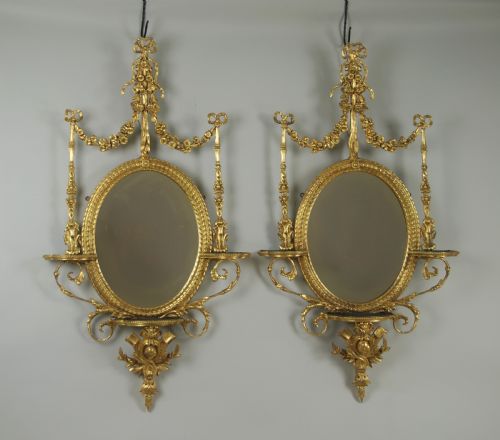
When you search for gilded wood shelving, you encounter an array of display pieces designed to elevate small objects or books while adding metallic light to a wall or corner. These items range from compact wall brackets and mirrored display shelves to open bookcases and floor-standing units.
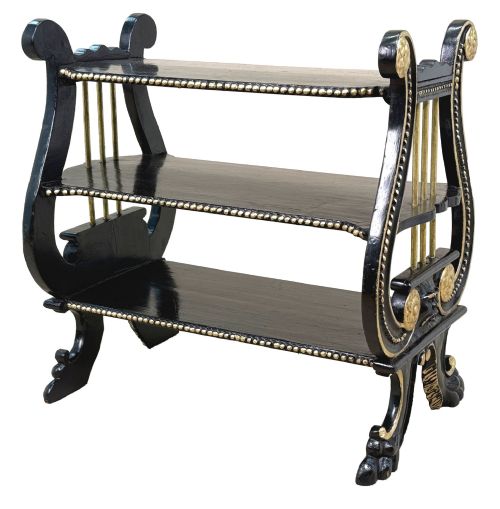
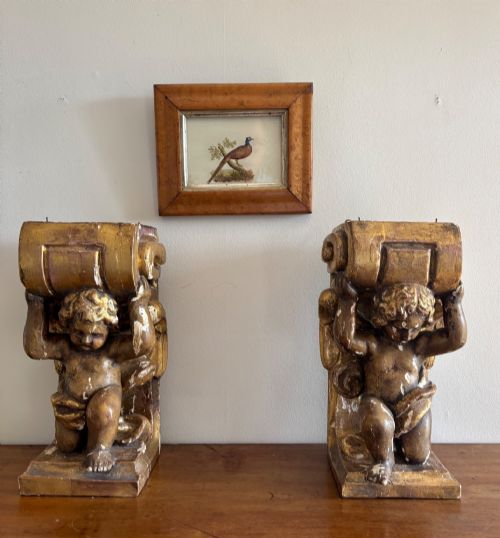
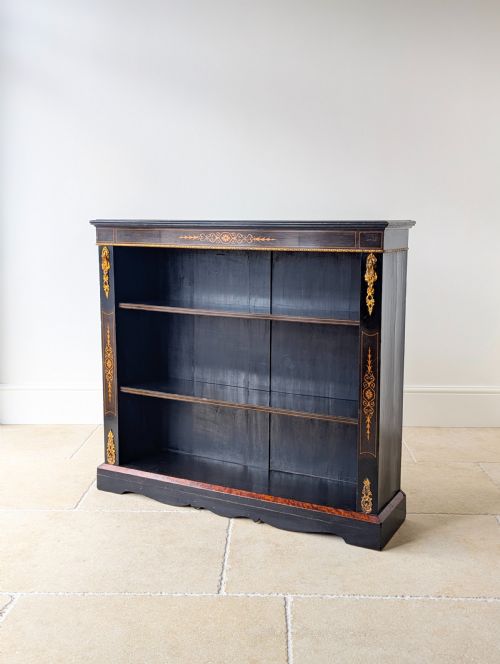
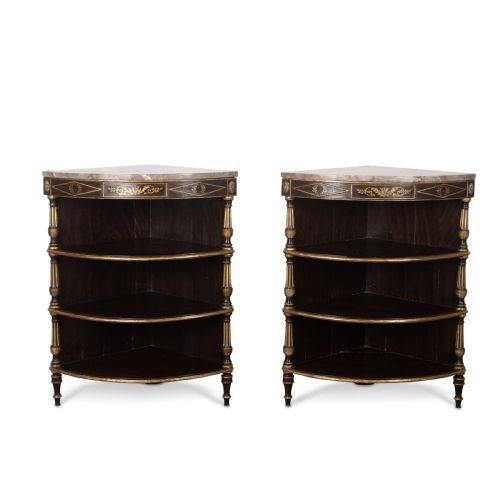
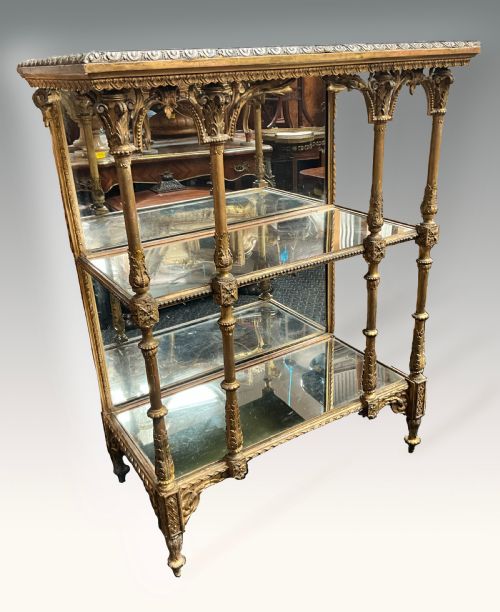
The pieces on this page span the Regency, Victorian, and George V eras, showing how decorative ledges evolved from architectural forms into functional furniture. You are most likely to meet Victorian and 19th-century wall brackets or ebonised open bookcases carrying gold leaf accents.
Makers utilised various supporting structures, including corner cabinets with marble tops and tiered étagères, to maximise both floor and wall space. Each form serves a distinct domestic purpose, whether holding heavy leather-bound volumes or displaying delicate porcelain figurines.
How they were made
Makers built these shelves using foundational timbers such as rosewood and ebonised wood, sometimes pairing them with heavy marble tops for added stability. Carved wood and gesso provided the sculptural base needed to receive the delicate layers of gold leaf or giltwood.
The application of gold leaf required skilled hands to press thin metal sheets over prepared gesso surfaces, creating a luminous finish that catches natural light. Ebonising involved treating timber to resemble costly ebony, which makers contrasted with parcel gilt details to highlight carved mouldings.
Gilded Wood Shelving Retail Price Guide 2026
Typical asking prices for gilded wood shelving among the pieces listed under this phrase on Sellingantiques today, from the lower quarter to the upper quarter. They describe what is for sale here now, not the wider market.
Desk organisers from the George V era brought miniature architectural shelving to the Victorian workspace, proving that even inkwells deserved a grand stage.
What varies in quality
The distinction between ordinary and exceptional pieces lies in the crispness of the carved wood details and the depth of the gilding. Superior examples display sharply defined ornamentation in the gesso and wood, whereas lesser items show softened edges from repetitive casting or heavy over-painting.
The structural integrity of the joints and the original condition of the glass or marble inserts also separate standard domestic items from finer decorative works. High-grade pieces retain their authentic gold leaf surface with minimal loss, showing natural ageing rather than modern restoration.
The Gilded Wood Shelving Glossary
- Giltwood
- Wood that has been coated with gold leaf or a gold-coloured finish. This technique adds bright metallic highlights to carved mouldings and frames.
- Gesso
- A plaster-like mixture applied to wood surfaces as a base for gilding and fine carving. It provides a smooth ground that holds intricate relief details.
- Ebonised
- Timber treated with a dark stain or finish to imitate costly ebony wood. It creates a stark, elegant contrast against parcel gilt elements.
- Étagère
- A piece of furniture consisting of open shelves for displaying small objects. These tiered stands were popular for showing off collections in the nineteenth century.
- Parcel Gilt
- Decoration where only certain parts of an object are gilded while the rest remains wood or paint. This method highlights specific carved motifs and architectural lines.
Gilded Wood Shelving: Frequently Asked Questions
Can these open bookcases hold heavy books?
Open bookcases from the nineteenth century were generally built to support standard book collections of the period. However, modern heavy volumes should be placed with care on older shelves.
Inspect the shelf supports and uprights to ensure the timber has not warped or weakened over time. Distributing weight evenly helps protect the antique structure from sagging.
How should I clean gilded wood surfaces?
Gilded surfaces require gentle maintenance using a soft, dry duster to remove surface dust without disturbing the delicate gold leaf. Avoid using water, chemical sprays, or abrasive cloths that can strip the historic finish.
If deeper cleaning is necessary, consult a professional conservator who understands nineteenth-century gilding techniques. Preservation of the original gesso and gold layer is essential for maintaining the piece.
What is the difference between Victorian and Regency styles?
Regency pieces often draw heavily on classical neoclassical lines, featuring cleaner silhouettes and dark woods like rosewood. They reflect an earlier aesthetic of proportion and restrained ornamentation.
Victorian items tend to embrace revivalist movements like Rococo or Gothic, offering heavier carving and more exuberant surface decoration. The use of ebonised finishes and rich gesso work became widespread during the latter half of the nineteenth century.