


Gilded Wood Seating
Gilded wood seating brings theatrical French style and nineteenth-century craftsmanship into a room through carved timber, gold leaf and plush upholstery.
Gilded Wood Seating
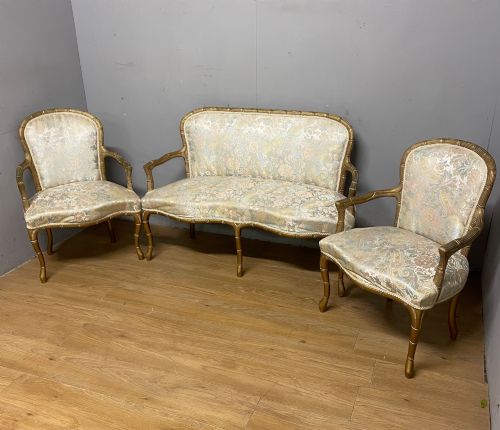
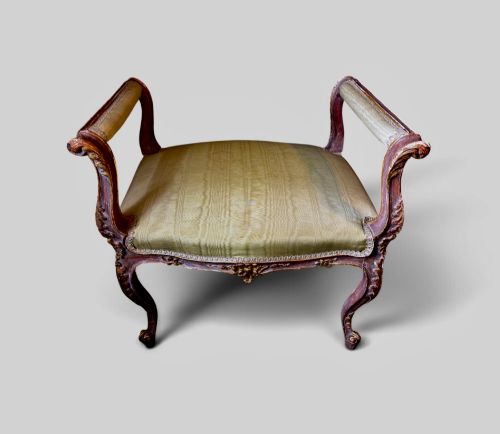
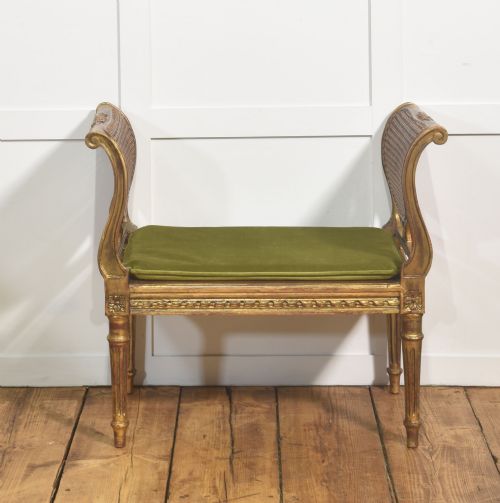
Gilded wood seating encompasses armchairs, window seats, stools and settees originating primarily from the nineteenth century and the early twentieth century. Buyers seeking gilded wood seating find French salon chairs, Italian neoclassical stools and English Regency settees finished in gold leaf or gilt paint.
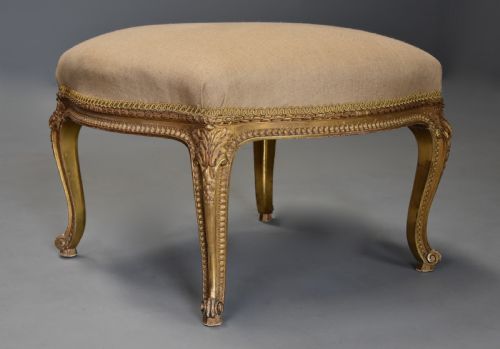
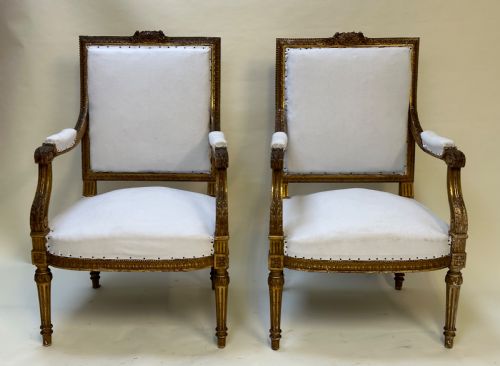
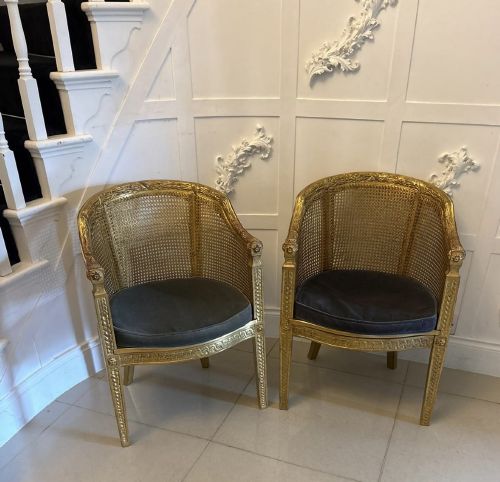
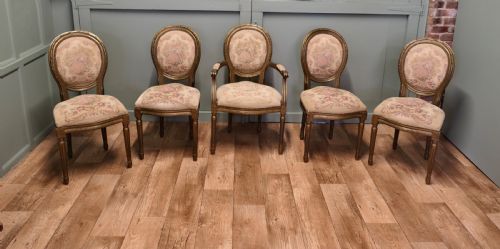
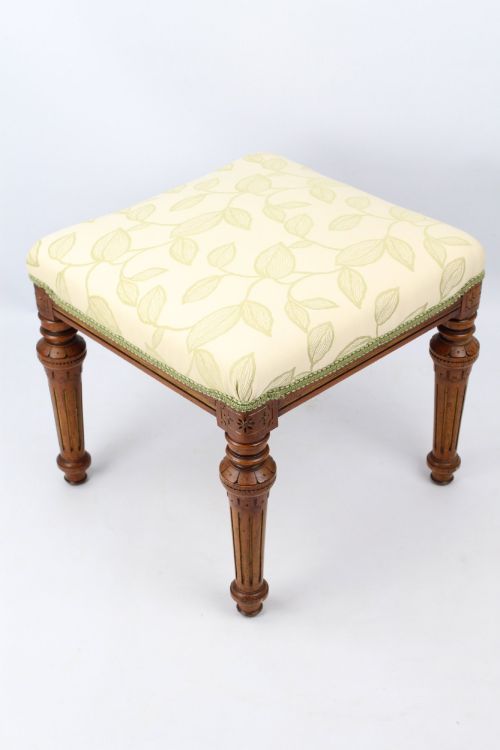
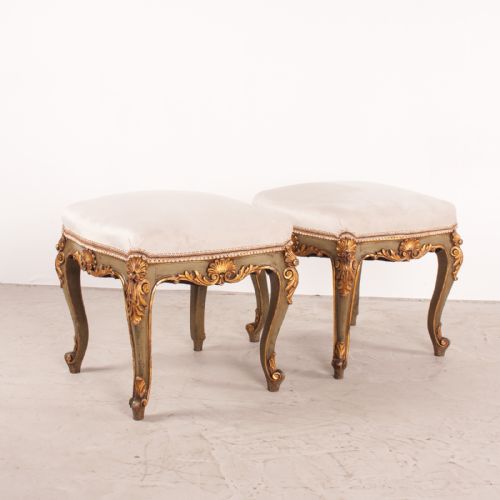
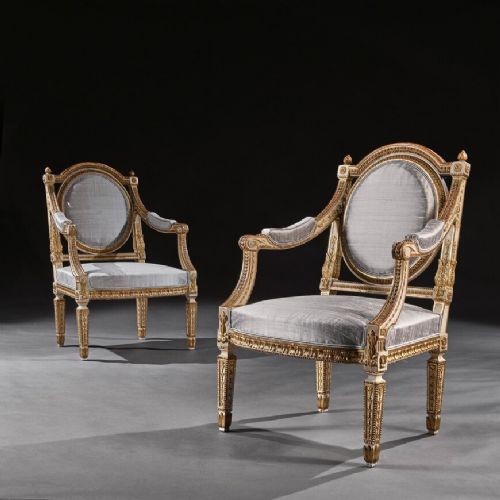
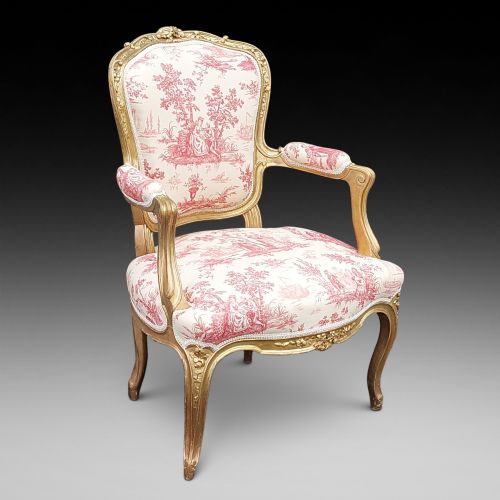
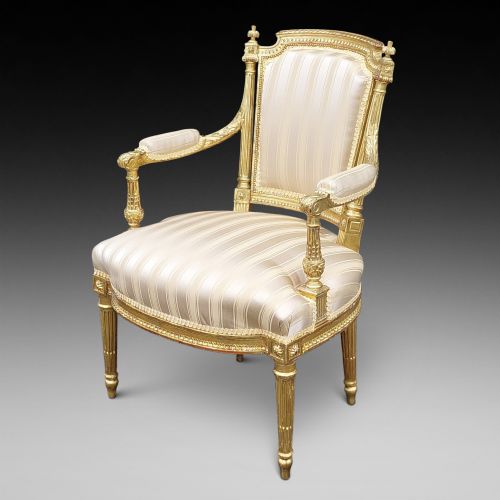
The most common forms on this page are armchairs and pairs of stools shaped in revival styles such as Louis XVI, Rococo and Neoclassical. These pieces draw on historical European designs, employing beech and oak carved with floral motifs, scrolls and fluted legs.
Beyond European furniture, the selections include Asian carved wooden figures and seats that incorporate painted and lacquered details. These diverse objects share a foundational use of carved timber and decorative surface application.
Materials and construction
Makers shaped structural frames from hardwoods such as beech and oak, carving decorative details directly into the timber before applying surface finishes. Joints were typically doweled or tenoned to support daily use in formal reception rooms and parlours.
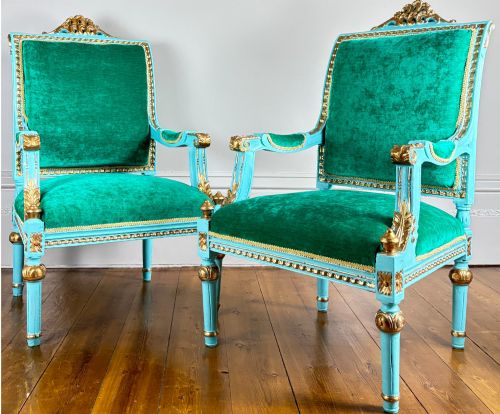
Guilders applied thin sheets of gold leaf over a prepared base of gesso or bole, burnishing the metal to achieve a bright or mellow metallic sheen. Some pieces utilised paint and parcel gilt, combining pigmented colours with exposed gold highlights on carved mouldings.
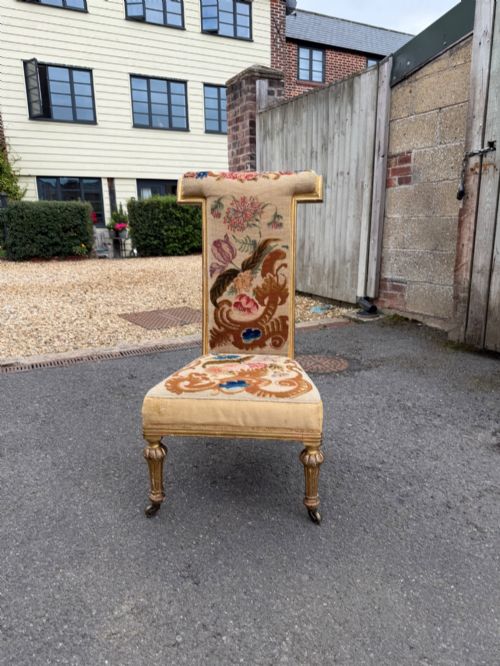
Upholstery completed the forms, utilising materials like silk fabric, velvet, textile and cane inserts held in place with traditional webbing and stuffing. Frames often accommodated newly upholstered fabrics while retaining their historic wooden structures.
Gilded Wood Seating Retail Price Guide 2026
Typical asking prices for gilded wood seating among the pieces listed under this phrase on Sellingantiques today, from the lower quarter to the upper quarter. They describe what is for sale here now, not the wider market.
Sculpted wooden elephants stand ready to seat weary visitors alongside traditional French gilded chairs.
Evaluating the standard
Quality rests in the crispness of the wood carving and the depth of the underlying gesso work. Sharp, well-defined acanthus leaves and fluting indicate skilled hand work by a competent workshop.
The integrity of the gilding separates standard production from finer examples, as hand-applied gold leaf ages with a soft warmth distinct from flat modern metallic paints. Surface wear reveals the red or yellow bole underneath, adding a natural dimensionality to the finish.
Proportion and structural balance dictate the success of a seat, particularly in revival pieces where correct scale mimics eighteenth-century archetypes. Well-balanced armrests, sturdy leg assemblies and harmonious upholstery integration elevate the piece.
LOIDRAULT FRERES PARIS·Miles & Edwards·Lamb of Manchester
The Gilded Wood Seating Glossary
- Giltwood
- Timber coated with gold leaf over a prepared gesso ground. This traditional finish provides a reflective surface that catches natural light in a room.
- Bergere
- An enclosed upholstered armchair with wooden sides and a padded back. These seats offer a comfortable, deep-seated design popular in French sitting rooms.
- Fauteuil
- An open-arm armchair with exposed wooden armrests and upholstered back and seat. The arms typically feature padded elbow rests.
- Canapé
- A decorative settee or sofa designed for multiple sitters. These pieces mirror the stylistic carvings of matching salon chairs.
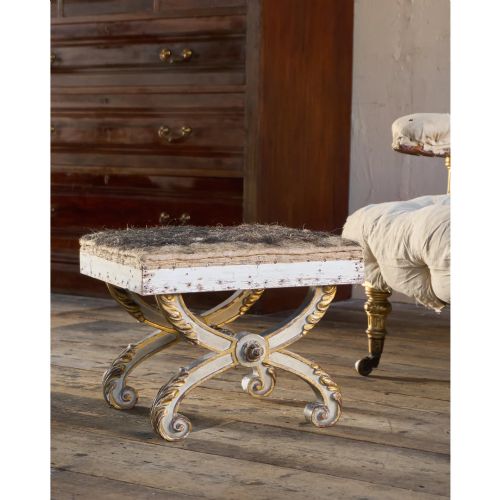
- Curule stool
- A seat with an X-shaped frame derived from ancient Roman magistrate chairs. This form often incorporates neoclassical carvings and gilt gesso.
- Gesso
- A plaster mixture applied to wood frames to create a smooth surface for gilding. It allows carvers to crisp up details before applying gold leaf.
Gilded Wood Seating: Frequently Asked Questions
How do I clean gilded wood?
Dust surfaces gently with a soft, dry ostrich feather brush or a clean microfiber cloth. Avoid commercial polishes, water and abrasive cleaners, which strip the delicate gold leaf.
Keep pieces away from direct sunlight and moisture to prevent the gesso ground from cracking or lifting away from the timber frame.
Are these chairs comfortable to sit in?
Nineteenth-century salon chairs and armchairs were built for formal entertaining rather than deep lounging. They offer upright, supportive seating thanks to traditional sprung or webbed bases.
Many pieces feature generous proportions and padded armrests, making them suitable for reading corners and occasional seating areas.
How do I identify a revival style?
Revival pieces produced in the nineteenth century imitate earlier monarchical periods like Louis XVI or French Rococo. Look for accurate neoclassical symmetry, straight fluted legs and classical urn or floral carvings.
Construction methods, tool marks on the timber and the chemical composition of the gesso usually give away the true nineteenth-century production date.
Can I reupholster a historic settee?
Historic frames can be successfully reupholstered using traditional techniques that respect the internal webbing and padding. Choose period-appropriate textiles such as silk, damask, velvet or cane to maintain historical integrity.
Ensure the upholsterer secures new fabrics without altering or damaging the delicate giltwood frame during the process.