

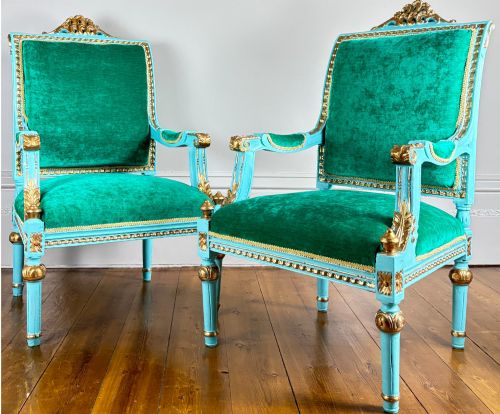
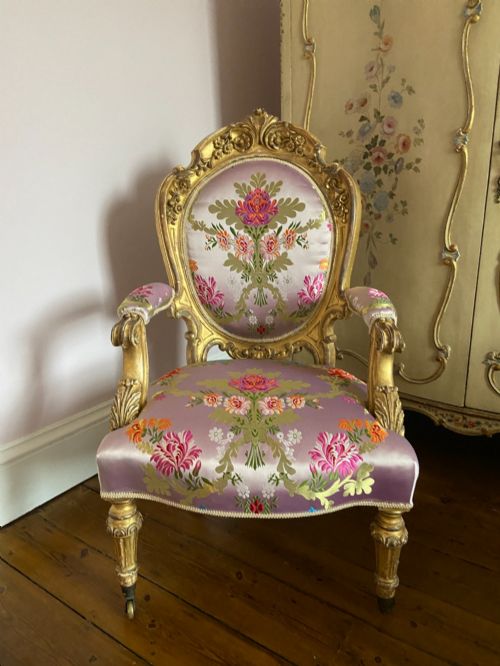
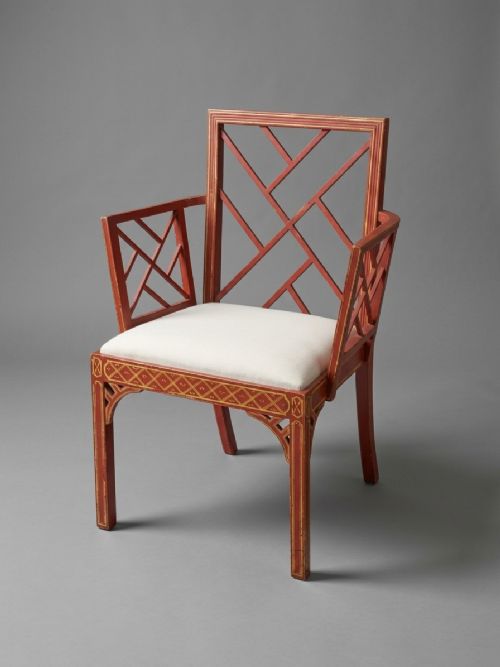
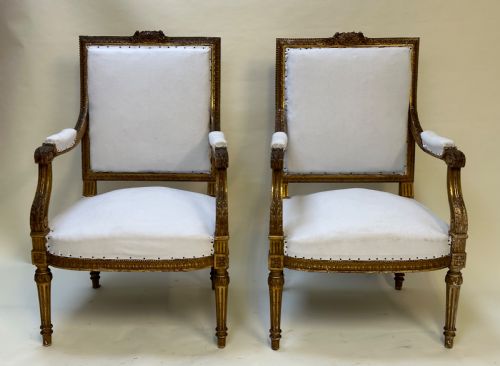
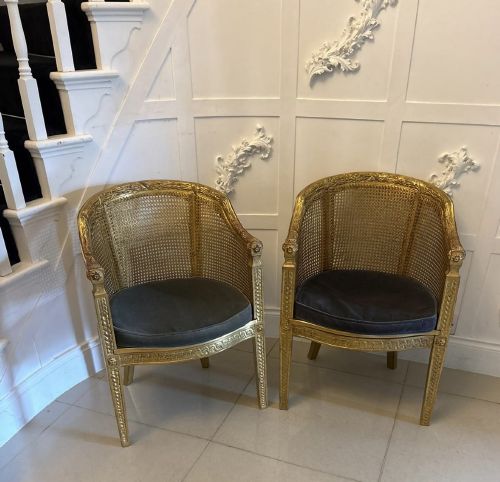
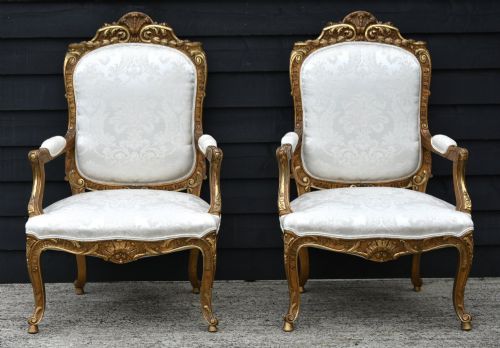
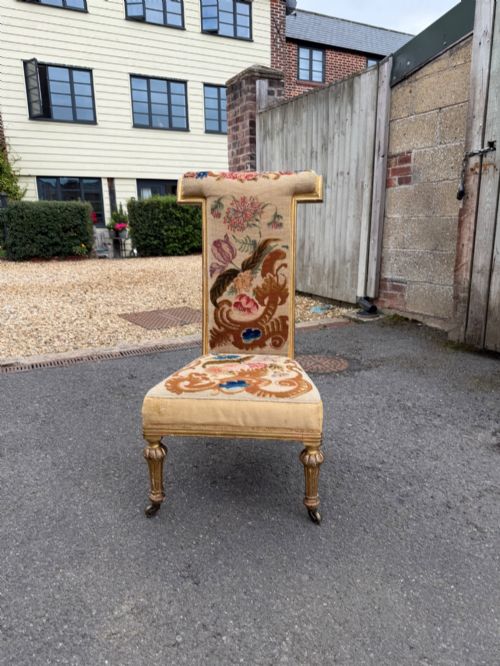
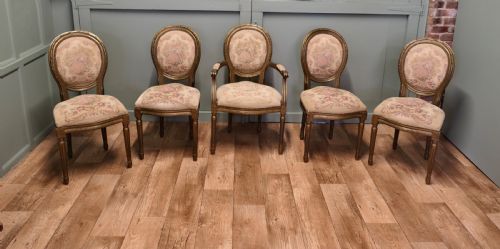
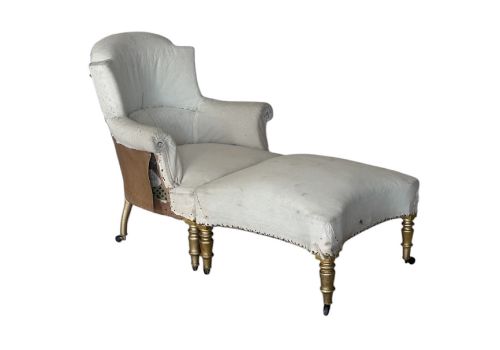
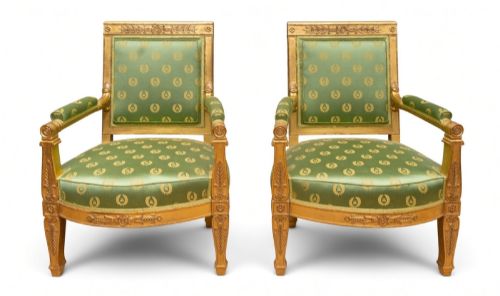
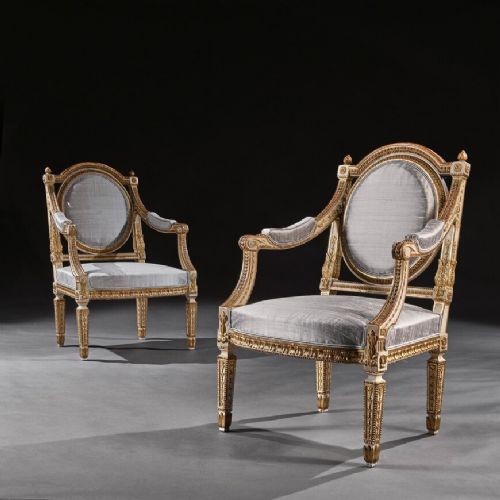
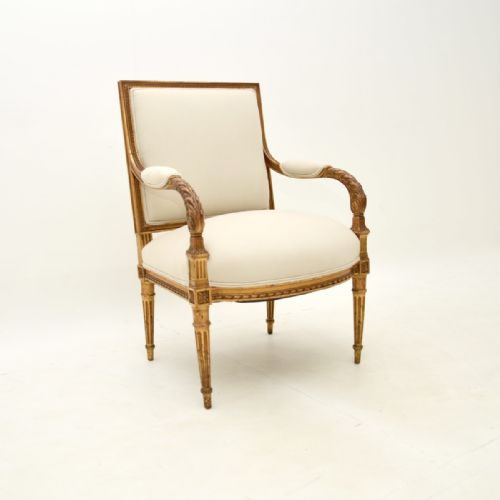

Gilded Wood Chair
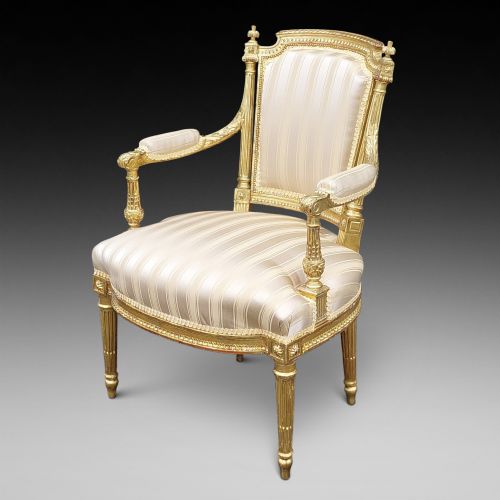
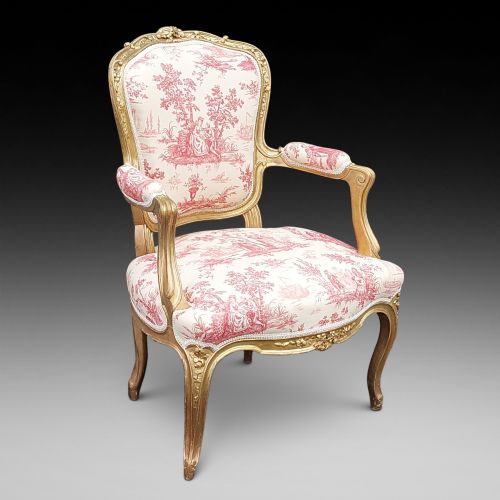
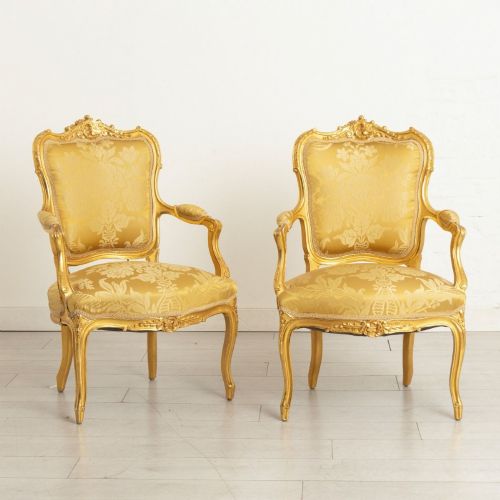
When you handle a gilded wood chair, you touch a tradition of French and continental seating finished in gleaming leaf across multiple centuries.
Gilded Wood Chair
A gilded wood chair brings together carved timber frames and applied metallic leaf, appearing in forms such as armchairs, side chairs, and dining sets. Buyers searching for a gilded wood chair encounter pieces spanning the eighteenth century through the twentieth century, with nineteenth-century French examples appearing most frequently.
The selection ranges from grand salon suites and bergères to smaller bedroom chairs and occasional seating. Makers drew inspiration from classical design, incorporating Louis XVI, Rococo, and Neoclassical styles into frames intended for formal and domestic interiors.
Many of these seats retain their original architectural proportions, while others emerge as revival pieces created during the Victorian period and the early twentieth century. Their functional roles varied from ceremonial seating in palaces to decorative occasional chairs in private drawing rooms.
Materials and construction
Makers typically carved these frames from beech or walnut, selecting timbers that accepted detailed chisel work and held structural weight. Artisans then applied gold leaf or paint directly onto the prepared wood base, often building up layers of gesso to create a smooth ground for the metal.
Upholstery completed the piece, with historical workshops utilising silk, velvet, textile, and occasional cane work to cover seats and backrests. The combination of carved giltwood and tactile fabrics defined the aesthetic standard for formal European seating.
Gilded Wood Chair Retail Price Guide 2026
Typical asking prices for gilded wood chair among the pieces listed under this phrase on Sellingantiques today, from the lower quarter to the upper quarter. They describe what is for sale here now, not the wider market.
Makers occasionally scaled down grand salon designs to build miniature children's salon chairs for affluent nurseries.
Assessing quality
The distinction between tiers rests upon the crispness of the wood carving and the depth of the gilding. Superior examples display hand-carved floral or scroll motifs with sharp edges, whereas lesser pieces rely on simpler moulded details.
The application of gold leaf also dictates merit, with genuine leaf ageing to a warm, mottled tone compared to flat modern metallic paints. Furthermore, the integrity of the underlying beech or walnut frame determines whether a chair survives structurally sound.
Jacob Desmalter·Lamb of Manchester
The Gilded Wood Chair Glossary
- Giltwood
- Timber coated with thin sheets of gold leaf over a prepared gesso ground. This finish provides the characteristic metallic brilliance seen on formal period seating.
- Fauteuil
- An open-framed upholstered armchair with wooden arms left exposed. These seats became central to French salon culture during the eighteenth century and later revivals.
- Bergère
- An enclosed upholstered armchair featuring solid sides filled with upholstery or cane work. They offer a deeper, more enclosed seat than standard open armchairs.
- Rococo Revival
- A decorative movement drawing on seventeenth and eighteenth-century asymmetrical motifs, C-scrolls, and naturalistic flora. This style dominated much of the mid-nineteenth-century European furniture production.
- Prie Dieu
- A devotional prayer chair featuring a low upholstered seat and a narrow upper shelf for kneeling or leaning. These pieces appear frequently in nineteenth-century continental inventories.
Gilded Wood Chair: Frequently Asked Questions
How do I identify a true period piece from a later revival?
Examine the timber shrinkage, the tool marks left by the carver, and the composition of the gesso beneath the gold leaf. Nineteenth-century revival pieces often display machine-assisted uniformity, whereas eighteenth-century originals show individual hand-chiselled variations in every scroll and leaf motif.
Look closely at the joinery methods used in the seat rails and blocks. Older frames utilise traditional pegging and hand-cut tenons that differ significantly from twentieth-century manufacturing techniques.
Can I use these chairs for everyday dining?
Dining chairs from these periods can serve at the table, provided the underlying beech or walnut frame remains structurally rigid. Many surviving sets were built specifically for dining use and retain sturdy proportions.
Consider the upholstery fabric when planning daily use, as antique silk and delicate textiles require gentle care. Selecting chairs with durable velvet or replacement upholstery ensures practical longevity in a modern home.
What is the difference between an armchair and a fauteuil?
An armchair is a general term for any seat fitted with side supports for the arms. A fauteuil specifically denotes a French open-arm chair featuring exposed wooden framing around the upholstered back and seat.
Fauteuils were designed for formal reception rooms, allowing women wearing wide hooped skirts to sit comfortably without crushing their garments against closed wooden sides.