





Gilded Mirror and Table
These gilded mirror and table sets bring grand console arrangements and intimate dressing pieces into domestic rooms with undeniable presence.
Gilded Mirror and Table
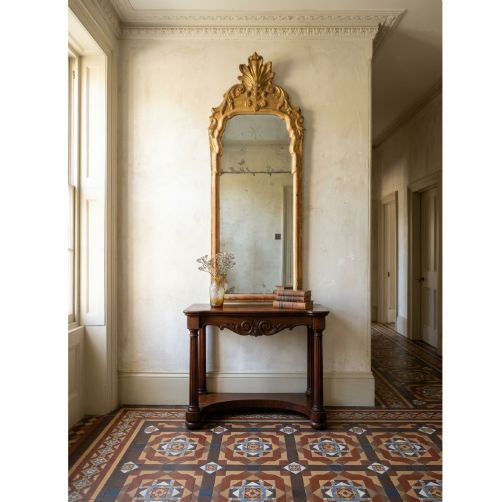
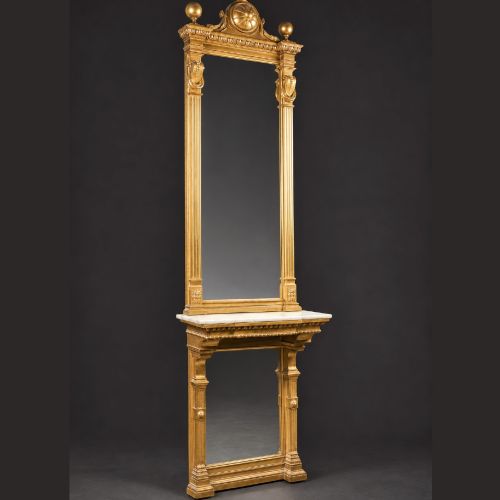
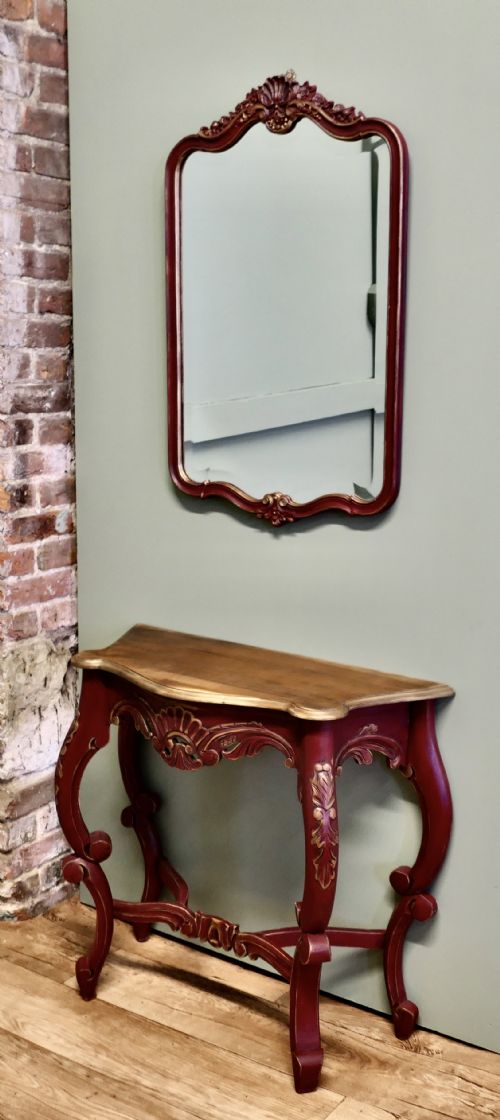
A gilded mirror and table combination pairs a wall-hung or pier mirror with a matching console, hall table, or dressing piece designed to function as a unified decorative scheme. These groupings emerge across the eighteenth, nineteenth, and early twentieth centuries in various regional interpretations, including Italian console sets and French Rococo Revival designs.
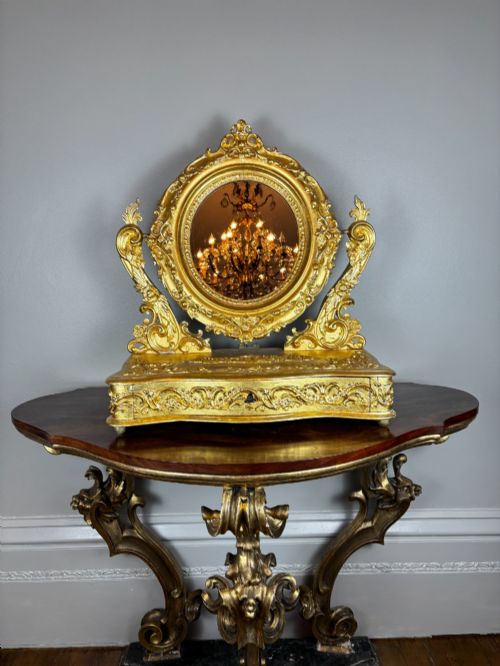
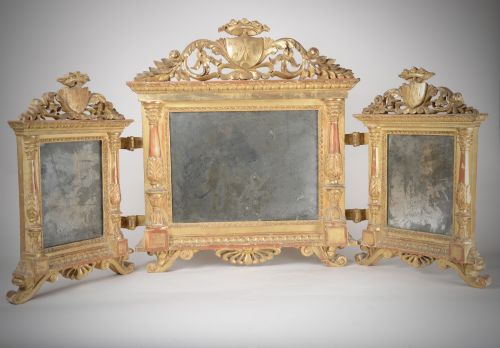
The pieces on this page span large architectural console tables with matching pier mirrors alongside smaller dressing table mirrors, toilet glasses, and easel variants. Console sets frequently incorporate marble tops, while dressing pieces utilise porcelain elements, wood, and detailed frames.
Origin styles range from Neoclassical and Baroque to Chinoiserie and Art Deco, reflecting how makers adapted these matched sets across different periods. Buyers most frequently encounter nineteenth-century console table and mirror sets alongside smaller Victorian and Edwardian dressing mirrors.
Materials and construction
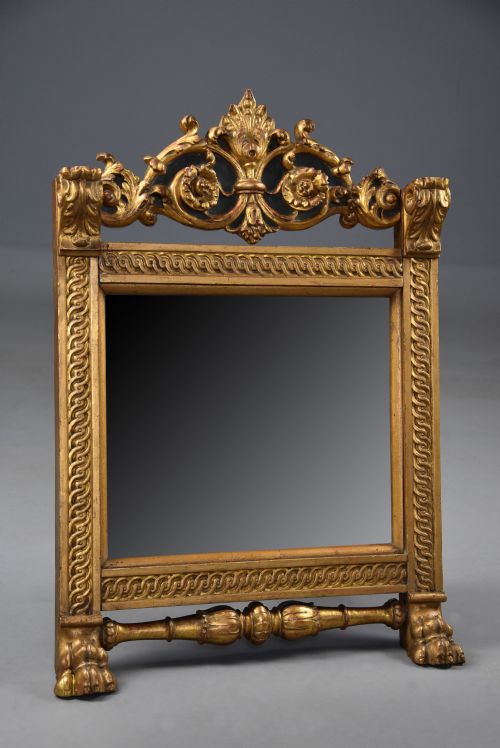
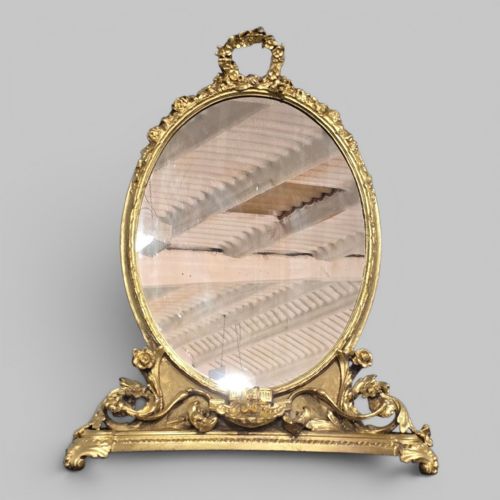
Gilded mirror and table pieces rely fundamentally on wood, gesso, and gold leaf, where artisans carved intricate floral and scroll motifs into timber before applying fine layers of gilding. Many nineteenth-century and earlier examples employ carved giltwood frames alongside mirror glass and polished marble tops for console surfaces.
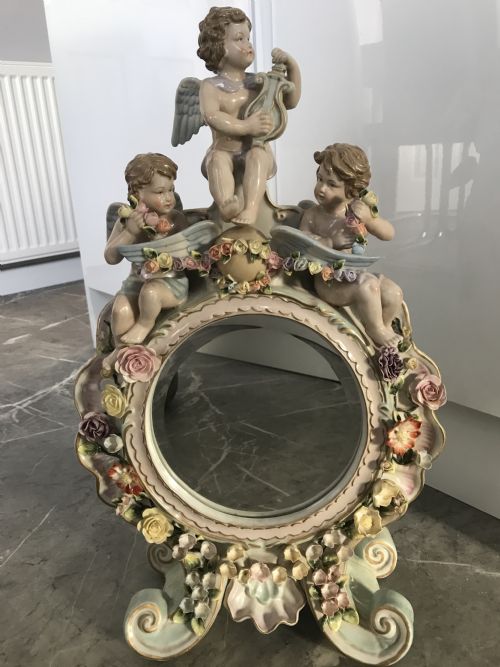
Smaller dressing mirrors introduce alternative materials such as porcelain, ormolu, and ebonised finishes, occasionally incorporating painted panels or Limoges enamel details. Structural integrity depends on traditional joinery for the tables and secure easel backs or wall-mounting fixings for the mirrors.
Gilded Mirror and Table Retail Price Guide 2026
Typical asking prices for gilded mirror and table among the pieces listed under this phrase on Sellingantiques today, from the lower quarter to the upper quarter. They describe what is for sale here now, not the wider market.
Listings span the eighteenth, nineteenth, and early twentieth centuries, featuring materials such as marble, giltwood, porcelain, and mirror glass.
Assessing quality and execution
Quality in these sets rests upon the depth and crispness of the hand-carving in the giltwood and gesso, where superior examples exhibit sharp, undercut details rather than soft, moulded edges. The application of gold leaf demonstrates the maker's hand through its burnished finish and subtle interaction with the underlying gesso layers.
The harmony between the mirror and its associated table dictates the visual cohesion of the pairing, with top-tier examples showing matched proportions, unified decorative vocabularies, and high-grade materials like fitted marble or porcelain plaques.
F.Bienvue·Continental Factory·Sitzendorf Porcelain
The Gilded Mirror and Table Glossary
- Giltwood
- Timber coated with gold leaf or gold powder laid over a prepared gesso ground. This material defines the bright, reflective frames characteristic of many period mirrors and console tables.
- Console table
- A table designed to stand against a wall, frequently supported by wall brackets or front legs. These pieces often feature marble tops and pair directly with matching pier mirrors.
- Pier mirror
- A tall mirror specifically proportioned to hang on the wall space between two windows above a console table. They create an illusion of greater light and room volume.
- Gesso
- A plaster-like mixture applied to wood surfaces as a smooth base for gilding. Skilled carvers and gilders relied on this compound to build up relief decoration before applying gold leaf.
- Trumeau
- A decorative wall panel incorporating a mirror and a painted or carved scene. These French elements often integrate with console tables to form a continuous architectural elevation.
Gilded Mirror and Table: Frequently Asked Questions
How do I style a gilded mirror and table set?
Position the console table firmly against a central wall with the matching mirror hung directly above to anchor the arrangement. This creates a traditional focal point suitable for entrance halls, reception rooms, or dressing areas.
Keep decorative items on the table surface minimal to allow the carved giltwood and marble details of the set to remain prominent. Use balanced lighting nearby to catch the reflective surfaces of the glass and gold leaf.
Are these sets usually made as a pair?
Many console tables and mirrors were designed and constructed together as a unified commission, sharing identical decorative motifs and proportions. Other examples bring together pieces from the same period that share stylistic traits like Rococo Revival carving.
Examining the underlying wood, gilding technique, and wear patterns helps determine whether the mirror and table originated as a matched set. Both unified suites and harmonious pairings appear across the available selections.
What is the difference between a console table and a pier mirror?
A console table is a rigid furniture piece resting on the floor, often featuring a marble top and ornate carved legs. It provides a functional surface beneath the wall.
A pier mirror is a vertical wall-hanging glass meant to occupy the architectural wall pier between windows. When combined, the table supports the visual weight of the tall mirror above it.
How do I care for antique giltwood and glass?
Dust giltwood frames gently with a dry, soft brush to protect the delicate gold leaf and gesso layers from abrasion. Avoid using chemical cleaners or moisture directly on the gilded surfaces.
Clean mirror glass sparingly with a soft cloth and mild glass cleaner, ensuring no liquid drips onto the antique frame or backing. Stable room temperatures prevent the wood and gesso from expanding or contracting.