
Gilded Metal Pendant Light
These gilded metal pendant lights bring together French and Italian metalwork, glass, and crystal across the nineteenth and twentieth centuries.
Gilded Metal Pendant Light
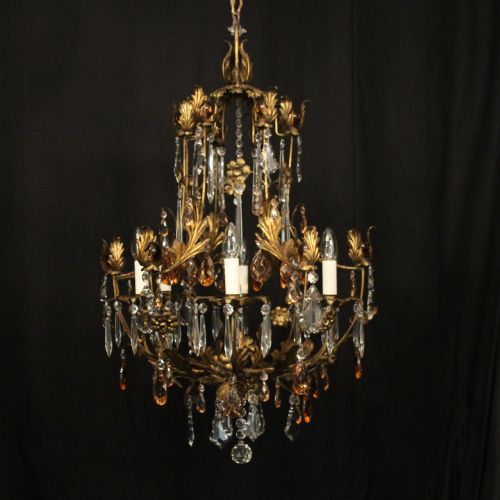
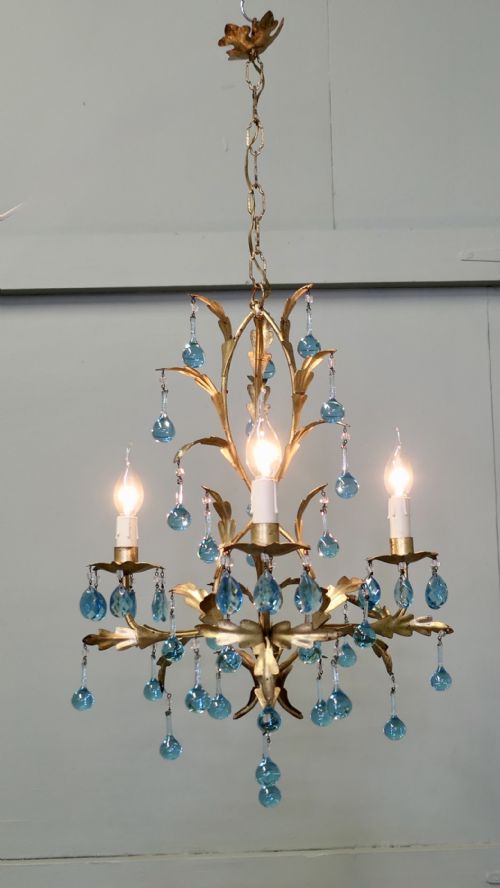
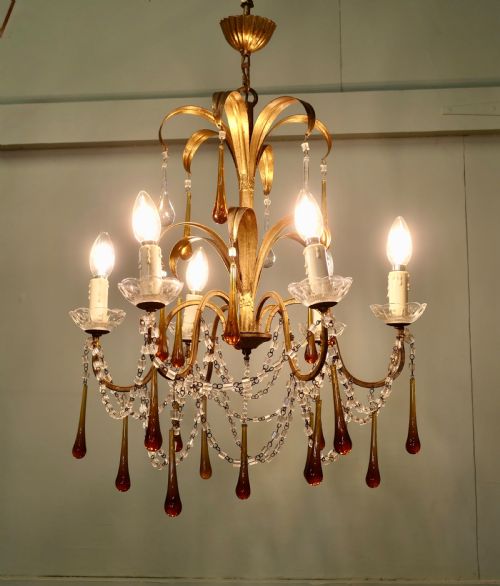
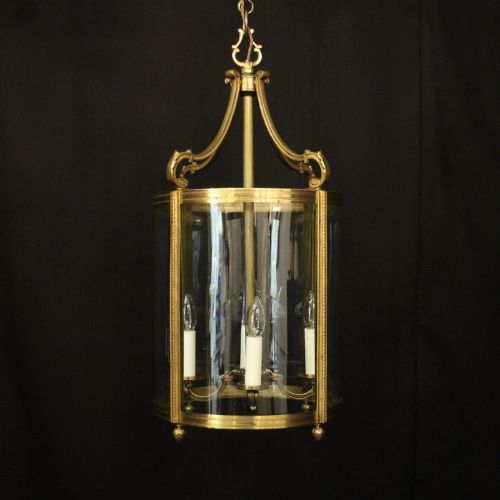
A gilded metal pendant light unites decorative metalwork with suspension for interior illumination, appearing widely across this selection in forms such as chandeliers, hall lanterns, and ceiling lights. You meet these pieces primarily in French and Italian designs, spanning periods from the nineteenth century through the 1930s.
Lamps often incorporate hanging drops or decorative elements alongside the metal structure. Many examples utilise multiple bulb configurations to cast ambient light through rooms.
How they were made
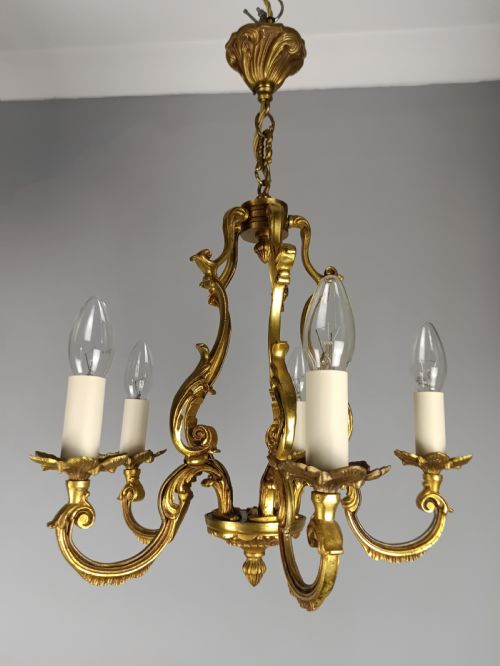
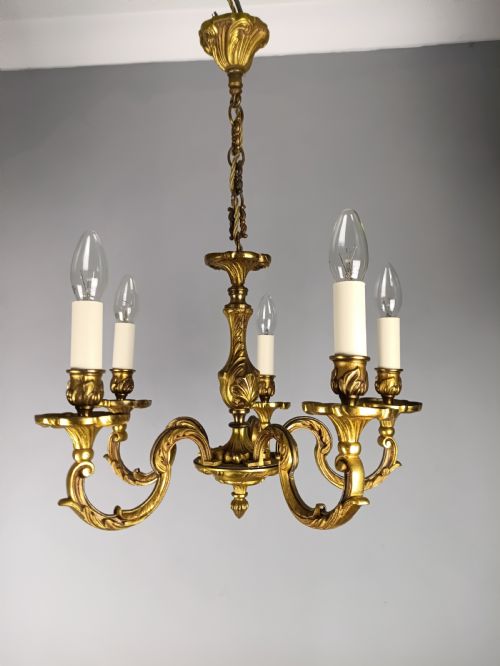
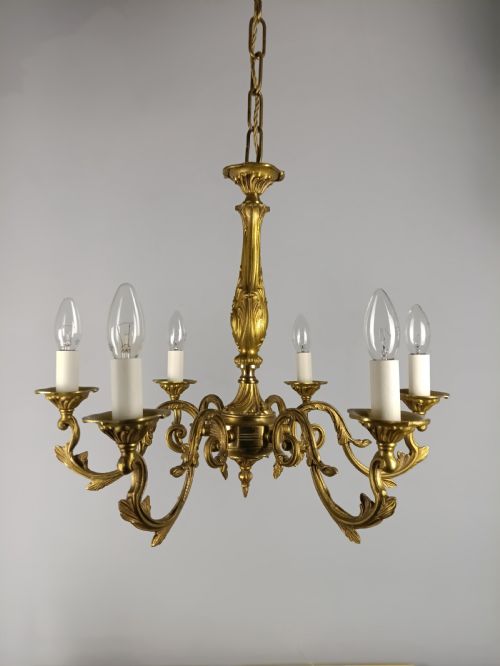
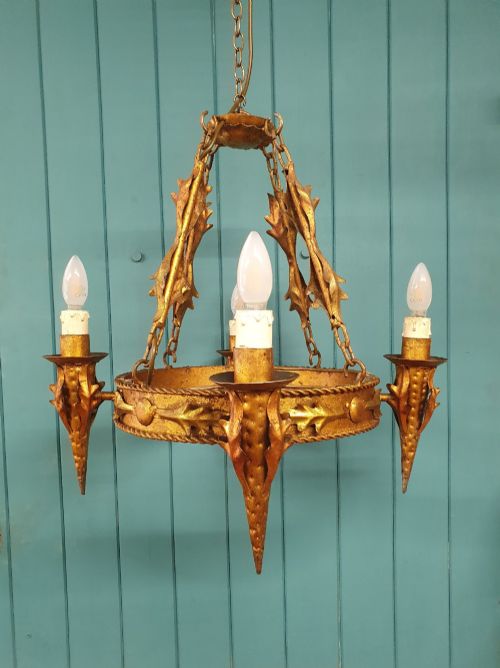
Craftsmen built these fixtures using gilt bronze, ormolu, brass, and iron as foundational metals, applying surface gilding to create rich metallic finishes. Workshops shaped these elements into structural arms, intricate frames, and decorative mounts.
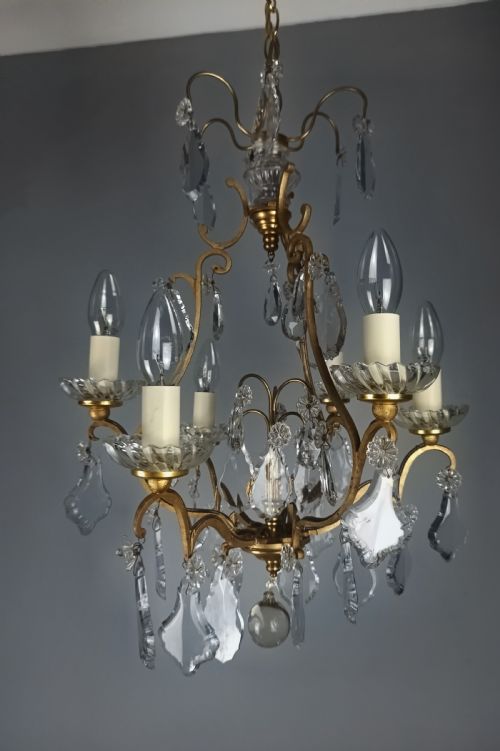
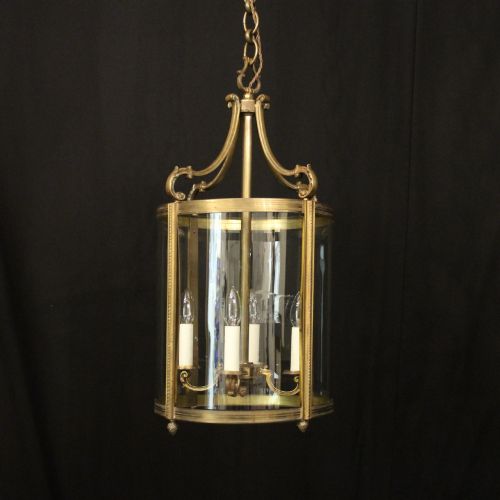
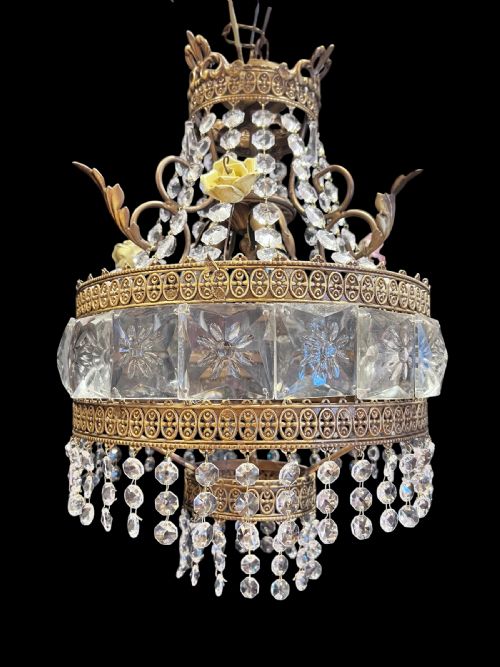
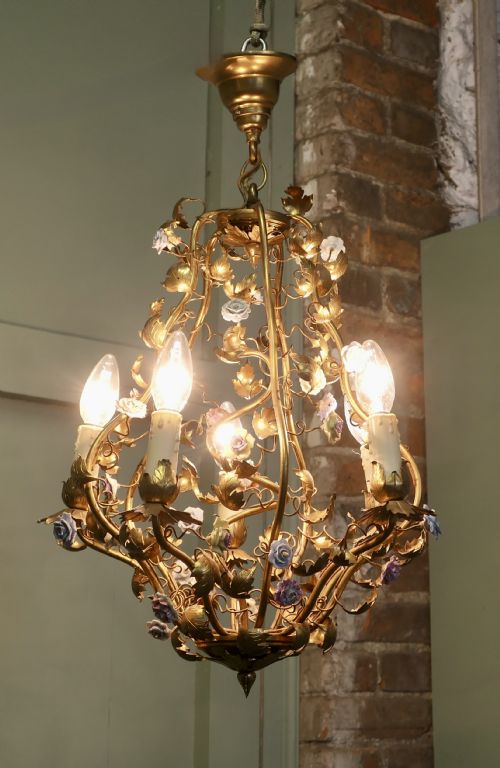
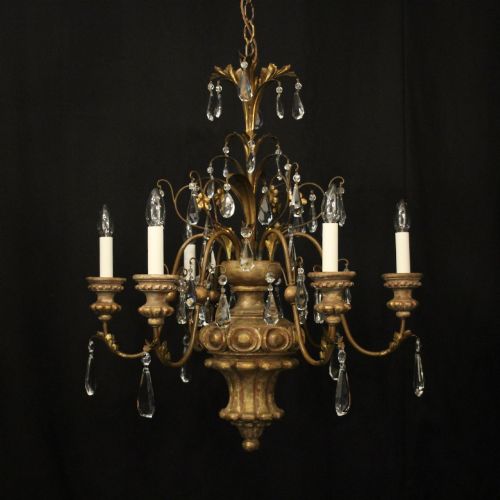
Artisans integrated glass, crystal teardrops, and porcelain or ceramic flowers to enhance the visual weight and light reflection of each fitting. Lanterns frequently employed bevelled glass panels held securely within metal frames.
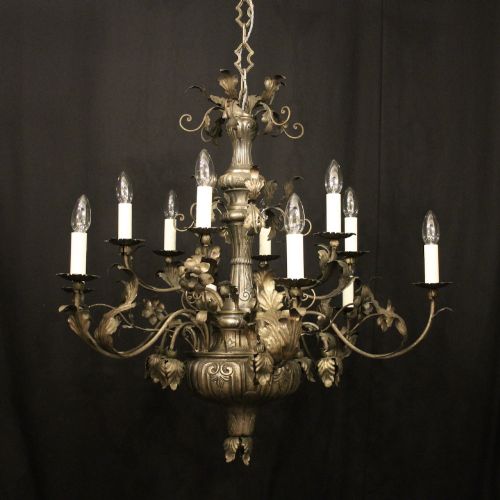
Makers combined cast metal components with hand-assembled crystals and toleware elements. The structural assembly balanced heavy metal frameworks with delicate glass pendants.
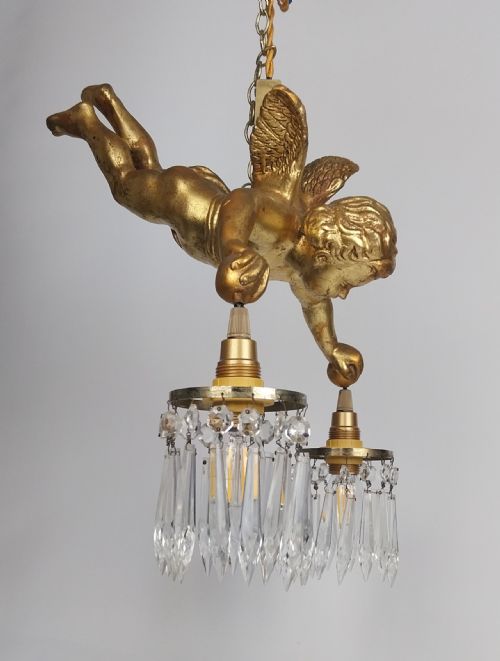
A winged cherub keeps watch overhead, guarding the room below from the ceiling.
What varies in quality
Quality depends upon the precision of the metal casting and the depth of the gilding applied to bronze, brass, or iron. Superior examples display crisp detail in sculptural elements such as cherubs, leaves, and coronets.
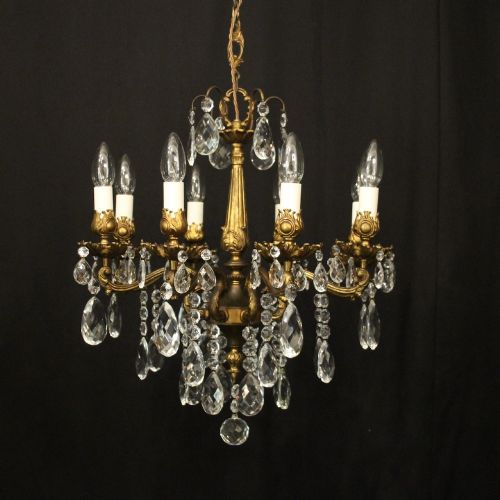
The selection and cutting of crystal and glass pendants dictate the brilliance of the piece when illuminated. Better fixtures integrate higher grades of cut crystal and securely mounted bevelled glass panels.
The Gilded Metal Pendant Light Glossary
- Ormolu
- Gilded bronze, typically produced by applying a mercury-gilding process to cast bronze objects during the eighteenth and nineteenth centuries.
- Toleware
- Painted tinplate or metalware often utilised for decorative floral and foliage elements on lighting fixtures.
- Birdcage chandelier
- A chandelier style featuring a curved wire or metal framework resembling a birdcage, frequently draped with crystal strands.
- Bevelled glass
- Glass panes possessing ground and polished edges angled to create a decorative framing effect.
- Coronet
- A small crown-shaped ornamental element positioned at the upper section of a chandelier or pendant light.
Gilded Metal Pendant Light: Frequently Asked Questions
Where should I hang a gilded metal pendant light?
These fixtures suit entrance halls, dining rooms, and high-ceilinged reception spaces where their drop and decorative metalwork command attention. Hall lanterns function effectively in narrow corridors, while larger multi-light chandeliers anchor central living areas.
Ensure adequate ceiling height for hanging designs, particularly multi-tiered or birdcage configurations that extend downwards into the room.
How do I identify French and Italian styles?
French pieces often exhibit refined Neoclassical, Rococo, or Chateau influences with formal symmetry and gilt bronze mounts. Italian examples frequently lean towards Florentine or Baroque aesthetics, showcasing leafy carvings, polychrome details, and floral motifs.
Regional metalwork techniques and decorative additions like porcelain flowers or coloured crystal teardrops further distinguish the origin.
Are these lights compatible with modern wiring?
Many vintage and antique light fixtures receive updated electrical wiring to meet contemporary safety standards while retaining their historic metal frames. Rewired components allow safe integration into modern domestic electrical systems.
Consult a qualified electrician to assess the internal wiring and structural hanging points before installation.
What maintenance do these metal and crystal lights require?
Dust metal frames gently with a soft, dry cloth to preserve the gilded surfaces without abrasive cleaners. Crystal drops and glass panels benefit from occasional careful cleaning with a mild solution to restore their reflective clarity.
Avoid harsh chemical polishes that can strip delicate gilt finishes from bronze or brass components.