
Gilded Metal Ceiling Light
A gilded metal ceiling light brings warmth and old theatre to a room, casting rich reflections from every corner.
Gilded Metal Ceiling Light
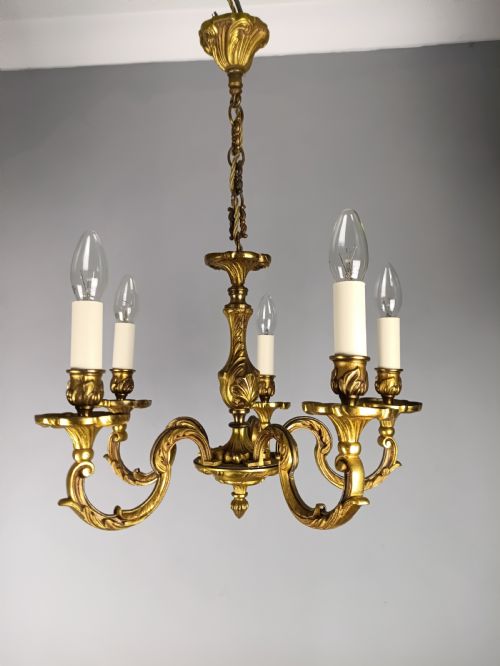
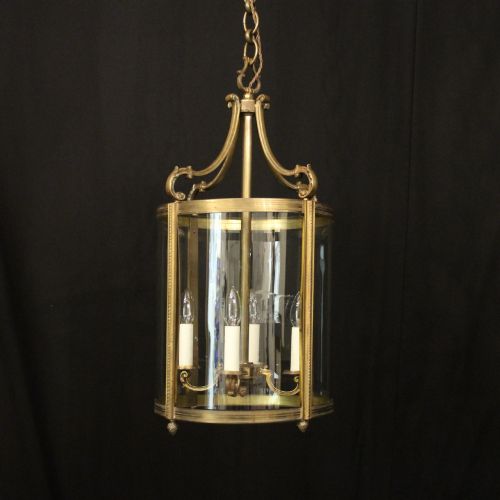
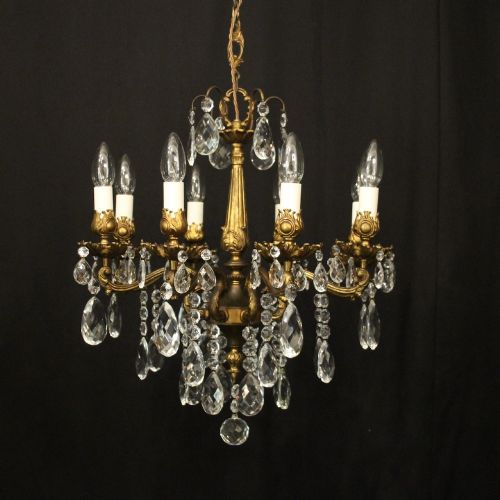
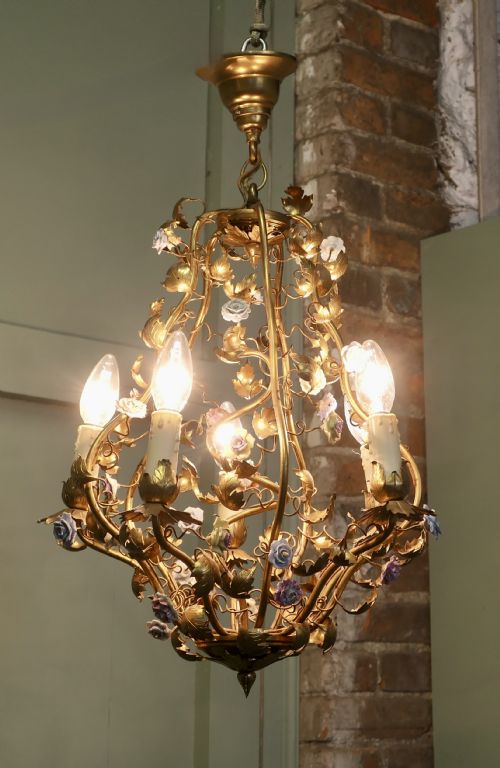
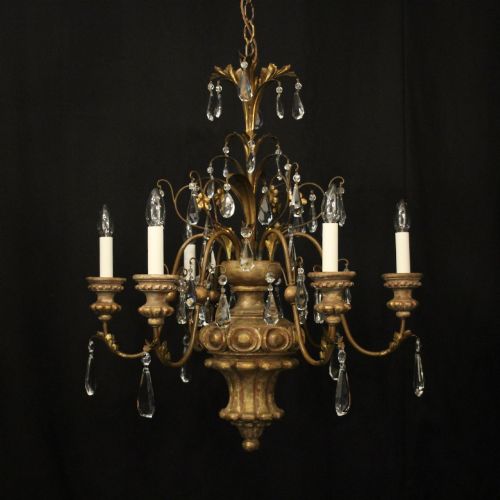
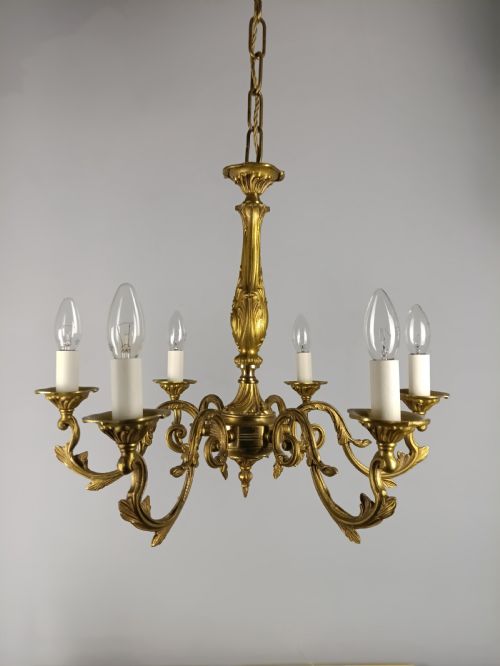
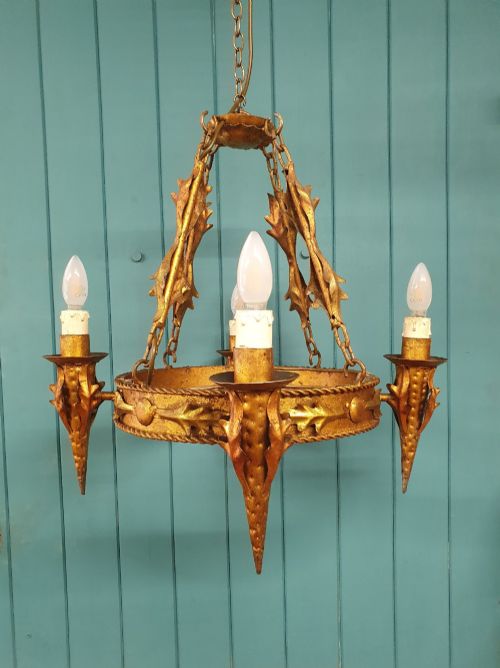
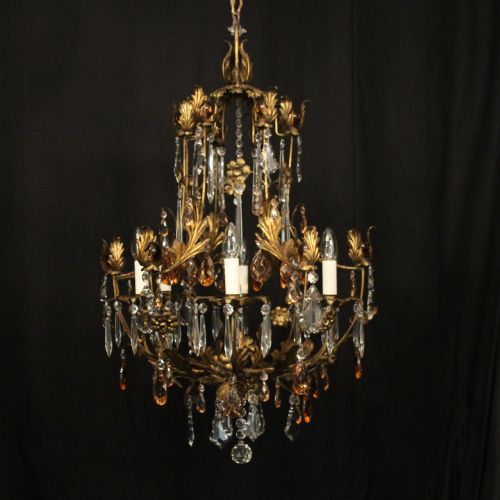
A gilded metal ceiling light spans several forms, from chandeliers and birdcage structures to hanging hall lanterns and pendant lights. You are most likely to encounter French and Italian examples originating from the nineteenth and early twentieth centuries, particularly the decades around nineteen thirty.
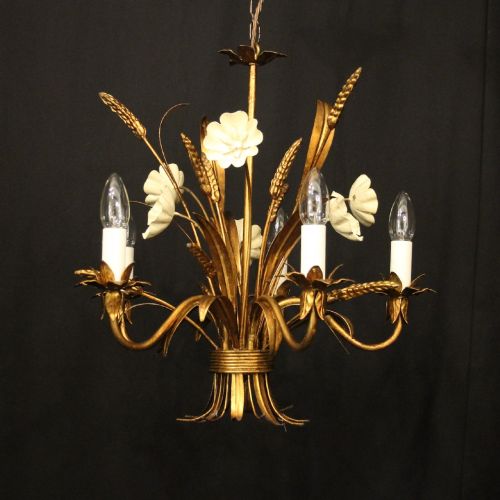
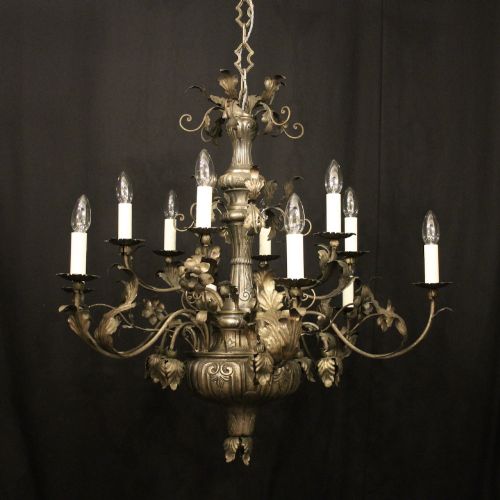
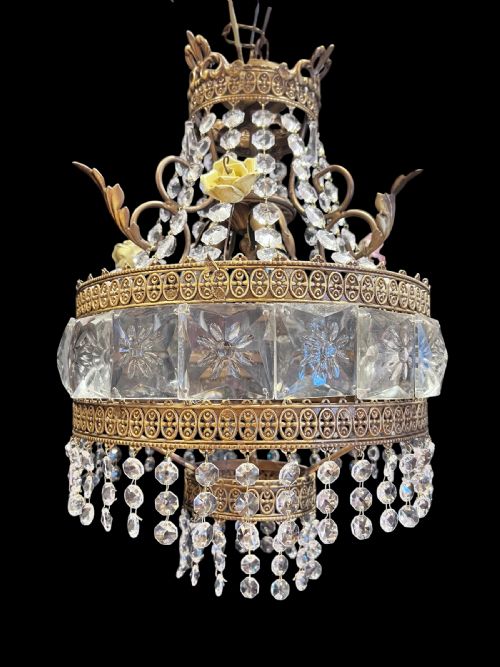
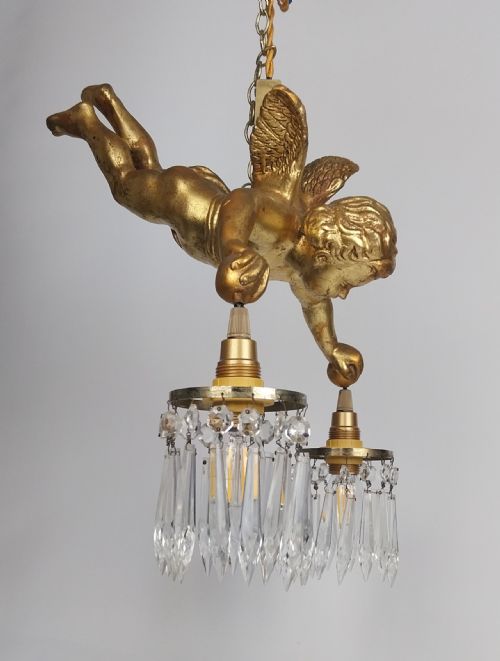
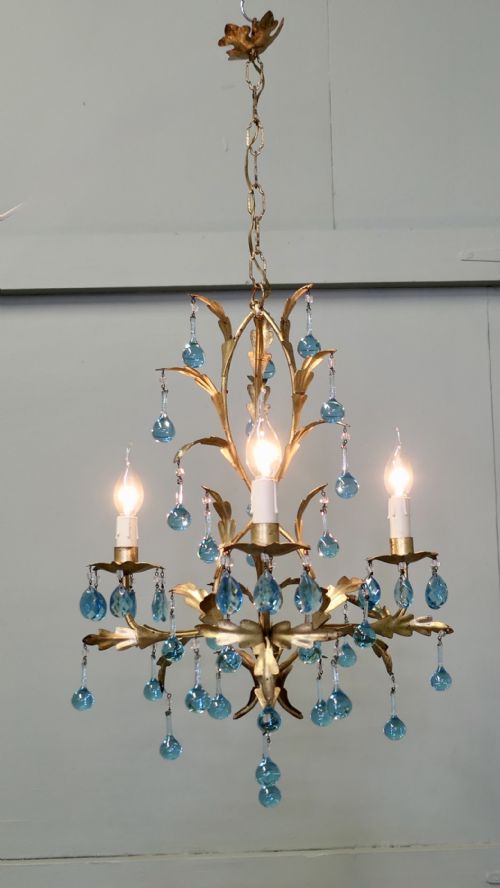
The designs draw heavily on regional styles such as French Rococo, Neoclassical, and Italian Florentine traditions. Many pieces incorporate decorative elements like crystal drops, porcelain flowers, toleware, or figural motifs such as winged cherubs.
Lighting formats range from compact single-bulb fixtures to large multi-tiered chandeliers carrying twelve or more lights. These pieces suit high ceilings and traditional interiors, serving as both practical illumination and sculptural centrepieces.
How they were made
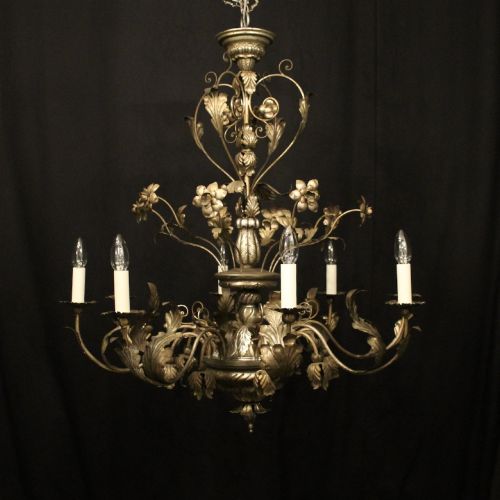
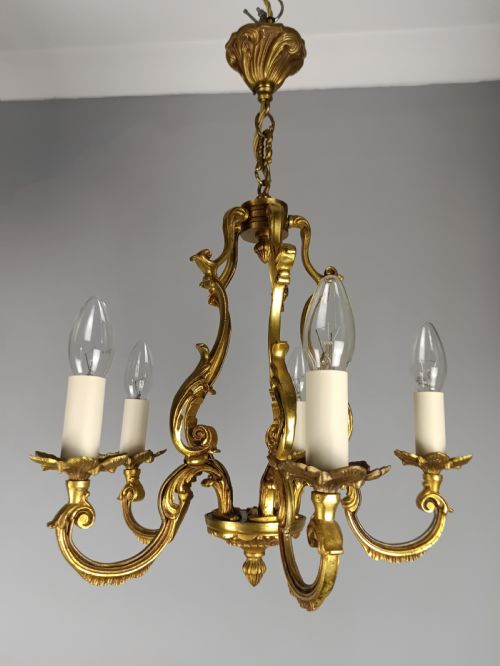
Metalwork forms the structural backbone of these fixtures, utilising cast bronze, brass, or iron that receives a gilt finish or silver gilding. Artisans shaped these metals into leafy frames, intricate cages, and ornate arms designed to support multiple light sources.
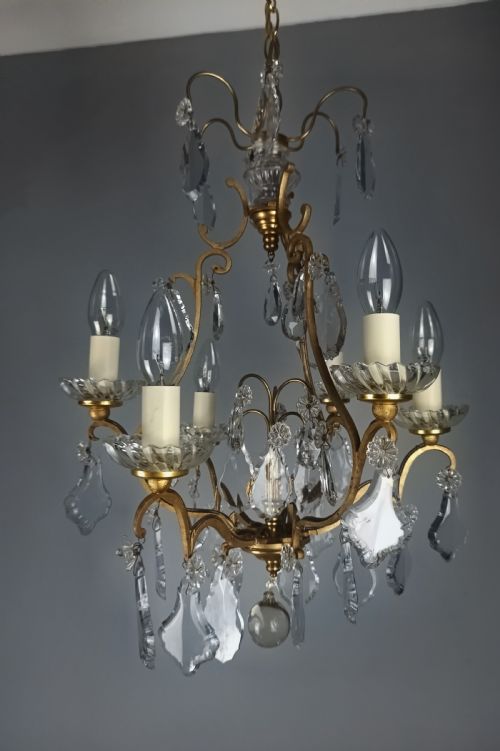
Glass and crystal components play a vital role, suspended as teardrops, cut crystal beads, or bevelled glass panels within lanterns. Additional decorative details include hand-painted toleware, ceramic flowers, and moulded porcelain elements integrated directly into the metal armature.
Listings feature pieces spanning the late nineteenth century through to nineteen thirty, predominantly representing French and Italian workshops.
What varies in quality
The refinement of the cast metalwork and the depth of the gilding set the standard for quality across these fixtures. Finely chased bronze and substantial brass frames hold their detail and visual weight far better than simpler stamped components.
The integration of decorative elements like cut crystal drops, bevelled glass panes, and hand-formed botanical details distinguishes finer pieces. Comprehensive craftsmanship in the assembly ensures that structural frames, wiring channels, and decorative mounts fit together with absolute precision.
The Gilded Metal Ceiling Light Glossary
- Gilt bronze
- Bronze that has been coated with a thin layer of gold or gold-coloured alloy. This technique provides a durable metallic sheen that resists tarnishing over decades.
- Toleware
- Painted or lacquered sheet metal, often utilised for decorative floral elements and leaves on twentieth-century fixtures. It introduces vibrant colour and organic shapes to the metal framework.
- Birdcage chandelier
- A skeletal frame style resembling an aviary, constructed from curved metal straps. Crystal strands and drops drape through the interior and exterior to catch the light.
- Ormolu
- Finely ground high-carat gold mercury-gilded onto a bronze base, popular in classical French metalwork. It yields a warm, soft lustre distinct from modern electroplating.
- Hall lantern
- An enclosed ceiling fixture designed specifically for entranceways and corridors. These pieces typically feature glass panels held within a glazed metal housing.
Gilded Metal Ceiling Light: Frequently Asked Questions
How do I hang a heavy antique chandelier safely?
Heavy fixtures require direct anchorage into a ceiling joist using a rated steel hook and proper electrical junction box support.
Professional installation is strongly advised to bear the combined weight of cast metal and crystal components securely.
Can these lights be rewired for modern homes?
Most antique fixtures accept modern electrical wiring and standard lamp holders without altering their exterior appearance.
Rewiring ensures compliance with current safety standards while preserving the original metalwork and decorative elements.
How do I clean crystal and gilt metal safely?
Dust the metal gently with a soft brush and wipe gilt surfaces with a dry cloth to protect the delicate finish.
Crystal drops can be cleaned using a mild solution of warm water and washing-up liquid while still attached or removed individually.
How do I distinguish French styles from Italian ones?
French fixtures frequently display Neoclassical symmetry, Rococo curves, and structured birdcage or coronet frames.
Italian pieces, particularly Florentine designs, often emphasise naturalistic gilt leaves, polychrome finishes, and elaborate floral motifs.