




Gilded Glass Lustres
Gilded glass lustres bring rich colour and sparkling crystal drops to a mantelpiece, offering both decorative presence and historic light.
Gilded Glass Lustres
Gilded glass lustres are decorative mantel ornaments and table pieces designed to catch and reflect light through hanging crystal drops. These items combine coloured glass bodies with metallic gilding and intricate cutting.
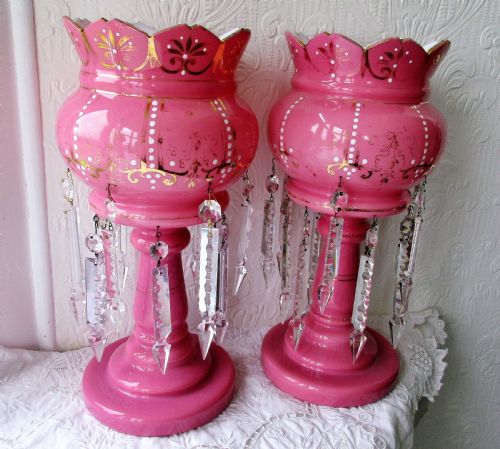
The versions most commonly met on this page span the Victorian and Edwardian periods, frequently appearing as matched pairs. They draw on French Rococo, Empire, and chateau styles alongside classic English designs.
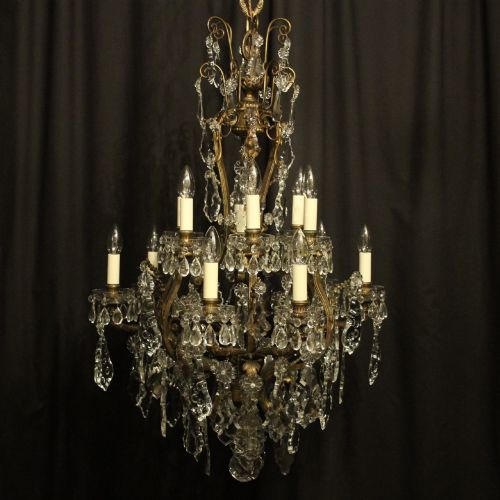
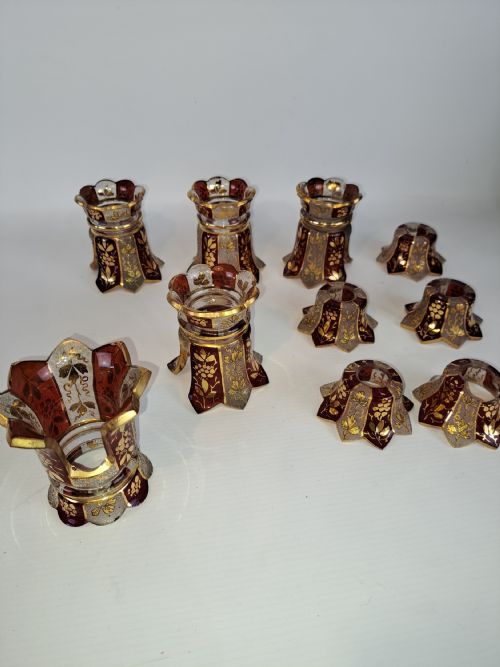
Makers utilised ruby glass, pink glass, and opaline glass as foundations for these pieces. Alongside standalone table lustres, the evidence includes related lighting components and larger chandeliers featuring gilded bronze.
How they were made
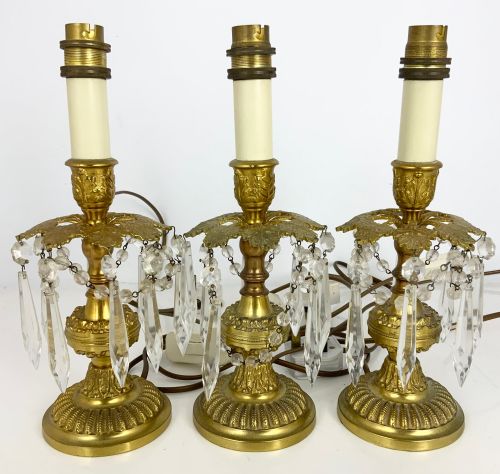
Makers shaped glass and crystal through blowing and cutting techniques, producing faceted bodies and polished capitals. These glass elements were then paired with cast bronze, ormolu, and gilt metal mounts.
Decoration relied on applied gold leaf and surface enamel work to embellish the glass components. Crystal prisms hung from these structures, secured by pins to complete the optical effect.
Gilded Glass Lustres Retail Price Guide 2026
Typical asking prices for gilded glass lustres among the pieces listed under this phrase on Sellingantiques today, from the lower quarter to the upper quarter. They describe what is for sale here now, not the wider market.
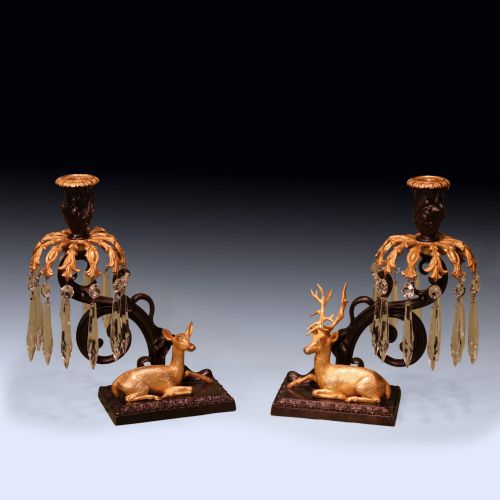
Bronze stags and does occasionally hold the lights, proving that nineteenth-century mantelpieces welcomed a touch of the forest.
What varies in quality
Quality rests in the depth of the glass colour and the crispness of the cutting across the crystal drops. Fine examples display rich ruby or opaline tones paired with cleanly chased bronze and ormolu mounts.
The application of gold leaf and the intricacy of the etched gilding separate standard production from finer work. Complete sets of matching pendants and sturdy construction further distinguish superior pieces.
The Gilded Glass Lustres Glossary
- Lustre
- A decorative mantel ornament featuring hanging glass pendants designed to reflect candlelight or daylight. These pieces often incorporate coloured glass and gilded highlights.
- Prism
- A cut crystal pendant suspended from the rim of a lustre to refract light. They catch the eye and amplify the brilliance of the object.
- Ormolu
- Gilded bronze mounted onto decorative objects and lighting components. This technique provides a rich metallic finish characteristic of French chateau and Rococo styles.
- Opaline glass
- An opaque, pastel-toned glass popular in nineteenth-century decorative pieces. It provides a smooth, milky canvas for gilding and enamel work.
- Capital
- The uppermost structural section of a lustre or candlestick. Etched gilded capitals frequently accent ruby glass bodies.
Gilded Glass Lustres: Frequently Asked Questions
Where should I place gilded glass lustres?
These pieces sit naturally on a mantelpiece, sideboard, or console table where ambient light can pass through the hanging crystals. Their vibrant glass bodies add a strong focal point to a room.
Because they were designed to catch daylight and candle flames, positioning them near a window or light source enhances their visual impact. Pairs look particularly balanced when arranged symmetrically.
How do I clean glass lustres safely?
Dust the glass and crystal components gently with a soft, dry cloth to prevent scratching the gilded surfaces. Remove the hanging pendants individually if deeper cleaning is required.
Wash the crystal drops in lukewarm water with mild soap, drying them thoroughly before reattachment. Avoid letting moisture touch the gilded bronze or applied gold leaf.
Were these pieces used for lighting?
Mantel lustres and table lustres served primarily as decorative ornaments rather than practical light sources. The hanging prisms caught and multiplied the flickering glow of nearby candles.
Some related items functioned directly as candlestick holders, while later adaptations incorporated electric fittings into the original gilt metal and glass bodies.
How do I tell Victorian lustres apart?
Victorian examples often feature rich ruby glass, pink glass, or opaline bodies paired with gilt metal or bronze mounts. Edwardian pieces tend to show slightly different proportions while retaining the traditional form.
Pay attention to the cut of the crystal pendants and the style of the gilt decoration, which reflect the changing tastes of the nineteenth century.