



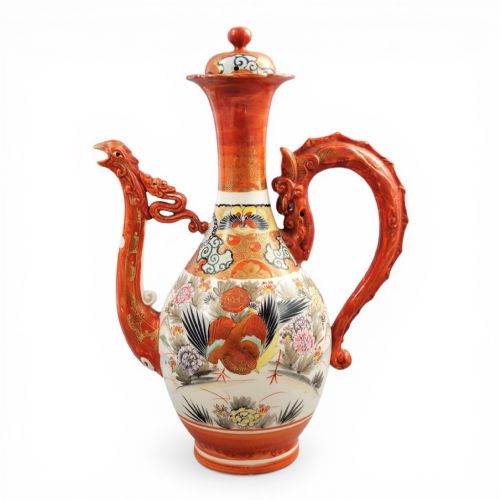


Gilded Dragon Ceramic
These gilded dragon ceramic pieces bring together vibrant orientalist motifs and rich metallic detailing across a range of centuries.
Gilded Dragon Ceramic
When searching for gilded dragon ceramic, buyers encounter a diverse selection of decorative bowls, vases, plates, and coffee cups. These objects span periods from the Georgian and Regency eras through the nineteenth century to the early twentieth century, including Edwardian and Art Deco productions.
The most common items on this page are British porcelains bearing specific dragon patterns alongside Japanese Satsuma and Chinese export wares. Pieces often take the form of large vases, octagonal bowls, and cabinet plates produced by prominent factories.
Origins vary between European potteries adopting oriental dragon motifs and genuine Asian export works from the Meiji, Late Qing, and early Republic periods.
Materials and production techniques
Potters utilised porcelain, bone china, and earthenware as the primary ceramic bodies for these items. These bases were shaped into decorative bowls, vases, ewers, and plates before receiving detailed surface treatments.
Makers applied intricate glaze work, including lustre glaze, enamel, and hand-painted iron-red pigments. Gold leaf and gilt details were then layered onto the ceramic surface to highlight the dragon motifs and borders.
Gilded Dragon Ceramic Retail Price Guide 2026
Typical asking prices for gilded dragon ceramic among the pieces listed under this phrase on Sellingantiques today, from the lower quarter to the upper quarter. They describe what is for sale here now, not the wider market.
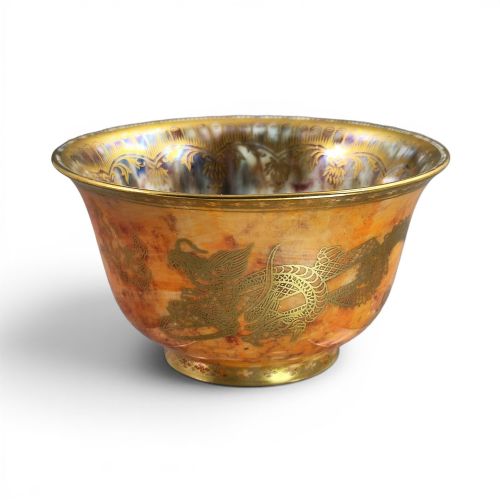
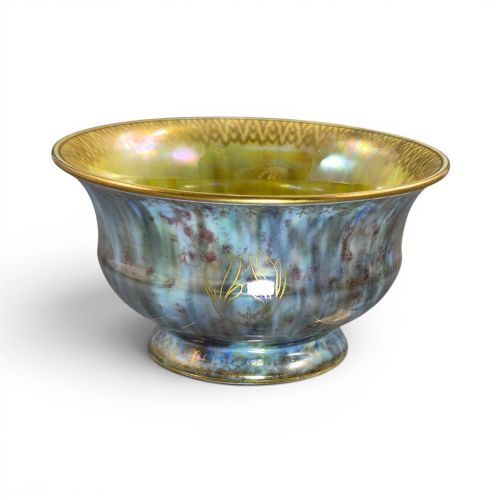
Several bowls manage to squeeze celestial dragons, fairies, and coiling beasts onto a single piece of lustrous earthenware.
Assessing quality in ceramic pieces
Quality separates through the precision of the hand-painted details and the complexity of the glaze effects applied to the ceramic body. Pieces demonstrating meticulous brushwork on the dragon motifs and uniform lustre finishes represent the higher tier of production.
The sophistication of the pattern layout, such as multi-compartment designs or elaborate celestial and coiling dragon compositions, dictates the distinction between standard factory output and superior artistic achievement.
Daisy Makeig-Jones·Wedgwood·Hotoda·Flight Barr And Barr·Chamberlain Worcester
The Gilded Dragon Ceramic Glossary
- Lustre Glaze
- A type of ceramic glaze containing metallic oxides that produce an iridescent, reflective surface sheen when fired. This technique creates a distinctive shimmering effect often seen on early twentieth-century decorative bowls.
- Bone China
- A type of soft-paste porcelain incorporating bone ash, resulting in high strength, chip resistance, and a translucent white body. It served as the primary material for many nineteenth and twentieth-century British tea wares and cabinet plates.
- Satsuma
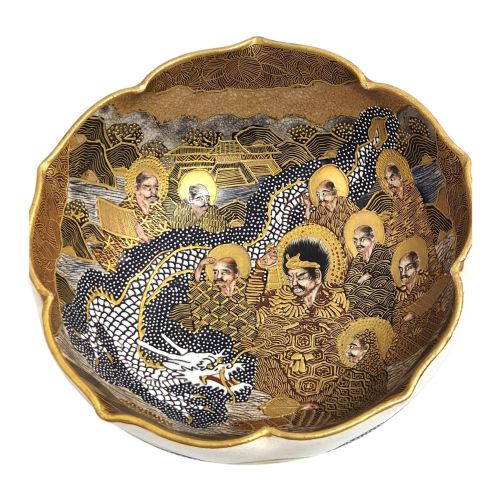
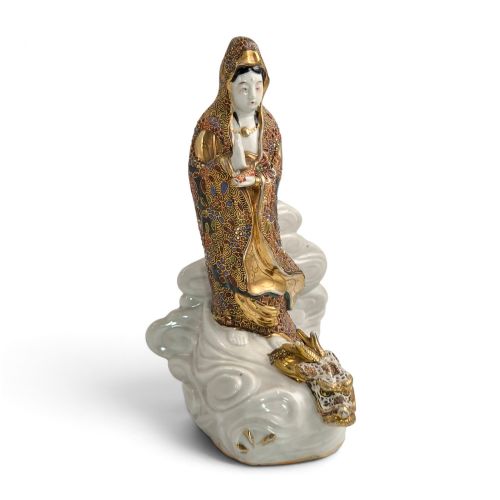
- A style of Japanese earthenware pottery characterised by a ivory-coloured, crackled glaze decorated with polychrome enamels and gilding. These wares frequently depict figures such as arhakas alongside traditional dragons.
- Famille Rose
- A palette of Chinese ceramic glazes introduced in the eighteenth century, dominated by opaque pink or purple enamel colours. Pieces utilising this palette often appear alongside gilt and dragon decorations.
- Earthenware
- Porous pottery fired at lower temperatures than porcelain and stoneware, requiring an impermeable glaze to hold liquids. It forms the structural body for many decorative vases and ewers.
Gilded Dragon Ceramic: Frequently Asked Questions
What is gilded dragon ceramic?
Gilded dragon ceramic encompasses decorative objects like vases, bowls, and plates featuring dragon motifs highlighted with gold leaf or gilt. These pieces originate from European potteries and Asian export workshops across multiple centuries.
They reflect diverse stylistic influences, ranging from British Regency patterns to Japanese Satsuma and Chinese export traditions.
How were these ceramic dragon pieces used?
Many of these items served as decorative display pieces, including cabinet plates, large vases, and octagonal bowls meant for prominent placement in domestic interiors. Smaller forms functioned as tea wares, such as coffee cups and saucers.
Ewers and miniature cups also filled decorative and functional roles within period room settings.
How do I live with antique ceramics?
Living with these ceramics involves placing them away from direct sunlight and areas of high foot traffic to protect fragile gilt and enamel surfaces. Using stable wooden stands helps support heavier bowls and vases safely on display.
Gentle dusting with a soft, dry cloth preserves the lustre glaze and metallic leaf without causing abrasion.
How do I tell periods apart?
Differentiating periods relies on examining the ceramic body, mark styles, and decorative techniques characteristic of specific eras. Georgian and Regency pieces often show neoclassical shapes with compartmentalised dragon patterns, while Edwardian and 1920s items frequently feature iridescent lustre glazes.
Meiji and Late Qing pieces display distinct regional painting styles and hand-applied gilding.