
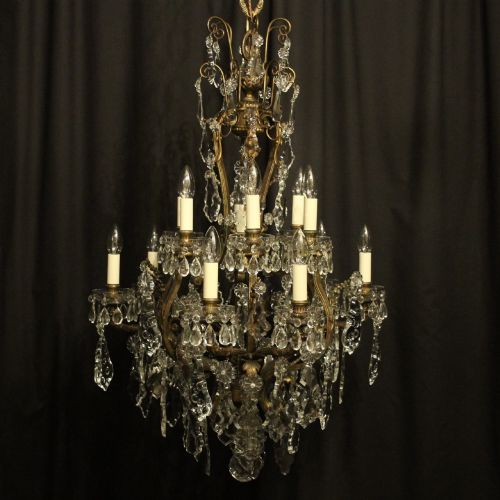

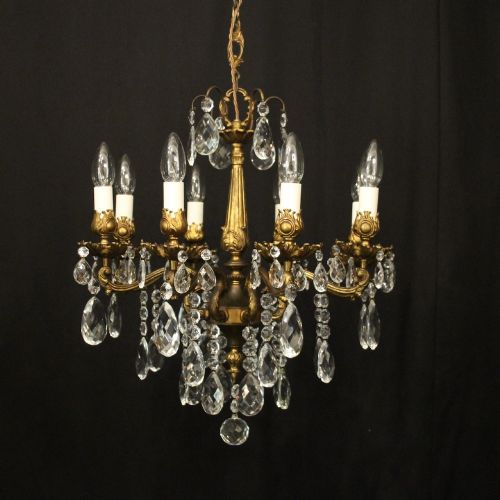
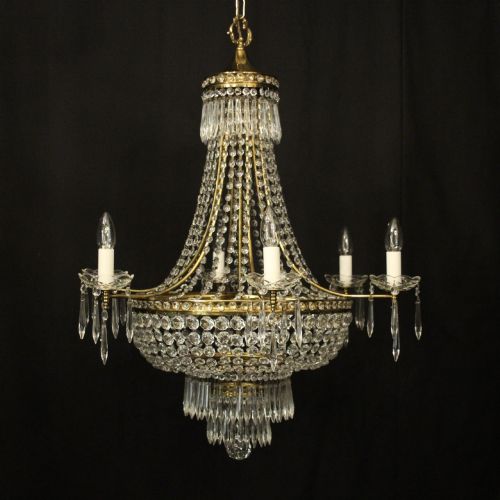
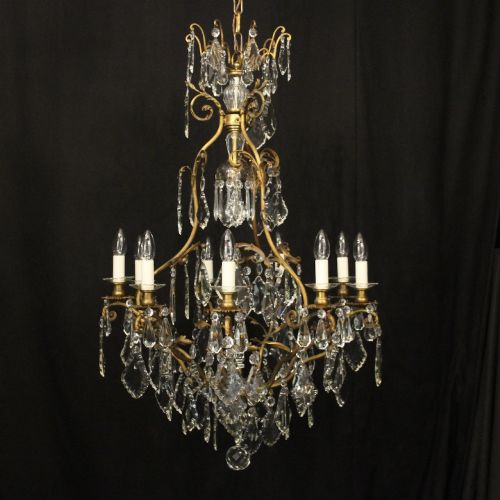
Gilded Crystal Pendant Light
A gilded crystal pendant light brings warmth and glittering refraction to a room, drawing the eye upward with historic metalwork and cut glass.
Gilded Crystal Pendant Light
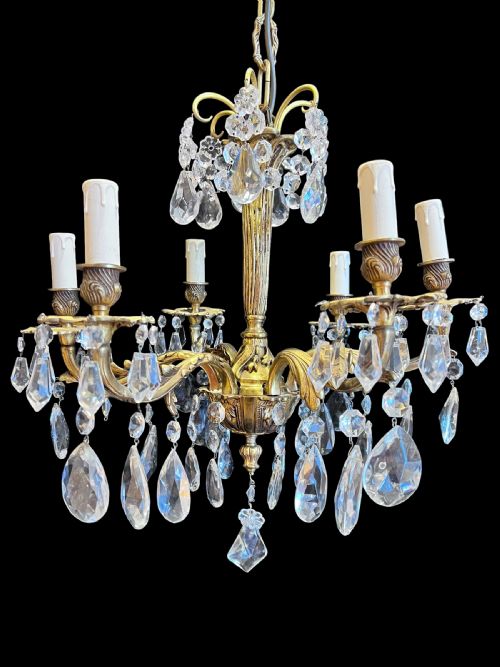
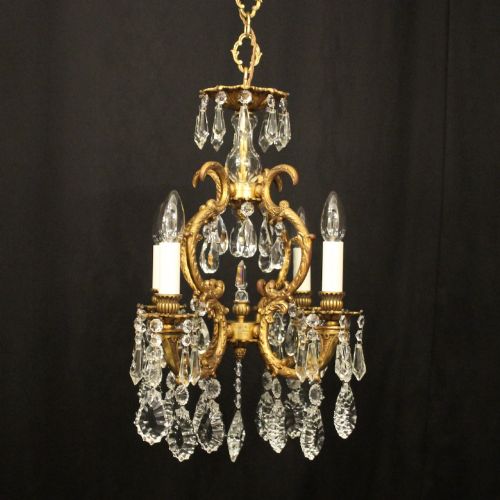
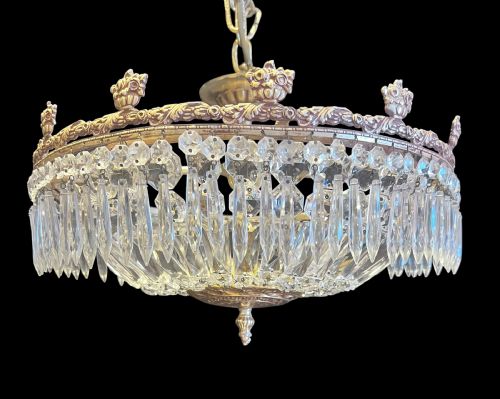
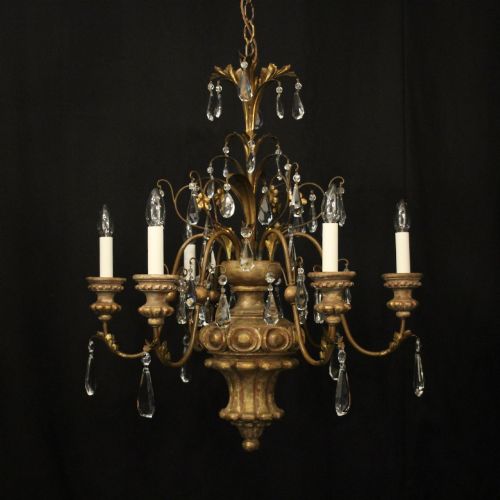
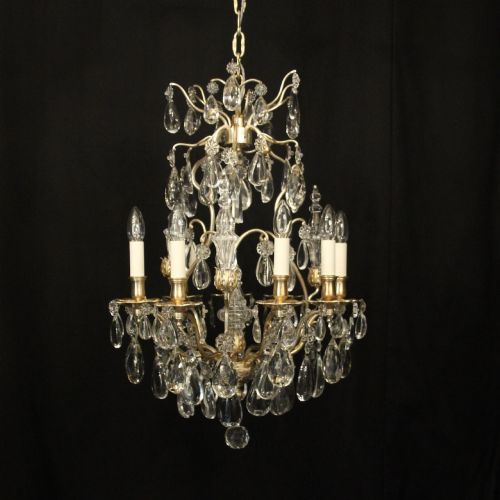
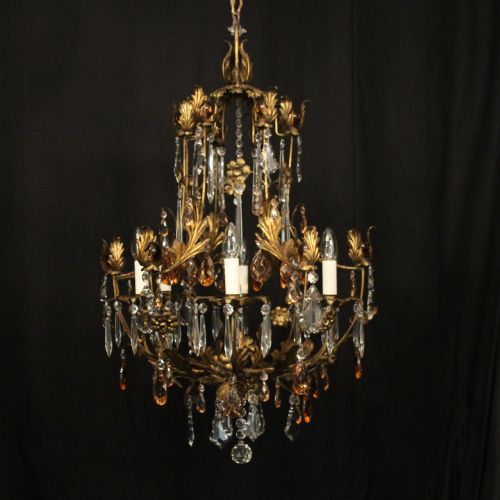
When you search for a gilded crystal pendant light, you encounter ceiling fixtures rooted in 19th-century, Edwardian, and early 20th-century design traditions. The pieces on this page lean heavily toward French and Italian aesthetics, incorporating styles such as Rococo Revival, Empire, and Florentine.
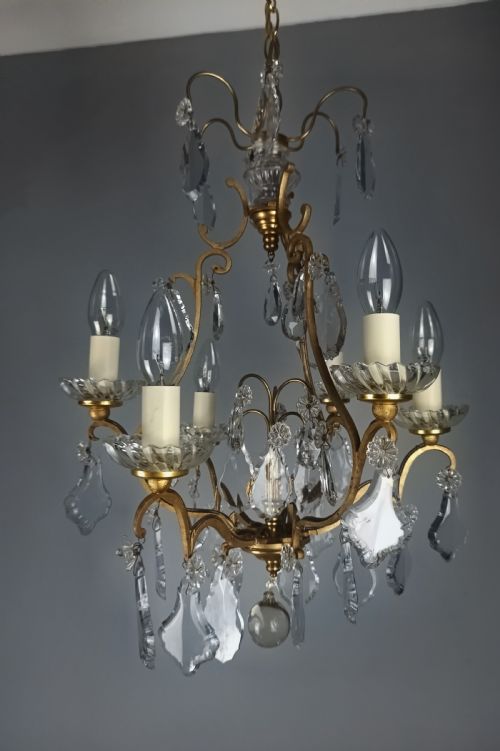
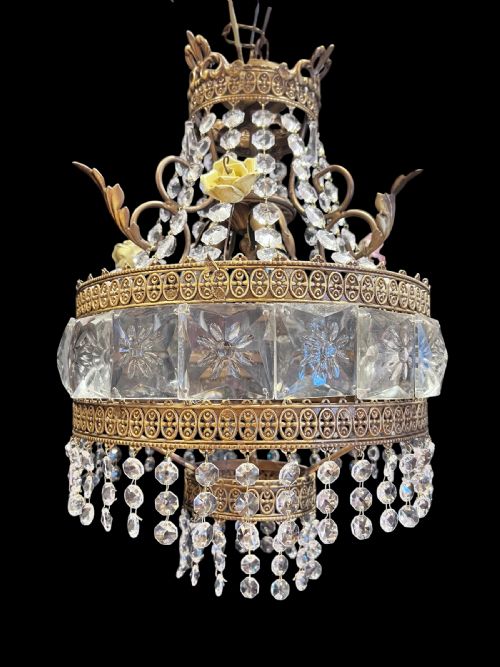
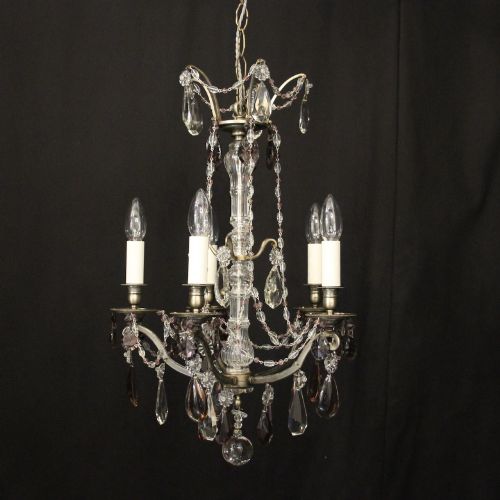
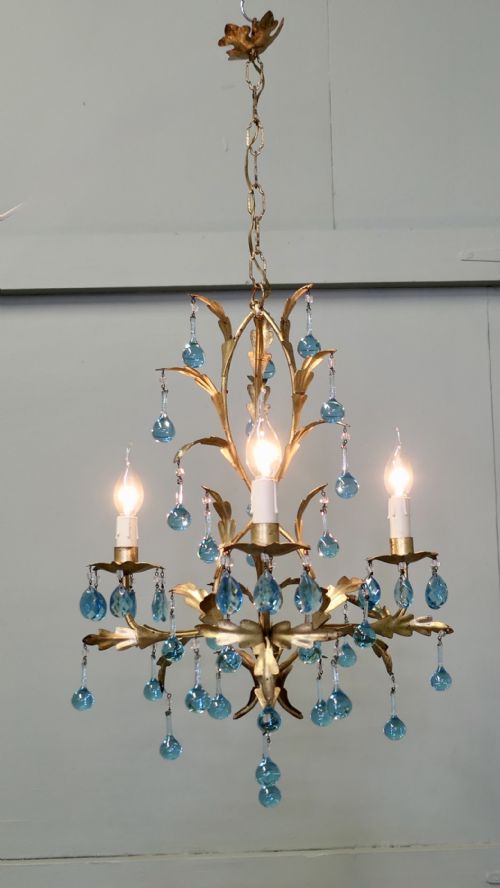
The most common formats you meet combine metal frames with drops, beads, and pendants of glass or crystal. These range from compact single-bulb fixtures to multi-light birdcage and tent-and-waterfall configurations designed for prominent interior spaces.
Materials and construction
The metal framework relies on brass, bronze, and wrought iron, treated with a gilt or silver-gilded surface finish to provide a reflective golden or silvery sheen. Some examples integrate painted toleware or porcelain elements alongside the metal structure.
Glass and crystal components are shaped, cut, and drilled by hand before being wired to the metal frame with pins or wire loops. Coloured crystals, amber drops, and amethyst accents appear alongside clear glass to alter the quality of the emitted light.
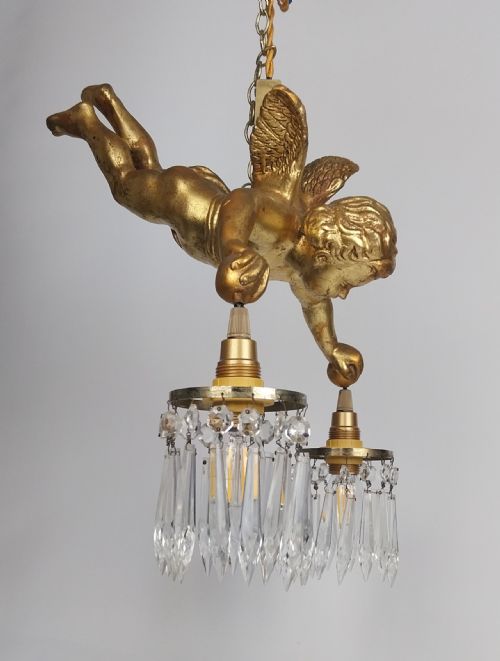
Some gilded chandeliers conceal cheerful winged cherubs among their leaves, watching quietly from the ceiling.
Distinguishing quality across the range
The sophistication of the casting and the weight of the metal determine the rigidity and presence of the frame. Heavier bronze or cast brass supports hold complex multi-light arrangements with greater stability than lighter pressed sheet metal.
The cut and clarity of the crystal drops dictate how effectively the fixture refracts illumination. Deeply cut facets and high-lead glass create sharp prismatic colour dispersal, whereas simpler moulded glass yields a softer, more diffused glow.
The Gilded Crystal Pendant Light Glossary
- Gilt
- A thin layer of gold applied to a surface of bronze, brass, or other metal. This finish provides a warm, metallic sheen that resists tarnishing over decades.
- Birdcage chandelier
- A ceiling fixture featuring a curved metal framework resembling an aviary. Crystal strands drape around this central cage to create a distinct silhouette.
- Tent and waterfall
- A lighting design where strings of beads form an upper conical tent above a cascading ring of crystal drops. This arrangement maximises the surface area for light refraction.
- Plafonniere
- A shallow ceiling light mounted close to the plasterwork rather than suspended on a long chain. These suit rooms with lower ceiling heights.
- Toleware
- Painted tin or metalware utilised for decorative floral or foliage elements on historical light fittings. It brings colourful, opaque contrast to transparent crystal.
Gilded Crystal Pendant Light: Frequently Asked Questions
How do I clean a crystal chandelier?
Maintenance involves wiping individual glass drops with a mild soapy solution and a soft cloth while the fitting hangs in place. Detaching every pendant is rarely necessary unless a deep restoration of the wiring is required.
Ensure the electricity remains switched off during cleaning, and dry each piece thoroughly with a lint-free towel to prevent water spots from forming on the glass.
Can these antique lights use modern bulbs?
Most historic fixtures accept standard modern LED lamps provided the bulb dimensions fit within the glass enclosure or shade. Rewiring is often updated to meet current safety standards while preserving the original exterior appearance.
Consult a qualified electrician to verify that the internal lampholders and wiring can safely handle contemporary electrical loads.
What rooms suit a gilded pendant light?
These decorative fixtures work well in dining rooms, entrance halls, and bedrooms where ambient illumination and ornate metalwork enhance the interior decor. Their reflective properties brighten darker corners and add a focal point to the ceiling.
Consider the ceiling height and floor space carefully to select a fixture with proportions that do not overwhelm the surrounding furniture.
How do I date a crystal light?
Dating relies on examining the casting methods of the metal frame, the style of the electrical wiring components, and the cut of the glass. Edwardian and 1930s pieces often exhibit lighter brass stampings, whereas 19th-century examples tend to feature heavy cast bronze.
Stylistic cues such as French Rococo Revival or Italian Florentine leafy motifs also point toward specific design eras within the nineteenth and early twentieth centuries.