



Gilded Ceramic Ewers
Gilded ceramic ewers bring sculptural elegance and metallic brilliance to a room, uniting functional vessel forms with fine surface decoration.
Gilded Ceramic Ewers
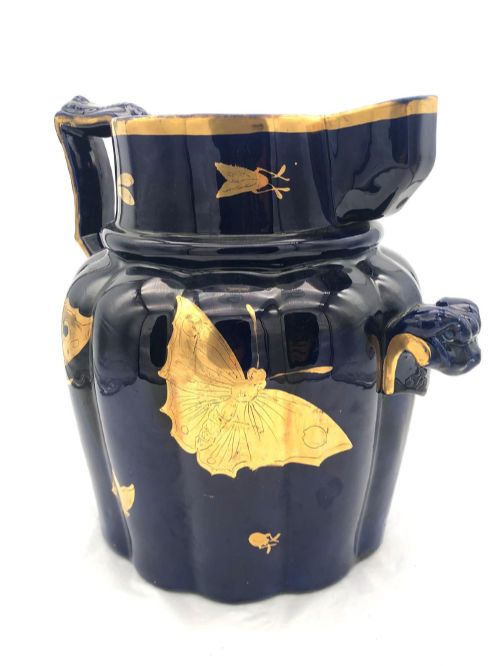
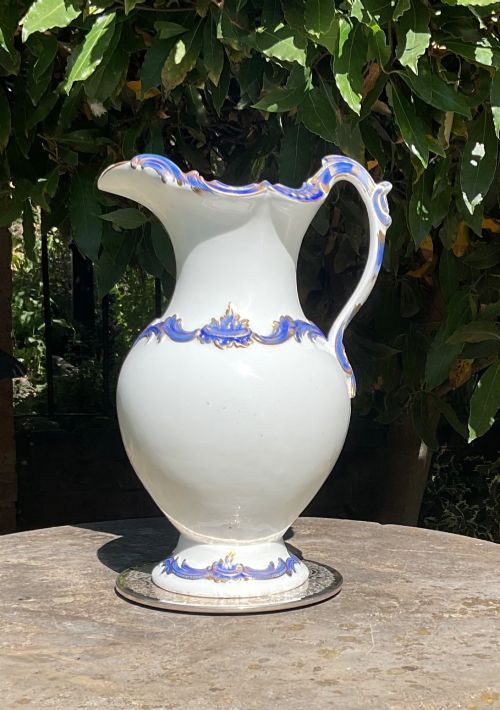
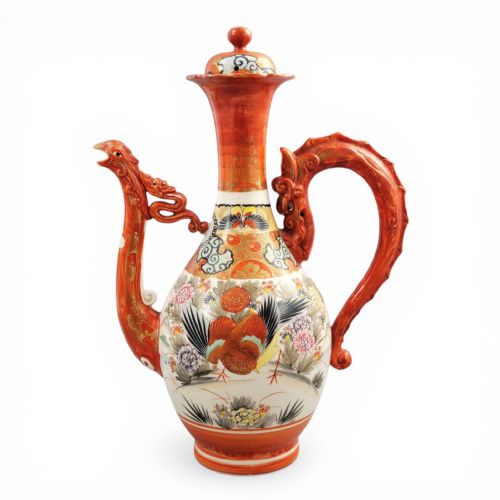
When you search for gilded ceramic ewers, you encounter pouring vessels and decorative display pieces shaped from porcelain and earthenware. The selection spans the nineteenth century and the early twentieth century, taking forms such as wine ewers, water jugs, and pedestal vases.
You meet many examples produced by English factories like Royal Worcester alongside French and Japanese works. These pieces range from compact miniature vessels to large decorative display ewers.
The style covers Victorian and Edwardian tastes, incorporating Chinoiserie motifs, Aesthetic Movement designs, and Rococo Revival curves.
Materials and Construction
Potters shaped these vessels from fine porcelain, ironstone, and earthenware bodies, often applying a smooth glaze before decoration. Handles frequently take elaborate or grotesque forms that demand careful modelling.
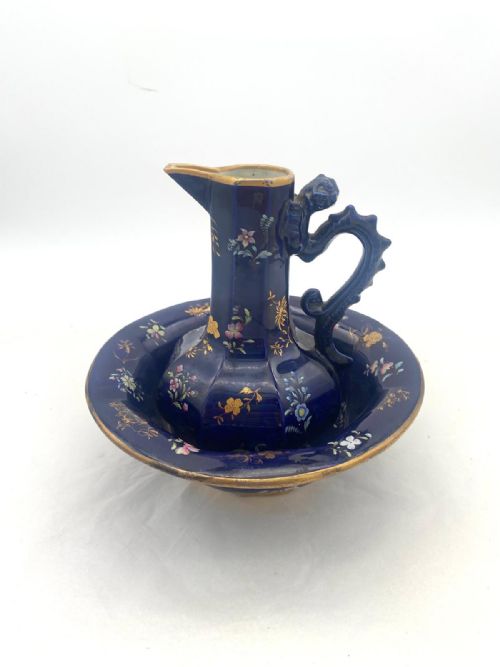
Surface ornamentation relies on hand-painted floral panels, cobalt blue grounds, and raised gold decor applied through meticulous gilding techniques. Some pieces incorporate reticulated porcelain piercing or delicate enamel work.
The listings show porcelain and ironstone as the primary materials, spanning the Victorian and Edwardian periods with strong representation from English factories.
Quality Variations
The distinction between standard production and top tier work rests on the finesse of the painting and the complexity of the moulding. Hand-painted details by recognised factory artists elevate a piece far above standard transfer-printed wares.
The crispness of the reticulation, the depth of the raised gold leaf work, and the balance of the handle against the body determine the overall success of the design.
Royal Worcester·Mason's Ironstone·Royal Crown Derby·Doulton Burslem·Coalport
The Gilded Ceramic Ewers Glossary
- Ewer
- A large pouring vessel with a wide spout and an ornate handle. These pieces often serve a purely decorative function on pedestals and sideboards.
- Gilding
- The application of gold leaf or gold dust to the ceramic surface. This technique highlights raised motifs and rim borders.
- Reticulation
- An openwork pierced pattern cut into the porcelain body before firing. It requires great skill to prevent warping in the kiln.
- Ironstone
- A dense, durable type of earthenware developed in the nineteenth century. It provides a strong base for rich cobalt grounds and enamels.
- Blush Ivory
- A matt cream ceramic finish associated with late Victorian porcelain. It acts as a subtle background for painted floral decoration.
Gilded Ceramic Ewers: Frequently Asked Questions
How do I identify a Victorian ewer?
Victorian pieces often display eclectic revival styles, ranging from Rococo scrolls to Japanese-inspired motifs. Factory marks, registration numbers, and specific paste colours help narrow down the decade of production.
Heavier ironstone bodies usually point to earlier decades, while blush ivory and reticulated porcelain typically indicate the later Victorian period.
Where were these ceramic ewers displayed?
Original owners placed these decorative vessels on drawing room mantelpieces, sideboards, and dedicated ceramic pedestals. Matching pairs often flanked larger centrepieces or clocks.
Washstand sets paired larger ewers with matching basins for domestic bedchambers, while smaller miniature ewers sat in cabinets.
How should I clean a gilded ewer?
Dust the surface gently with a soft, dry brush to protect delicate raised gilding and hand-painted enamel details. Avoid abrasive cloths or cleaning solutions that can wear away historic gold leaf.
Keep pieces away from direct sunlight to preserve the vibrancy of the painted floral panels and cobalt grounds.