
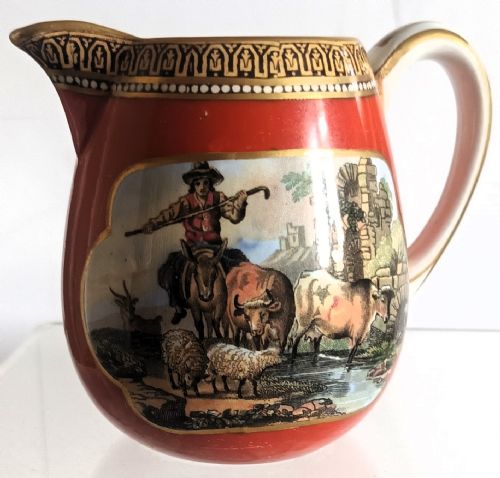


Gilded Ceramic Creamer
These gilded ceramic creamer examples range from Georgian armorial pieces to Victorian earthenware, bringing refined pouring vessels to the tea table.
Gilded Ceramic Creamer
A gilded ceramic creamer is a small pouring vessel designed for milk or cream during tea service, appearing across various centuries and ceramic bodies. When exploring this selection, buyers encounter forms ranging from traditional cream jugs and pitchers to miniature ewers and cow creamers.
The objects span multiple eras, including Georgian, Regency, and Victorian periods, alongside later twentieth-century studio and factory productions. English factories predominate, though French porcelain and Chinese export wares also appear within the collection.
Materials and construction
Potters shaped these creamers using porcelain, earthenware, ironstone, and fine pottery bodies, often applying a smooth glaze before decoration. Artisans then added handpainted details, enamel motifs, and applied gilding or gold leaf to highlight handles, rims, and body panels.
Firing techniques varied according to the ceramic body, with porcelain requiring higher temperatures to achieve vitrification. Gilding was typically applied as a final metallic layer and refired to bond with the glazed surface.
Among the pouring vessels sits a ceramic cow creamer, designed so that milk pours directly from the animal's mouth.
Judging the range
Quality in a gilded ceramic creamer rests upon the crispness of the moulding and the finesse of any handpainted or armorial decoration. Pieces featuring delicate floral panels, detailed birds and insects, or signed artist work demonstrate superior workshop standards.
The preservation of the gold leaf or gilding significantly influences the standing of an individual piece. Weight, balance, and the precise throwing or moulding of the spout and handle further distinguish standard domestic utility wares from high-end cabinet specimens.
Royal Worcester·H & R Daniel·Chamberlain Worcester·Minton·Ahrenfeldt and Asalvary
The Gilded Ceramic Creamer Glossary
- Gilding
- The application of gold leaf or powdered gold onto the ceramic surface. This technique highlights rims, handles, and painted motifs.
- Ironstone
- A dense, durable type of earthenware patented in the nineteenth century. It resists chipping and provided a sturdy base for colourful patterns.
- Armorial
- A ceramic design displaying a family coat of arms or crest. These bespoke commissions were often handpainted for elite households.
- Ewers
- Pitchers with a wide spout and large handle, historically used for pouring liquids. Miniature versions served decorative or specialised table functions.
- Kakiemon
- A style of Japanese enamelled porcelain decoration featuring asymmetrical floral and animal motifs. European factories frequently revived these colourful patterns during the nineteenth century.
Gilded Ceramic Creamer: Frequently Asked Questions
How do I date an antique creamer?
Dating relies on observing the ceramic body, glaze characteristics, and any factory marks stamped or painted on the base. Stylistic cues such as Regency shapes or Victorian revival motifs also help narrow the period.
Examining the wear on the base and the method of gilding provides further clues to the decade or century of manufacture.
What is ironstone china?
Ironstone is a heavy, vitrified earthenware developed to imitate true porcelain while offering greater strength and durability. It provides a sturdy canvas for rich glazes and transfer-printed or handpainted designs.
Pieces made from this material often feel heavier in the hand than standard porcelain.
Why are some creamers gilded?
Gilding added a layer of visual luxury, catching candlelight and reflecting the status of the owner during tea service. It accentuated the moulded contours of the spout, handle, and foot.
Wealthy households favoured gold-trimmed ceramics to match their silver tea sets and formal dining services.