
Gilded Ceiling Fixture
These gilded ceiling fixtures bring warmth and overhead illumination to a room, ranging from grand multi-tier crystal chandeliers to intimate hall lanterns.
Gilded Ceiling Fixture
A gilded ceiling fixture encompasses chandeliers, hall lanterns, pendant lights and plafonniers designed to suspend from above. When examining this selection, buyers encounter pieces primarily originating from French and Italian workshops across the nineteenth century, the Edwardian era and the 1920s and 1930s.
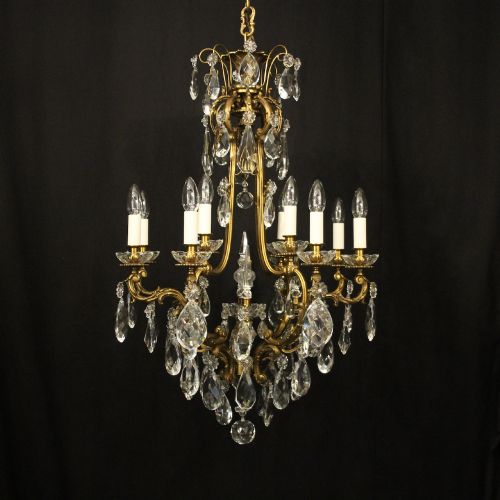
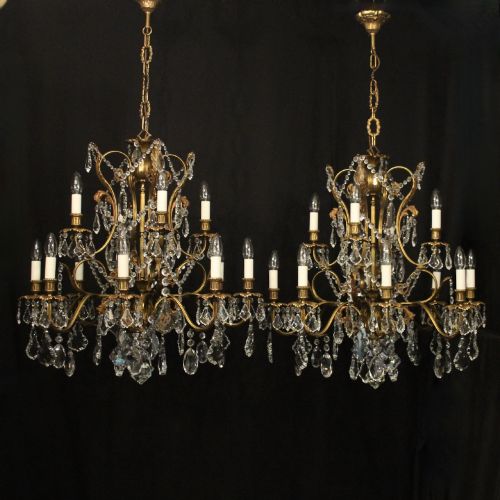
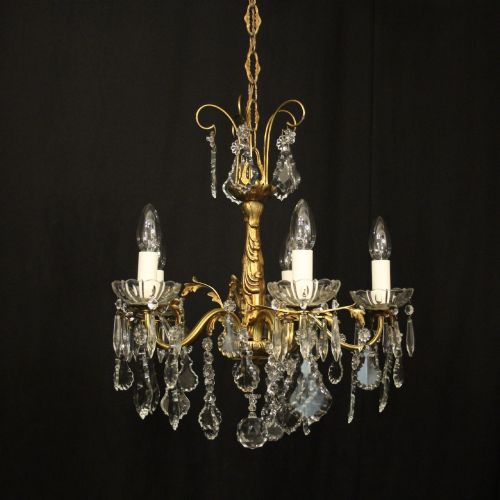
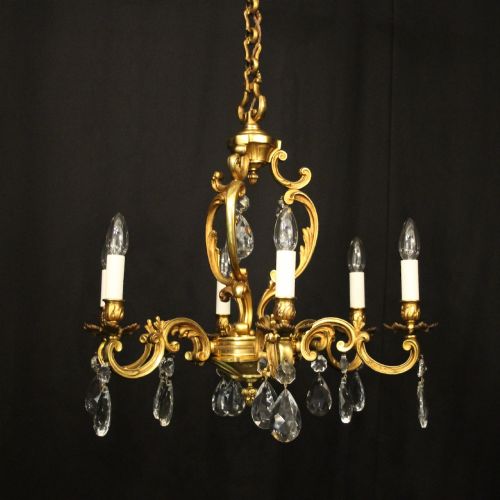
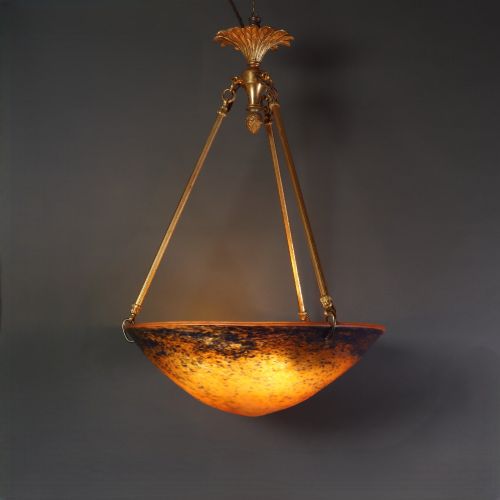
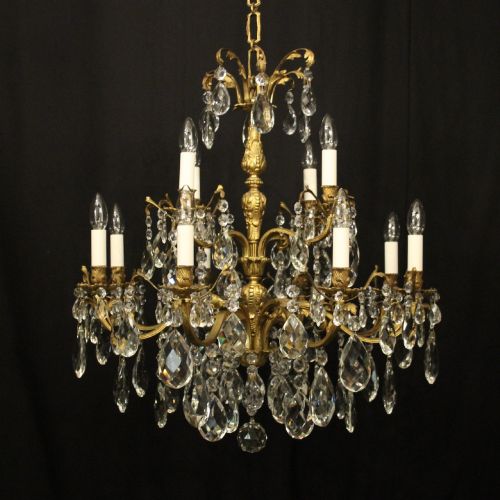
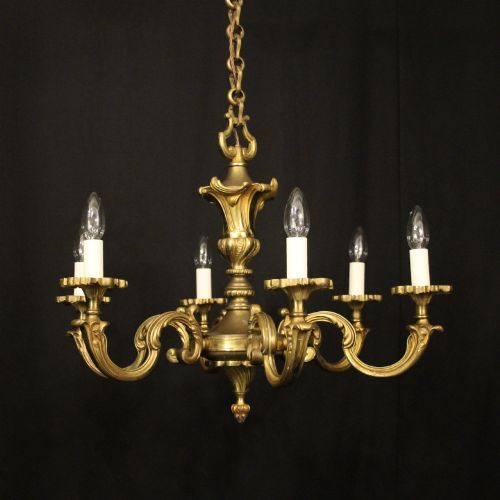
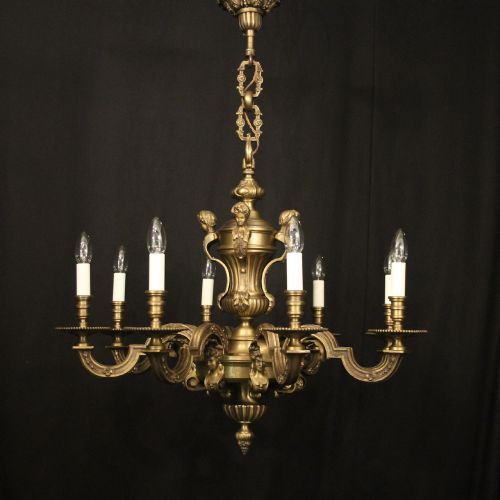
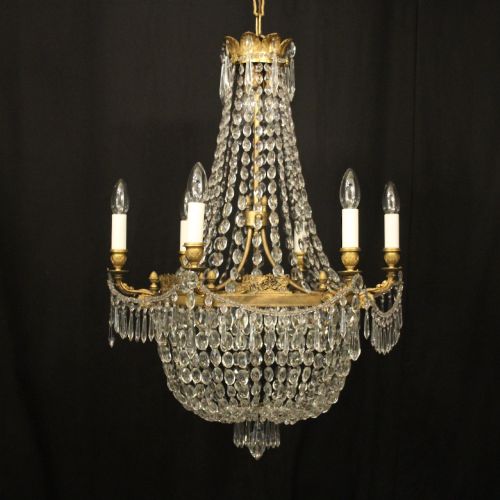
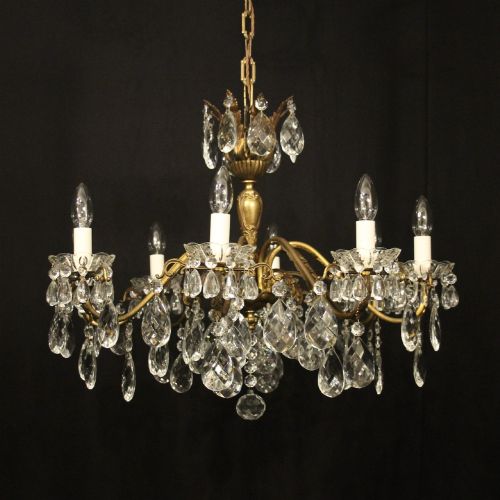
The most common forms on this page include multi-light chandeliers featuring tent and waterfall crystal configurations, birdcage designs, and ornate bronze or brass frames. Alongside these, smaller convex hall lanterns and flush-fitting plafonniers provide options for lower ceilings or restricted spaces.
Materials and construction methods
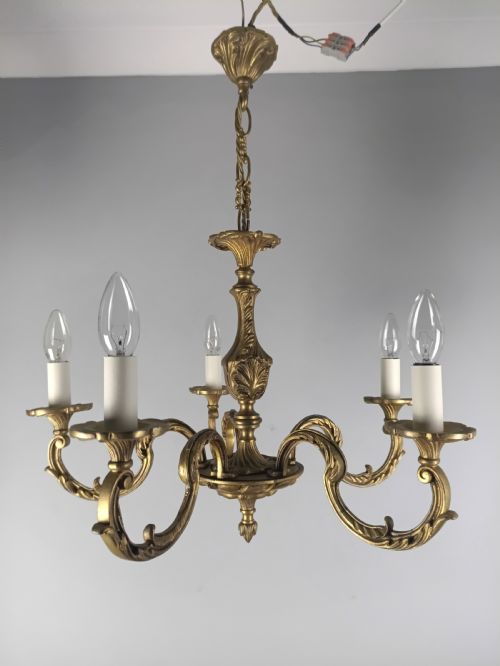
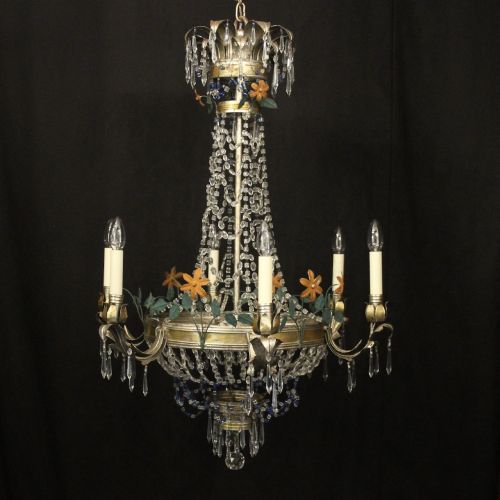
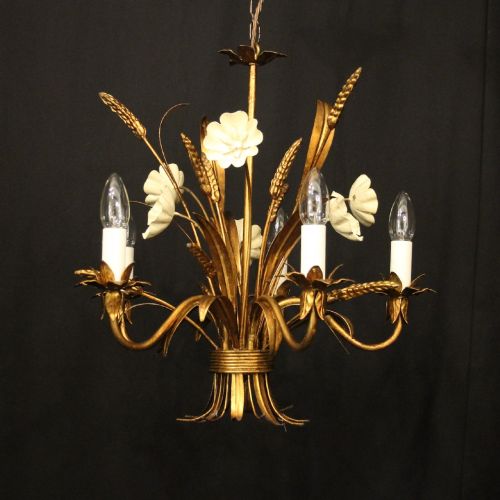
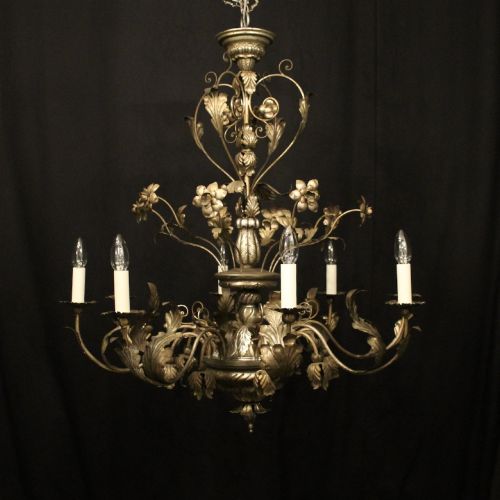
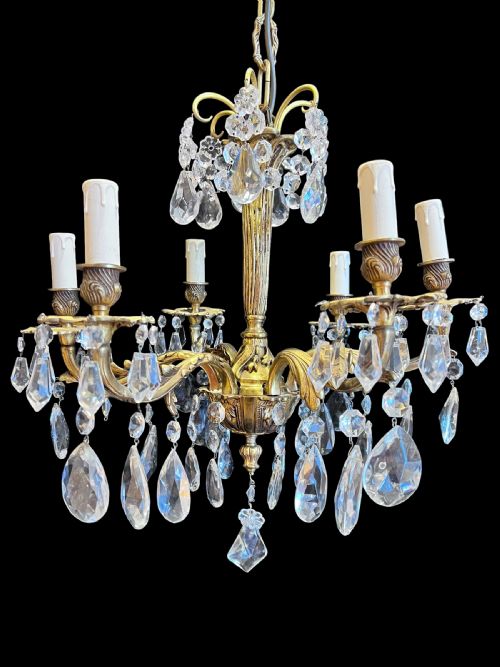
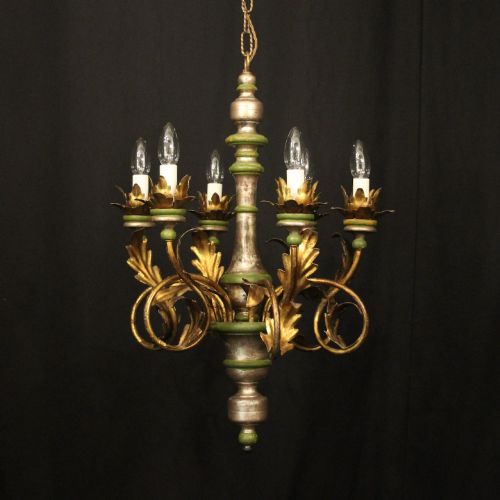
Makers utilised cast bronze, brass, or carved wood as structural foundations, applying gold or silver leaf, or ormolu finishes to the metal surfaces. These frames were frequently assembled with cut crystal drops, glass beads, and occasionally ceramic flowers or painted tolewear elements.
Lighting configurations evolved from early candle sockets to electrified fittings, with complex arrangements holding anywhere from three up to twelve lights. Frame components were secured via pins and wiring, integrating decorative cast motifs such as wheatsheaves or rococo scrolls into the primary structure.
Listings feature French and Italian designs spanning the nineteenth century, the Edwardian era, and the 1920s and 1930s.
Distinctions in manufacture and depth
The refinement of the casting and the depth of the gilding dictate the visual impact of a fixture. Finely chased bronze work exhibits crisp botanical and scroll details, whereas simpler brass structures rely on smooth reflective surfaces.
The quality of the hanging elements also defines the piece, with high-grade hand-cut crystal prisms producing sharper light refraction than standard pressed glass. Furthermore, the integrity of the original frame assembly and the weight of the metal components indicate superior workshop production.
Charles Schneider
The Gilded Ceiling Fixture Glossary
- Ormolu
- A gilded bronze finish applied to metal mounts and decorative elements. This technique gives the surface a rich golden lustre.
- Plafonnier
- A ceiling-mounted lighting fixture or bowl glass light that sits flush or close to the ceiling. These are often associated with Art Deco glass designs.
- Tent and waterfall
- A chandelier style featuring strings of crystal beads draped in a triangular tent shape above a cascading shower of crystals. This configuration maximises light reflection.
- Birdcage chandelier
- A metal frame constructed with vertical curved straps resembling an aviary, enclosing central lights and crystal strands. It is a distinctive form seen in French lighting from the early twentieth century.
- Giltwood
- Wood that has been coated with a thin layer of gold leaf. It is frequently carved with ornate floral or architectural motifs.
Gilded Ceiling Fixture: Frequently Asked Questions
How do I choose the right size fixture?
Consider both the ceiling height and the floor area of the room to ensure the piece balances the space without dominating it. Larger multi-light chandeliers require substantial vertical clearance to hang correctly.
Smaller hall lanterns or flush plafonniers suit compact corridors or rooms with standard ceiling heights where a hanging drop is impractical.
Were these fixtures originally electrified?
Most pieces from the late nineteenth century and early decades of the twentieth century were adapted from candle or gas lighting to run on electricity. Wiring is typically updated to meet modern safety standards while preserving the external frame.
Internal components such as lamp holders are replaced during restoration to accommodate contemporary bulbs.
How do I clean a crystal chandelier?
Dust the frame and crystal drops regularly with a soft duster or microfibre cloth to maintain clarity. For deeper cleaning, delicate glass components can be wiped individually with a mild cleaning solution while supported on the frame.
Harsh chemical sprays should be avoided to protect the gilded surface on the metal structure underneath.
How do I date a gilded ceiling fixture?
Dating relies on stylistic indicators, such as neoclassical motifs from the nineteenth century, Edwardian elegance, or geometric Art Deco lines from the 1920s. Construction methods, wiring channels, and fixing types also offer clues to the era of manufacture.
Comparing the casting style with documented pieces from known workshops helps narrow down the period.