


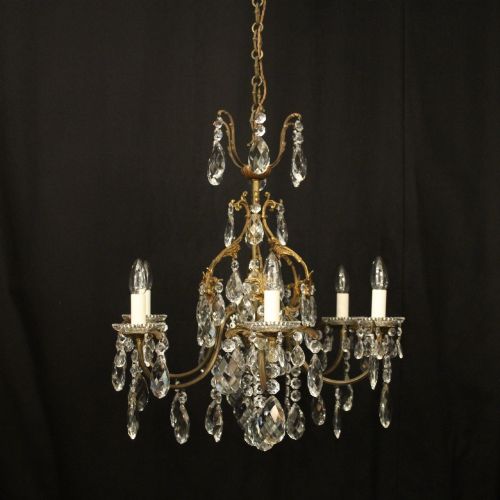
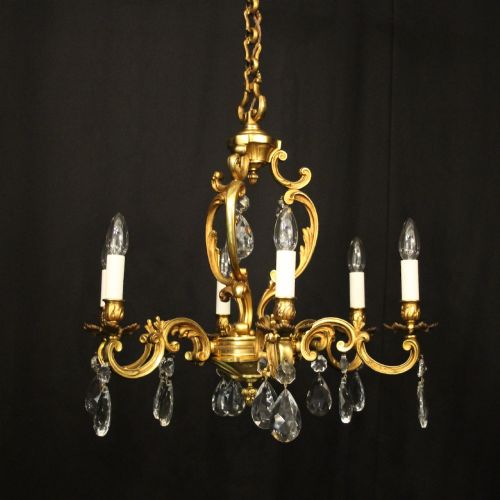
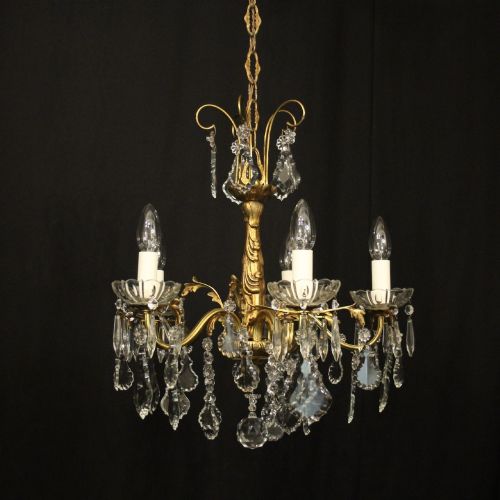
Gilded Bronze Fixture
A gilded bronze fixture brings warm metalwork and refracted light into a room, spanning grand chandeliers and modest wall sconces.
Gilded Bronze Fixture
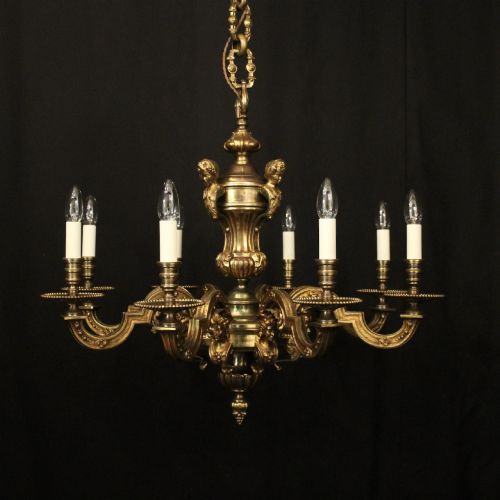
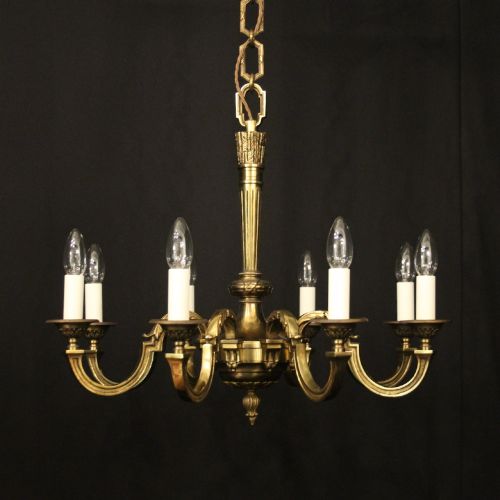
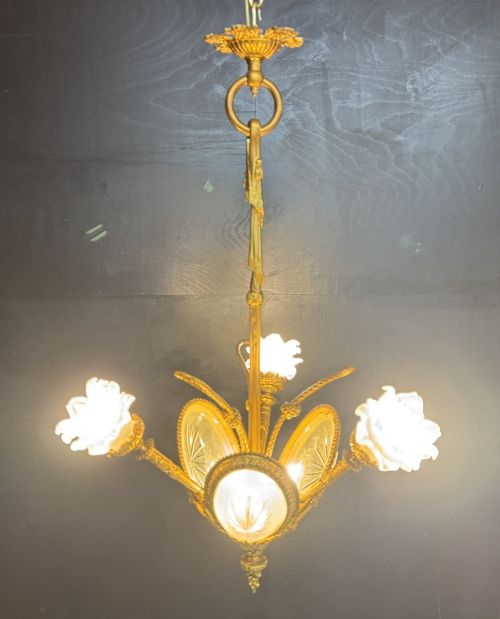
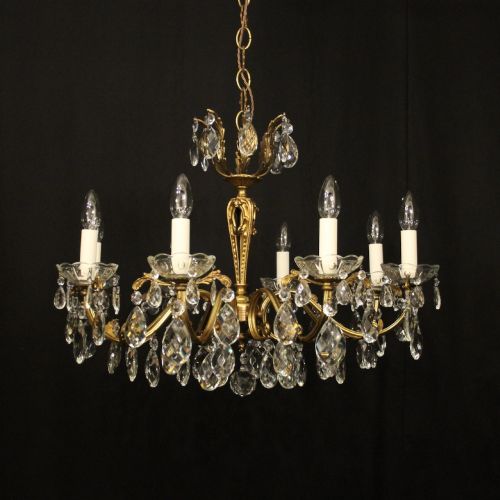
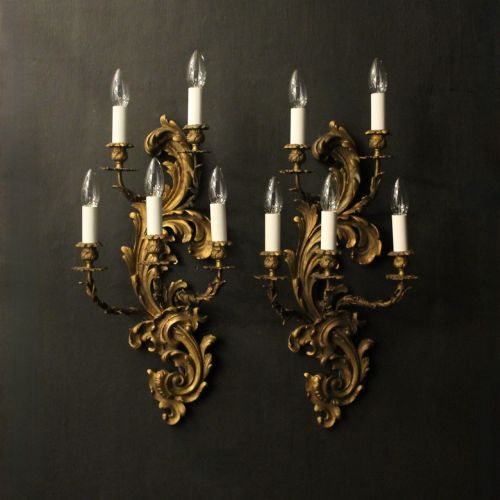
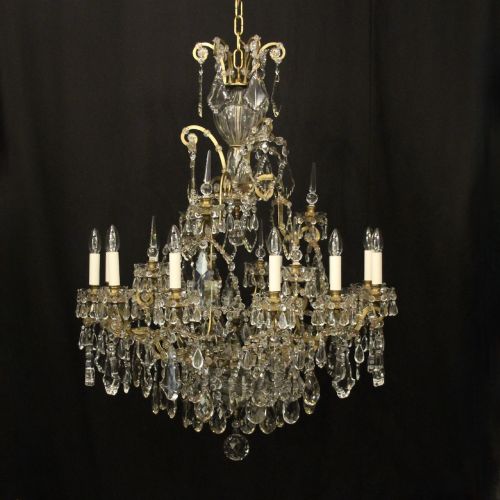
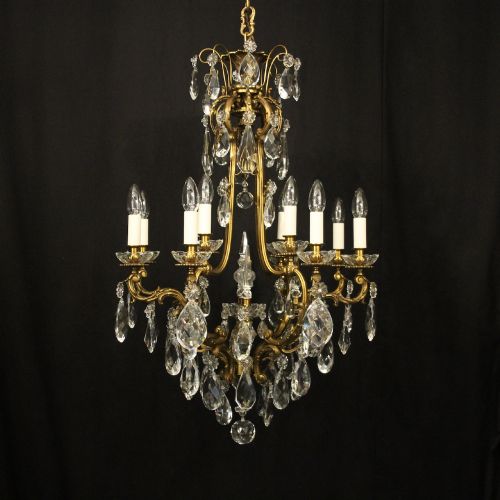
A gilded bronze fixture encompasses lighting designed to illuminate interiors through metal frames and glass pendants. When searching for a gilded bronze fixture, buyers encounter pieces intended for ceilings and walls, including multi-armed chandeliers and flush-mounted ceiling lights. The selection centres heavily on French designs from the late nineteenth and early twentieth centuries, particularly those bearing the hallmarks of the Rococo, Empire and Louis XVI styles.
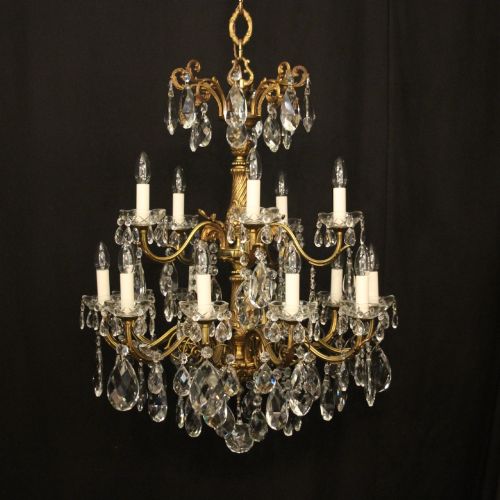
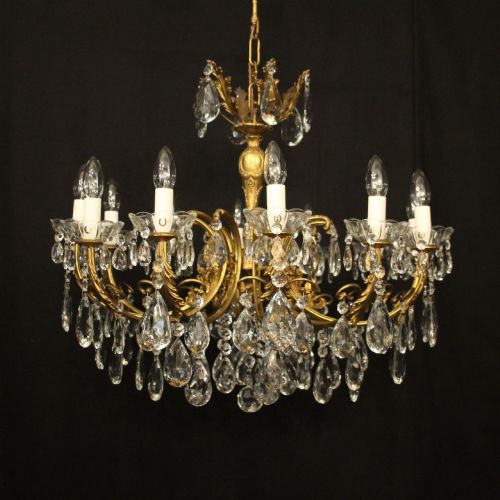
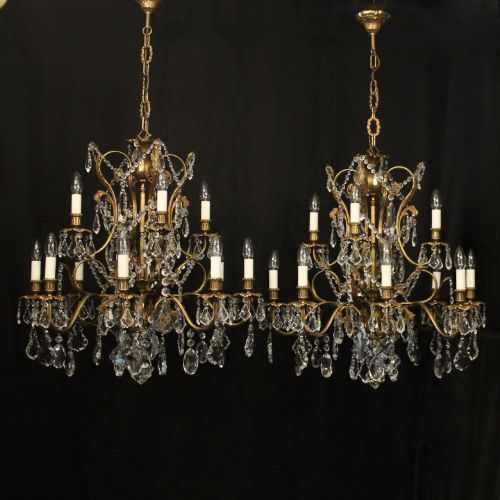
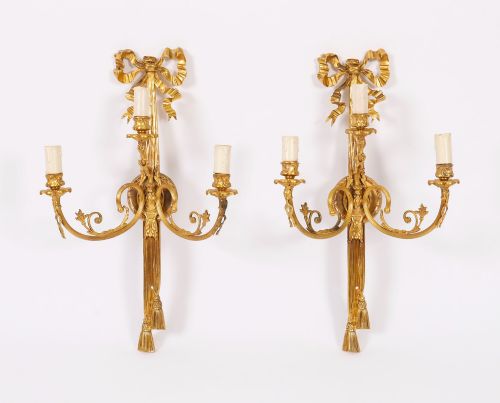
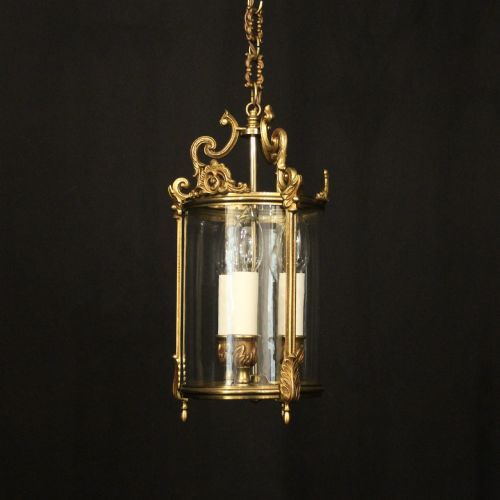
Chandeliers dominate the form, ranging from modest four-light configurations to twelve-light centrepieces hung with crystal drops. Alongside these overhead lights, the inventory includes wall lights, sconces and hall lanterns designed to match the principal rooms of period properties. These objects served both practical illumination and decorative display in formal spaces.
Materials and construction
Metalworking techniques of the nineteenth and twentieth centuries relied on casting bronze, brass and ormolu into ornate shapes. Artisans applied thin layers of gold leaf or mercury gilding to the base metal to achieve a lasting surface lustre. This metallic structure was then combined with cut crystal, moulded glass and glass beads to catch and scatter the light.
Wiring and electrical components were frequently added or updated to suit domestic installations, while retaining the original cast metal frames. Glass elements such as drops, waterfalls and plafonniers were shaped by hand or in moulds, then suspended from the metal armature using wire loops or pins.
Gilded Bronze Fixture Retail Price Guide 2026
Typical asking prices for gilded bronze fixture among the pieces listed under this phrase on Sellingantiques today, from the lower quarter to the upper quarter. They describe what is for sale here now, not the wider market.
Distinctions in craftsmanship
Quality in these objects rests upon the crispness of the bronze casting and the depth of the original gilding. Finer pieces display sharply chased surface details and heavy cast frames rather than thin stamped metal components. The integration of high-grade cut crystal pendants also separates standard items from exceptional examples.
Proportion and balance dictate the architectural success of a fitting, particularly in larger multi-armed chandeliers and symmetrical wall sconces. Pieces that retain matching glass elements and uncompromised structural integrity represent the upper tier of the selection.
Charles Schneider
The Gilded Bronze Fixture Glossary
- Ormolu
- Gilt bronze, typically produced by applying a gold and mercury amalgam to a bronze base and firing it. This technique creates a durable, warm metallic finish common on nineteenth-century French light fittings.
- Plafonnier
- A ceiling-mounted glass bowl light, often associated with Art Deco makers. These fixtures sit flat against the ceiling to diffuse light evenly across a room.
- Tent and waterfall
- A chandelier configuration where strings of glass beads form a tent shape at the top, flowing down into a cascade of drops around the central stem. This style maximises the refractive surface area.
- Applique
- A French term for a wall light or sconce mounted directly onto a vertical surface. These fixtures often feature multiple arms mirroring the design of matching chandeliers.
Gilded Bronze Fixture: Frequently Asked Questions
How do I clean a gilded bronze chandelier?
Dust the metal gently with a soft brush and wipe glass components with a damp cloth.
Avoid abrasive cleaners or chemical polishes that can strip the delicate surface layer from the bronze.
Are these antique fixtures wired for modern use?
Many period fittings have been updated with modern wiring to meet safety standards for domestic installation.
It is advisable to have a qualified electrician check the internal wiring before mounting the fixture.
What is the difference between gilt bronze and brass?
Gilt bronze utilises a copper and tin alloy coated in gold leaf or amalgam, providing a rich, deep hue.
Brass is a copper and zinc alloy that tends to have a brighter, yellower metallic tone when unplated.
How do I determine the period of a wall light?
Stylistic indicators such as Rococo curves, Neoclassical symmetry or Art Deco geometric lines provide primary clues to the era of manufacture.
Construction methods, screw types and the composition of the glass elements offer further verification.