




German Porcelain Couple
These german porcelain couple figures bring theatrical pastoral charm to a room, offering finely modelled characters from centuries of European kilns.
German Porcelain Couple
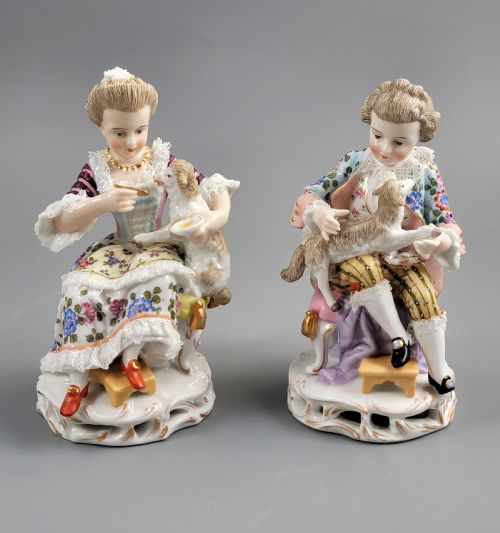
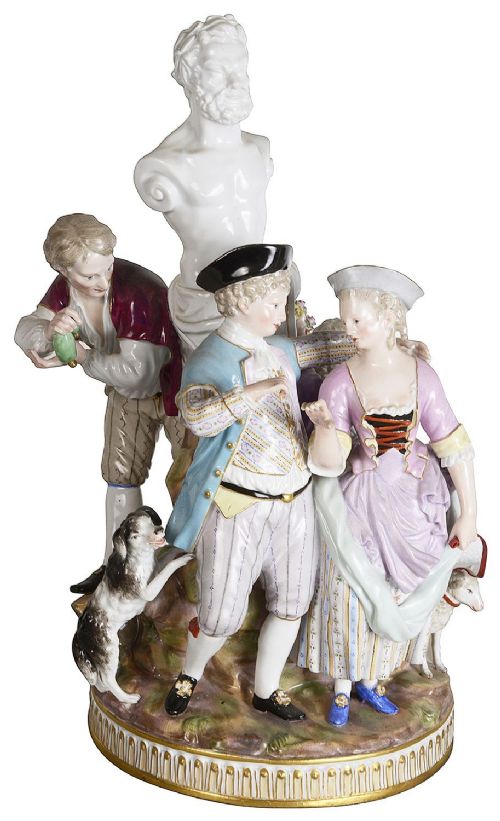
A german porcelain couple typically takes the form of pastoral shepherds, courting sweethearts or romantic pairs arranged in graceful postures. These figures range from substantial nineteenth-century cabinet groups down to smaller trinket boxes topped with figural lids.
The selections span distinct historical eras, most frequently drawing upon nineteenth-century manufacturing traditions alongside earlier eighteenth-century prototypes. Collectors encounter works originating from renowned centres such as Meissen, Sitzendorf, Volkstedt and Plaue.
Moulded groupings often depict allegorical themes, children with animals or classical figures standing behind the central pair. Each piece captures the prevailing decorative taste of its period, shifting from elaborate rococo revival curves towards cleaner art deco geometries.
Materials and production methods
Hard-paste porcelain serves as the primary body for the majority of these figures, fired at high temperatures to achieve a dense, durable ceramic structure. Bisque porcelain and parian ware appear frequently where a matte, unglazed finish mimics the texture of carved marble.
Surface decoration relies heavily upon hand-applied enamel colours combined with delicate gold leaf and gilding to accentuate garments and accessories. Artisans constructed complex groups in multiple parts, bonding individual moulded elements with liquid clay before firing.
German Porcelain Couple Retail Price Guide 2026
Typical asking prices for german porcelain couple among the pieces listed under this phrase on Sellingantiques today, from the lower quarter to the upper quarter. They describe what is for sale here now, not the wider market.
Listings feature hard-paste porcelain and bisque porcelain alongside parian ware, spanning the eighteenth to the twentieth centuries.
Distinctions in quality
The skill of the painting department dictates visual success, distinguishing finely shaded hand-brushwork from mechanical application. Colour depth and the sparing, effective use of gilding separate workshop masterpieces from standard commercial production.
C. G. Schierholz·Sitzendorf·Meissen·Carl Thieme·Triebner Ens & Co·Ludwigsburg
The German Porcelain Couple Glossary
- Hard-paste porcelain
- A durable ceramic compound composed of kaolin and petuntse, fired at very high temperatures. It forms a dense, vitrified body that resists scratching.
- Bisque porcelain
- Unglazed ceramic fired once to create a matte, porous finish resembling marble. It highlights sculptural detail without the distraction of shiny glazes.
- Parian ware
- A fine-grained type of bisque porcelain developed in the nineteenth century to imitate white marble. It possesses a subtle yellowish tinge and slight translucency.
- Enamel
- Vitrified glass powder fused to the porcelain surface during a secondary low-temperature firing. It provides the vibrant colours found on garments and floral motifs.
- Gilding
- The application of gold leaf or powdered gold to highlights on the figures and bases. It adds a decorative sheen associated with high-status ceramics.
German Porcelain Couple: Frequently Asked Questions
How are german porcelain couple figures cleaned safely?
Dust these delicate ceramic pieces gently with a soft dry brush to prevent accumulation in crevices. Avoid submerging them in water, especially older examples with vulnerable enamel painting or applied gold leaf.
For stubborn marks, use a slightly damp cotton swab on glazed areas only. Keep unglazed bisque surfaces dry, as moisture permanently stains porous ceramic bodies.
Where were german porcelain couple pieces displayed historically?
Owners placed these decorative groups on mantelpieces, inside glass-fronted vitrines or as centrepieces on dining tables during formal gatherings. Their detailed modelling invited close inspection by guests in a drawing room setting.
Smaller lidded versions served practical functions on dressing tables to hold powder or trinkets. Their placement depended largely on scale, with large paired figures dominating side tables.
How do I identify the period of a german porcelain couple?
Examine the base for factory marks, impressed numbers or painted cyphers that correspond to known nineteenth or eighteenth-century production eras. Stylistic clues such as rococo scrolls or art deco lines also provide broad chronological boundaries.
Compare the quality of the modelling and the palette of the enamel colours with documented pieces from specific factories. Weight and the texture of the porcelain body further indicate whether a piece dates to early hard-paste production or later Victorian revival periods.
Why do some figures have matte surfaces while others shine?
The matte finish results from bisque porcelain or parian ware left unglazed after the initial firing to emulate carved marble sculpture. Glazed pieces receive a glassy liquid coating before a high-temperature kiln run to seal the ceramic body.
Different manufactories utilised both finishes depending on the desired aesthetic and the period style. Rococo revival pieces often feature glossy glazes, whereas nineteenth-century classical subjects frequently employ matte bisque.